Backdrop size is one of the most important decisions you’ll make when planning the visual layout of an event. In an event context, backdrop size refers to the height and width of the structure or printed surface used behind stages, photo booths, red carpets, head tables, or branded areas.
Size directly impacts branding, guest experience, photography results, and overall stage presence. Too small, and logos get cut off in photos. Too large, and the space feels crowded or visually overwhelming. The right size makes everything feel intentional.
It’s also important to separate event backdrops from photography studio backdrops. Studio backdrops are typically chosen for controlled environments and single-subject shoots. Event backdrops must account for guest movement, group photos, lighting, staging, and real-world venue limitations.
Below, we break down standard backdrop sizes, when to use each one, and how to choose the right dimensions for your event — complete with a practical sizing chart and real recommendations.
Ready to go beyond a single backdrop? Work with our event design team to create a cohesive, high-impact event from floor to ceiling.
Why Backdrop Size Matters at Events
Framing the Experience
Backdrop size determines what shows up in photos — and what doesn’t. If it’s too narrow, you’ll see wall edges or lighting stands in the frame. If it’s too short, heads get cropped or logos disappear.
From a guest perspective, a properly sized backdrop feels polished and professional. It anchors the space. It signals where photos happen. It reinforces branding. A well-sized backdrop doesn’t just sit in the background — it shapes the experience.
Coverage vs Visual Impact
There’s a balance.
Too small equals awkward cropping, tight group shots, and constant repositioning.
Too large can overpower the venue, limit walkways, or distract from the stage itself.
The right backdrop size provides full coverage without swallowing the room. It complements the environment instead of competing with it.
Branding & Logo Visibility
When it comes to step-and-repeat walls or corporate backdrops, spacing matters. Logos need enough breathing room to be visible in both wide group shots and tight social media selfies.
If the backdrop is too small, logos get crowded. If it’s too wide without proper scaling, logos look tiny and lose impact. Proper sizing ensures your brand reads clearly in every frame — from press photos to Instagram stories.
Standard Backdrop Sizes Explained
While custom builds are always an option, most event backdrops fall into recognizable size categories. Here’s a practical breakdown:
| Size Category | Dimensions | Best For | Guest Capacity |
|---|---|---|---|
| Small | 4×4 ft | Headshots, product displays | 1–2 |
| Medium | 5×8 ft | Registration tables | 2–3 |
| Standard | 8×8 ft | Photo booths, corporate logos | 3–5 |
| Large | 8×10 ft | Red carpet, small brand activations | 5–7 |
| Large | 8×12 ft | Corporate events, small stages | 6–8 |
| XL | 8×16 ft | Trade shows, step & repeats | 8–12 |
| Oversized | 8×20 ft+ | Large galas, media walls | 12+ |
| Custom Fabrication | Wall-to-wall / room builds | Immersive events | Unlimited |
Most event backdrops are 8 feet tall because that height provides full coverage behind standing guests while remaining manageable for indoor venues.
Our Most Popular Backdrop Size: 8×8
Why 8×8 Is the Industry Standard
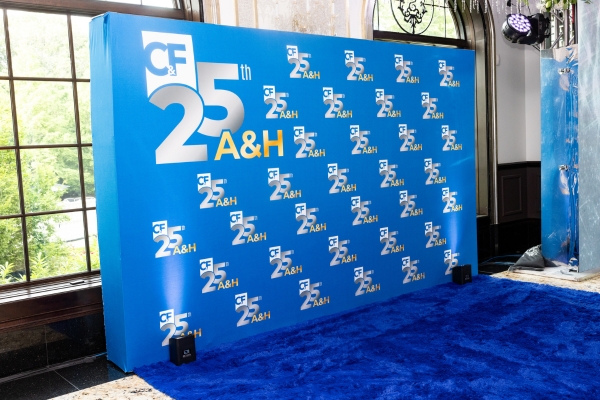
The 8×8 ft backdrop is the most versatile size in event production.
- It’s ideal for photo booth rentals because it comfortably fits 3–5 guests without crowding the frame.
- It works perfectly for corporate logo walls and step-and-repeat setups.
- It fits inside most New Jersey venues without overpowering the space.
- It delivers strong branding impact without requiring excessive floor space.
For many events, 8×8 is the sweet spot between coverage and practicality.
When 8×8 is Not Enough
There are situations where 8×8 simply won’t cut it.
- Large teams or group photos need more width.
- Red carpet entrances require breathing room for movement.
- Brand activations often demand more logo repetition.
- Stage backdrops must scale proportionally to the platform and lighting.
When guest count, media presence, or production scale increases, moving up to 8×12, 8×16, or larger makes a noticeable difference.
Backdrop Size by Event Type
Corporate Events & Brand Activations
For corporate branding, 8×8 works perfectly as a step-and-repeat or media wall.
For stage branding or executive presentations, 8×12 or larger creates proper visual proportion.
For product launches or immersive brand experiences, custom builds — including LED integrations and architectural structures — deliver maximum impact.
Weddings
Ceremony backdrops are often wider than standard photo booth setups, especially when framing floral installs or arches.
Sweetheart table backdrops typically fall in the 8×8 to 8×12 range.
For luxury weddings or tented events, full-room installations and wall-to-wall fabrications completely transform the environment.
Galas & Fundraisers
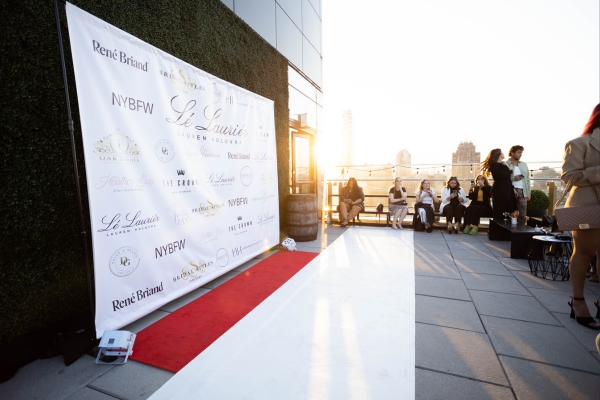
Red carpet moments typically start at 8×12 for comfortable guest flow.
Sponsor-heavy media walls often require 8×20 or larger to fit multiple logos without crowding.
These events demand width for photography and visibility.
Trade Shows
Trade show booths benefit from 8×16 or larger backdrops for maximum visibility across the floor.
Structural builds, tension fabric systems, and custom scenic elements often replace standard banner-style backdrops in these environments.
Here, backdrop size isn’t just about photos — it’s about stopping foot traffic and commanding attention.
Step and Repeat Backdrop Sizes
Backdrop size becomes even more important when you’re talking about step and repeat walls. These are designed specifically for branding, photography, and media visibility — so width and logo spacing matter a lot.
Most Common Sizes
Here are the most widely used step and repeat backdrop sizes in events:
- 8×8 ft – The go-to standard. Perfect for 3–5 guests.
- 8×10 ft – Adds breathing room for small red carpet moments.
- 8×12 ft – Ideal for 6–8 guests and corporate events.
- 8×16 ft – Strong presence for trade shows and sponsor-heavy walls.
- 8×20 ft – Built for large galas, media coverage, and high-traffic red carpets.
Most step and repeats are 8 feet tall because that height cleanly covers standing guests and works in the majority of venues.
Logo Size Guidelines
Logos typically land between 9–14 inches wide, depending on shape and layout.
Spacing is just as important as size. Logos must be readable in:
- Full group photos
- Tight selfies
- Cropped social media posts
Print clarity also matters. A large backdrop with low-resolution artwork will show flaws immediately. Proper scaling, spacing, and file quality ensure your brand looks sharp under flash photography and event lighting.
Red Carpet Add-Ons
A step and repeat rarely stands alone.
To elevate the experience, consider:
- Carpet length that allows guests to walk and pose comfortably
- Stanchions for crowd control and visual framing
- Professional lighting to eliminate shadows and keep logos crisp
The backdrop sets the stage. The surrounding elements complete the moment.
Custom Backdrop Sizes for Immersive Events
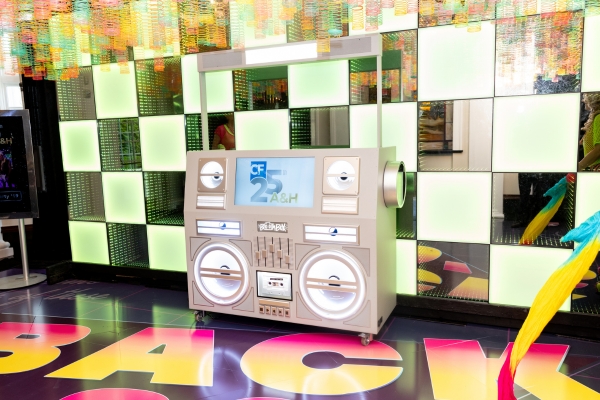
This is where we separate from print shops.
Anyone can print an 8×8 banner. Not everyone can transform an entire room.
Wall-to-Wall Fabrication
Custom backdrop sizes allow for:
- Full room transformations
- LED wall integration
- Architectural scenic builds
Instead of a single flat surface, custom fabrication can wrap walls, frame entrances, build depth, and create immersive environments. This isn’t just branding — it’s atmosphere.
Stage & Production Integration
A backdrop doesn’t exist in isolation. It interacts with:
- Lighting design
- AV placement
- Rigging and safety requirements
Stage backdrops must scale proportionally to the platform and screen sizes. Lighting angles must be considered to avoid glare. Structural integrity matters when hanging large formats or integrating LED panels.
This is event production, not just printing.
When to Go Custom Instead of Standard
Go custom when:
- The event is brand-heavy
- Media coverage is expected
- You want full scenic design impact
- The space demands architectural creativity
If the backdrop is a focal point of the event, custom is usually the smarter move.
Factors That Influence Backdrop Size Selection
Choosing the right backdrop size isn’t guesswork. It’s a combination of logistics and design.
Venue Space
Start with measurements.
- Ceiling height
- Wall width
- Rigging restrictions
An oversized backdrop in a low-ceiling venue feels cramped. A small backdrop in a ballroom feels lost. The venue sets the boundaries.
Guest Count
How many people do you want in one frame?
If it’s more than 5–6 guests, 8×8 may feel tight. Larger groups require wider formats to avoid awkward squeezing.
Camera Framing
Horizontal orientation works best for group shots.
Vertical framing works for head-to-toe portraits.
Think about how your event will be photographed before choosing dimensions.
Budget
Larger backdrops require more material, larger support systems, and more labor. As scale increases, so does cost.
The key is aligning impact with investment.
Storage & Setup Logistics
Standard 8×8 systems are portable and quick to install.
Larger formats require:
- More crew
- Larger vehicles
- Structured breakdown timelines
Planning for installation and removal is part of smart sizing.
Backdrop Orientation: Portrait vs Landscape
Orientation affects how the backdrop interacts with guests and cameras.
When vertical works:
Full-body portraits, formal headshots, controlled posing.
When horizontal is better:
Group photos, red carpets, sponsor walls.
Event backdrops are typically 8 feet tall because that height supports both orientations without cropping heads or logos.
The biggest mistake is deciding orientation too late. Plan early so design, logo layout, and lighting align correctly.
Backdrop Size Comparison: Standard vs Custom
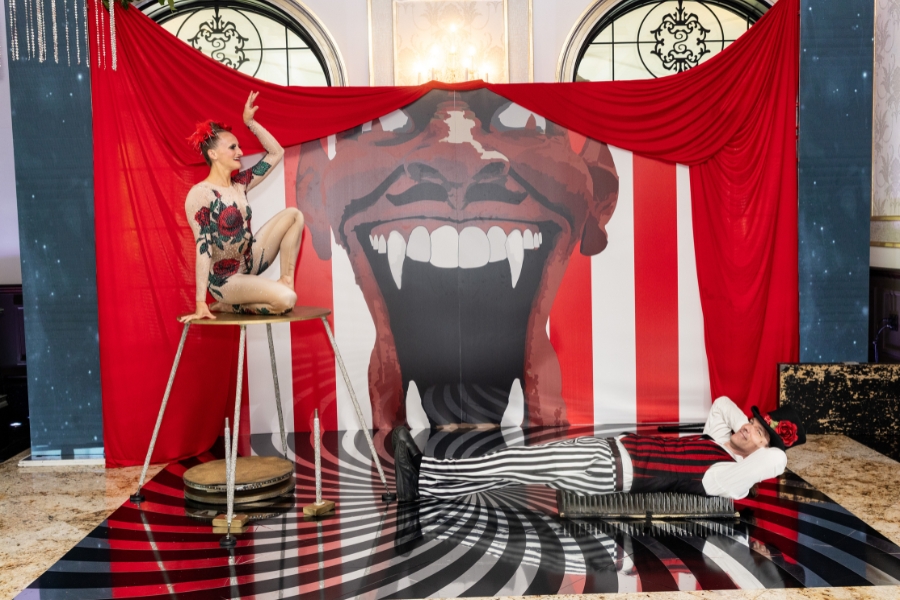
Here’s a simple breakdown:
- Standard:
- 8×8 ft
- Portable
- Ideal for photo booths and logo walls
- Large Format:
- 8×12–8×20 ft
- Better for red carpets, stages, sponsor-heavy events
- Custom Fabrication:
- Wall-to-wall builds
- Immersive scenic design
- LED integration and architectural structures
At One Of A Kind Events, we’re not just printing vinyl. We design events, fabricate, install, and integrate backdrops into full production environments.
That’s the difference between a banner and a built experience.
Frequently Asked Questions About Backdrop Size
What is the most common backdrop size for events?
The most common backdrop size for events is 8×8 ft. It’s the industry standard because it fits comfortably in most venues, works for 3–5 guests, and provides strong logo visibility without overwhelming the space.
How wide should a backdrop be for 10 guests?
For 10 guests in one photo, you should look at 8×12 ft or larger. This prevents people from crowding together and keeps branding readable across the entire frame.
Can you build custom-sized backdrops?
Yes. Custom backdrop sizes can be fabricated to match exact venue dimensions, stage widths, or full-room concepts. This is common for galas, product launches, and immersive brand experiences.
What size backdrop works best for corporate logos?
An 8×8 ft backdrop works perfectly for most corporate logo walls and step-and-repeat setups. If you have multiple sponsors or expect larger group photos, upgrading to 8×12 or 8×16 provides better spacing.
How tall should a stage backdrop be?
Most stage backdrops are at least 8 feet tall, but larger stages may require additional height or layered scenic elements to maintain visual proportion. The backdrop should scale to the stage, not compete with it.
What backdrop size is best for a red carpet?
For red carpet setups, 8×12 ft is usually the minimum. Larger events with media coverage or high guest volume often use 8×16 or 8×20 to allow smoother traffic flow and cleaner photography.
Does backdrop size affect lighting?
Yes. Smaller backdrops limit where lighting can be positioned and increase the chance of shadows. Larger backdrops provide more flexibility for proper light placement and better photo quality.
Can one backdrop size work for every event?
Not always. While 8×8 works for many situations, larger events, bigger guest counts, or stage-based setups often require expanded dimensions. Matching the backdrop size to the event type is key.
Should I size up if I’m unsure?
In most cases, yes. Slightly larger is usually safer than too small. Extra width provides flexibility for cropping, guest movement, and unexpected photo moments.
Conclusion
Backdrop size affects more than just the background — it shapes how your event looks in photos, how your branding appears on camera, and how the entire space feels in person. The right dimensions create balance, clarity, and visual impact across stages, red carpets, and photo moments.
But sizing is only one piece of the puzzle. When backdrop selection is integrated into a full event design strategy, everything works together — lighting, staging, branding, and layout. If you’re unsure what size fits your venue or vision, collaborating with an experienced event design team ensures the backdrop enhances the environment instead of just filling space.