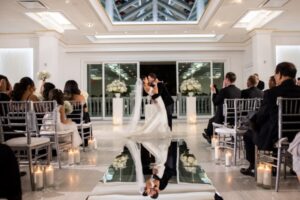
Modern weddings can feel overwhelming to plan, and one of the biggest questions couples ask is the correct order of dances at wedding receptions. The truth is, your DJ, planner, and venue all help shape the flow—but having a clear structure makes the night feel smooth, intentional, and stress-free. Below is a simple, step-by-step guide to the traditional, modern, and cultural dance order so you know exactly what to expect.
The Standard Order of Dances at a Wedding (Quick Overview)
This is the most common sequence, perfect for a featured snippet:
- Grand Entrance
- First Dance
- Parent Dances
- Wedding Party Dance
- Cultural or Special Dances
- Dinner Transitions + Speeches (optional)
- Anniversary Dance
- Open Dancing
- Bouquet Toss / Garter Toss
- Money Dance (optional)
- Last Dance
The Grand Entrance Sets the Tone
How Couples & Wedding Party Enter
The wedding DJ shapes the grand entrance with:
- Announcements of the full wedding party
- Music that matches your desired energy level
- Direction on whether the wedding party circles the dance floor or heads to their seats
When the First Dance Happens if Not Done Immediately
Couples often move the first dance later in the night, such as:
- After the entrée when guests are settled
- After speeches to transition into open dancing
- After a short dance set for couples who want to warm up first
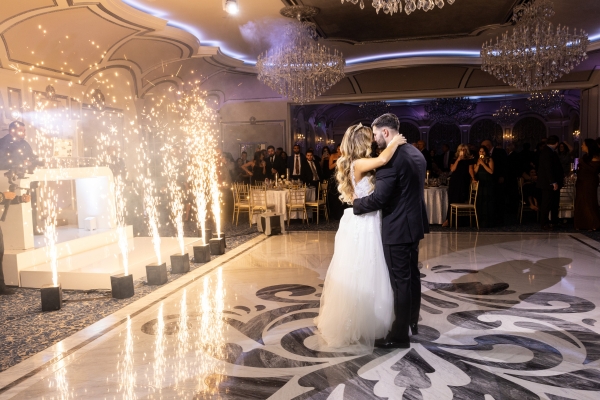
The First Dance (Where the Night Officially Begins)
Traditional Timing
Most couples do their first dance immediately after the grand entrance because it:
- Creates a cinematic, emotional opening moment
- Helps maintain high energy in the room
- Flows naturally into parent dances or welcomes
Modern Timing Options
More relaxed couples may prefer to shift the first dance to:
- After dinner
- Following the welcome toast
- Later in the evening to ease nerves or incorporate choreography
How DJs Set the Mood for the Room
A good DJ elevates the moment through:
- Lighting cues that spotlight the couple
- Placement on the dance floor for ideal visibility
- Smooth transitions into the next reception activity
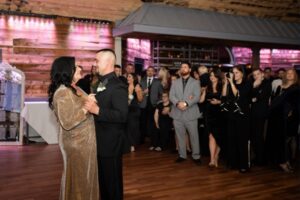
Parent Dances (Father–Daughter, Mother–Son, Step-Parents, Etc.)
Traditional Order
- Father–daughter
- Mother–son
- Optional dances with stepparents, grandparents, or siblings
Modern, Flexible Approaches
- Combined parent medley
- Back-to-back shortened versions
- Scheduling parent dances later in the evening to kick off a second dance set
Tips for Making Parent Dances Flow Smoothly
- Choose the right song length to avoid overly long moments
- Consider emotional pacing so the room stays engaged
- Use DJ fade-outs or shortened edits for smoother transitions
Cultural + Special Dances (Where Your Traditions Shine)
Jewish Weddings — The Hora
- Often placed right after the first dance or parent dances
- High-energy opener that gets everyone on the dance floor
Wedding Party Dance (Optional but Fun)
When It Typically Happens
- After parent dances
- After dinner
- When couples want to kickstart the dance floor with familiar faces
Why Some Couples Skip It
- To avoid dragging out the timeline
- To open the dance floor to everyone immediately
Anniversary Dance (A Sweet Tradition Guests Love)
How It Works
- DJ invites all married couples to the dance floor
- Couples gradually step off until the longest-married pair remains
Where It Fits in the Timeline
- After dinner
- Before a slow dance set
Open Dancing (Party Time Begins!)
How DJs Build the First Dance Set
- Curating a strong opening mix to fill the dance floor quickly
- Balancing fast and slow songs for all ages
- Reading the room and adjusting in real time
Energy Flow Throughout the Night
- Resetting momentum after meal courses or speeches
- Managing song requests without breaking the vibe
- Maintaining consistent energy through transitions and genre shifts
Cake Cutting + Toss Moments (Optional Modern Traditions)
Understanding how these fit into the order of dances at wedding receptions helps keep your timeline smooth and crowd-friendly.
When to Cut the Cake
- After dinner
- Before the final dance block
Bouquet + Garter Toss Placement
- Combined with the cake cutting for easy transitions
- Placed later in the night if you’re aiming at a younger crowd
Alternatives to Tossing Traditions
- Anniversary gift toss
- Breakaway bouquet
- Fun trivia giveaways for guests
The Final Dance (The Perfect Ending to the Night)
Slow + Emotional Closers
- Romantic choices for a sentimental send-off
Hype-Energy Final Songs
- Big, upbeat crowd moments to wrap the night with excitement
Coordinating Last Dance + Grand Exit
- Sparkler exits
- Cold spark fountains
- One final slow song reserved for the couple only
Tips From Professional Wedding DJs
How to Shorten Dances Without Awkwardness
- Use clean fade-outs or pre-edited cuts
- Trim verses while keeping the emotional core of the song
What to Do If You Don’t Want Certain Dances
- Replace them with a joint family dance
- Skip them entirely without disrupting the flow
How to Replace Old Traditions You Don’t Love
- Swap bouquet toss for a fun group photo moment
- Replace garter toss with a trivia giveaway or anniversary dance
Mistakes Couples Make With Dance Timing
- Placing all formalities late in the night
- Making speeches interrupt dance momentum
- Forgetting to coordinate with caterers, photographers, and DJ
Final Thoughts: Your Wedding Dance Order Should Feel Like You
A perfect reception doesn’t follow a strict formula—it follows your personality, comfort level, and vision. There’s no single “correct” order of dances at wedding receptions. What truly matters is keeping the night flowing, the room engaged, and the energy exactly where you want it.
Want a reception that feels seamless, smooth, and stress-free? Our wedding DJs and MCs create the perfect dance timeline for every couple. Contact One of a Kind Events today