Questions to ask before renting a stage can save you from the kind of event problems people usually notice too late. Most people don’t realize how much a stage affects an event until something goes wrong. Poor sightlines, cramped performers, unsafe access, awkward room flow, or a stage that looks completely disconnected from the production can impact the entire guest experience.
Before booking a platform from just any rental company, it’s important to ask the right questions about sizing, setup, safety, production integration, and event flow. If you’re planning a wedding, gala, conference, concert, or private event, asking these questions early can save major headaches later.
If you’re currently comparing options for stage rentals in New Jersey, this guide will help you understand what actually matters before signing a contract.
Why Asking the Right Stage Rental Questions Matters
The stage controls more than people think
A stage is not just where people stand. It becomes the visual focal point of the room, especially during speeches, performances, award presentations, first dances, introductions, and entertainment moments.
It also affects how your event looks in photos and video. If the stage is too low, too small, too dark, or badly placed, the whole production can feel less polished than it should.
The right stage gives performers room to move, helps guests see what is happening, and makes the event feel intentional. The wrong stage can make even a beautiful venue feel awkward.
Not all stage rental companies operate the same way
Some stage rental companies simply drop off platforms and leave the rest to you. That may work for a basic setup, but it is not always enough for weddings, galas, conferences, or events with lighting, sound, branding, or live entertainment.
A production focused team looks at the full picture. They think through room layout, load in, performer needs, safety, sightlines, cable management, stage height, and how the stage connects to everything around it.
That experience matters. Live events move quickly, and the crew installing the stage should understand how DJs, bands, speakers, planners, venues, and production teams actually work together.
A bad stage setup creates problems fast
Stage issues usually show up at the worst time. A stage that is too small can leave performers cramped. A stage that is too large can eat into the dance floor. Poor cable routing can create trip hazards. A low stage can make it hard for guests in the back to see.
Other problems are more subtle but still matter. No backstage space, awkward stairs, poor sightlines, or a setup that looks temporary can make the event feel less professional.
Sizing mistakes are especially common because people often choose based on guest count alone. For a deeper breakdown of dimensions, layouts, and event type recommendations, see our Stage Sizing Guide for 2026.
Questions About Stage Size and Layout
1. What stage size do you actually recommend for my event?
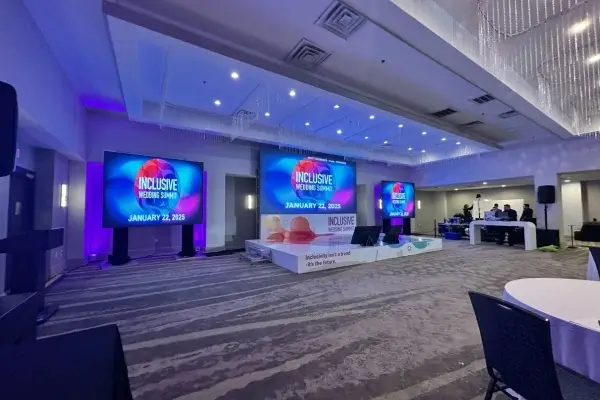
This should be one of the first questions you ask. Do not choose a stage size based only on what sounds good or what fits the budget.
A good stage rental partner should ask what the stage is being used for. A DJ setup, wedding band, keynote speaker, award presentation, and live performance all need different layouts.
Guest count matters, but it is not the only factor. The venue shape, room depth, table layout, dance floor placement, performer count, and equipment footprint can matter just as much.
2. How many performers can realistically fit on the stage?
There is a big difference between technically fitting people on a stage and giving them enough room to perform comfortably.
A DJ may need space for a facade, controller, laptop stands, speakers, and lighting. A band may need drums, keyboards, amps, vocalists, monitors, and clear walking space. Dancers need even more open room to move safely.
Ask your stage provider what can realistically fit without crowding the setup. If performers look cramped, the whole event can feel cramped.
3. How much space is needed for equipment?
Equipment is where stage planning often goes wrong. People remember the performers, but forget about the gear that comes with them.
Drum kits, DJ facades, keyboard rigs, monitor speakers, LED walls, truss, cables, microphones, podiums, and branded backdrops all take up space. Some of that space needs to stay clear for movement and safety.
A stage may look large enough on paper, but once the equipment is placed, the usable space can shrink fast. Always ask how much room the full setup actually needs.
4. Will the stage block the dance floor or guest visibility?
This is especially important for weddings, galas, and ballroom events. The stage should create a focal point, not disrupt the room.
If it is too large or placed poorly, it can crowd the dance floor, block tables, interfere with guest flow, or make certain seats feel disconnected from the main event.
Ask how the stage will work with the full floor plan. The best setups support the entertainment while still keeping the room open, comfortable, and easy to navigate.
5. What stage height makes sense for the room?
Stage height affects visibility, energy, and how dominant the stage feels in the space.
For seated audiences, you may not need as much height if sightlines are clear. For standing crowds or deeper rooms, the stage may need to be higher so guests in the back can see. Wide rooms may need more stage width, while long rooms often need better elevation.
The goal is balance. The stage should be high enough to create presence, but not so tall that it overwhelms a smaller room or feels disconnected from the guests.
6. Do we need stairs, rails, or ADA access?
Access should be discussed before the event, not during setup.
Speakers, musicians, DJs, performers, and staff all need a safe way on and off the stage. Depending on the height, stairs or rails may be necessary. For certain events, ADA access may also need to be considered.
This matters for both safety and flow. If people are stepping awkwardly onto the stage, carrying instruments, or moving during a live program, proper access becomes essential.
Questions About Safety and Installation
7. Who installs and levels the stage?
You should know exactly who is responsible for installation. A stage is only as good as the crew building it.
Ask whether the company uses an in-house team or third-party labor. An experienced crew will understand leveling, venue rules, floor protection, access points, and how to build safely around other vendors.
This is even more important for outdoor events. Grass, pavement, tents, rooftops, and uneven surfaces can all affect how the stage needs to be installed.
8. Is your team insured and experienced with event staging?
Insurance matters because staging involves people, equipment, venues, and liability. You want a company that treats the install professionally from load-in to breakdown.
Experience matters just as much. Event staging is not only about assembling platforms. The crew needs to understand traffic flow, vendor coordination, guest safety, performer needs, and timing.
A professional team should be able to explain how they manage the setup, protect the venue, and keep the stage safe for everyone using it.
9. How do you manage cables and trip hazards?
Cable management can make or break the safety and appearance of a stage setup.
Ask how cables will be routed, covered, and kept away from walkways. This is important for bands, DJs, speakers, guests, photographers, planners, and venue staff.
Clean cable runs also make the stage look more professional. Loose cords, messy connections, and exposed runs can make even an expensive setup look rushed.
10. Can the stage safely support our performers and equipment?
Every stage should be planned around what is actually going on it.
That includes performers, band backline, drums, amps, LED walls, podiums, branded décor, props, and any other production elements. Weight, movement, and equipment placement all matter.
Do not assume every stage can support every setup. A reliable stage rental partner should help confirm that the size, structure, and layout are appropriate for the event.
11. What happens if the event is outdoors?
Questions to ask before renting a stage become even more important when the event is outdoors. Outdoor staging has more variables than an indoor ballroom, and those details need to be discussed before event day.
Start with the surface. Is the stage going on grass, pavement, gravel, sand, or a temporary floor? A flat surface is always best, but some outdoor setups may need a subfloor or additional planning to keep the stage level and stable.
Weather also matters. Rain, wind, heat, and soft ground can all affect the setup. Outdoor sightlines are different too because crowds are usually more spread out, which may mean the stage needs more height, width, or visual support to feel strong from a distance.
Questions About Production and Design
12. Can the stage integrate with lighting, sound, and video?

A stage should work with the rest of the production, not compete with it. If you are using LED video walls, uplighting, moving heads, truss, speakers, or monitor wedges, the stage needs to be planned around those pieces.
Ask how lighting will be positioned, where speakers will go, and whether performers will have enough monitor coverage. These details affect both the look and function of the event.
This is where a production-minded stage partner makes a difference. They are not just thinking about the platform. They are thinking about how the entire setup works together.
13. Can the stage be customized with branding or logos?
For corporate events, galas, product launches, sponsor showcases, and brand activations, the stage often needs to do more than hold people. It needs to support the brand.
Customization may include branded fascia, vinyl stage fronts, logo placement, custom colors, sponsor graphics, or coordinated LED content. Even small branding details can make the setup feel more intentional and camera-ready.
Ask what customization options are available and how they will look from the audience’s point of view. The goal is clean branding, not clutter.
14. What finishes are available?
Stage finish changes the entire feel of the setup. A basic carpeted stage may work well for a simple speaker presentation, while vinyl, acrylic, mirrored, or high-gloss finishes can feel more elevated for weddings, galas, and luxury events.
The right finish should match the room design. A black stage may feel sleek and performance-driven. A white or acrylic finish may feel cleaner and more modern. A custom vinyl front can help tie the stage into the event branding.
Ask to see finish options before choosing. The surface, front edge, skirting, and surrounding design all affect how polished the stage feels.
15. Can you show examples of similar stage builds?
Always ask for real event examples. Renderings are helpful, but actual photos show what the company can really build.
Look for stages that match your type of event. Corporate stages, wedding DJ stages, gala platforms, LED wall stages, branded stages, and live performance setups all have different needs.
Seeing past work also helps you explain what you like. If you need inspiration, review our Examples of Stage Design to see how different stage builds can change the entire feel of a room.
16. Will the stage look good on camera?
Events live beyond the actual day through photos, video, social media, recap reels, and branded content. That means the stage should be designed with the camera in mind.
Ask about backdrop choices, lighting angles, stage height, and the front-facing presentation. A messy stage front, harsh lighting, or poorly placed screen can show up quickly in photos.
A camera-ready stage does not have to be complicated. It just needs clean lines, intentional lighting, and a layout that looks polished from the main viewing angles.
Questions About Event Type and Use Case
17. Have you staged this type of event before?
A wedding stage is not the same as a corporate stage. A conference stage is not the same as a concert stage. Before booking, ask whether the company has handled your type of event before.
Weddings, galas, brand activations, school events, concerts, and corporate events all come with different timing, access, production, and layout needs.
Experience matters because the right team will already know what problems to look for. They can guide you before small details turn into event-day issues.
18. What stage setup works best for a wedding?
For weddings, the stage has to support the entertainment without taking over the room. A DJ setup may only need a smaller riser, while a full wedding band needs more width, depth, and clean spacing.
Dance floor placement matters too. The stage should energize the dance floor, not shrink it. You also need to think about sweetheart table visibility, grand entrances, first dances, cold sparks, dancing on the clouds, and other production moments happening nearby. Check out our dance floor rentals page for more information.
The best wedding stages feel connected to the celebration. They give the entertainment presence while keeping the guest experience comfortable.
19. What stage setup works best for a corporate event?
Corporate stages need to look clean, branded, and professional. Common setups include podiums, panel seating, LED screens, projection, branded backdrops, and walk space for presenters.
The stage should support the message. If there are speakers, they need room to move. If there are panels, the seating should feel balanced. If cameras are involved, the stage needs to look sharp from multiple angles.
Branding should be visible without overwhelming the presentation. A strong corporate stage feels polished, focused, and easy for the audience to follow.
20. What stage setup works best for a live band or performance?
Live bands and performers need more than a platform. They need space to move, hear themselves, and perform safely.
Ask about backline, monitor placement, vocalist spacing, drums, keys, amps, and cable paths. Drums and keyboard rigs usually need more depth than people expect, while vocalists and guitarists need clean front-line space.
If you need dimensions by band size or event type, compare common layouts in the Stage Sizing Guide for 2026 before finalizing your setup.
Questions About Logistics and Timeline
21. When should I book my stage rental?
A good planning window is usually 4–6 weeks before the event, especially during peak wedding, gala, and corporate seasons.
Booking early gives you more flexibility with stage size, finish, customization, production add-ons, and delivery scheduling. It also gives the stage team enough time to review the venue and coordinate with other vendors.
Last-minute rentals may still be possible depending on inventory and schedule, but they leave less room for customization and problem-solving.
22. What information do you need to quote accurately?
A stage quote is only as accurate as the information provided. Be ready to share your venue, event date, indoor or outdoor setup, guest count, performer type, desired stage size, stage height, and any add-ons.
You should also mention load-in restrictions, elevator access, stairs, loading docks, venue rules, and timing windows. These details can affect labor, setup time, and the final plan.
The more complete the information, the easier it is to avoid surprise costs or layout changes later.
23. What is included in the rental price?
Do not assume every quote includes the same things. Ask what is included before comparing prices.
Important items may include delivery, setup, breakdown, stage finish, stairs, rails, skirting, customization, leveling, and production support. Some add-ons, like LED walls, truss, lighting, branding, or special finishes, may be priced separately.
A cheaper quote is not always a better quote if it leaves out key pieces you actually need.
24. How long does setup and breakdown take?
Setup time depends on the size and complexity of the stage. A small DJ riser may be quick, while a larger branded stage with lighting, LED, stairs, and custom finishes will need more time.
Venue access also matters. Tight load-in windows, shared elevators, loading dock rules, and other vendors working at the same time can all affect the schedule.
Ask how much time the crew needs and where staging falls in the load-in order. This helps planners, venues, DJs, bands, florists, and AV teams stay coordinated.
25. Who coordinates with the venue and other vendors?
Stage setup rarely happens in isolation. It often touches venue rules, loading dock access, power placement, AV teams, planners, DJs, bands, décor teams, and production crews.
Ask who is responsible for coordination. A professional stage partner should understand how to work with the venue and other vendors so the process does not fall completely on the client.
Good coordination keeps the setup cleaner, safer, and less stressful. It also helps prevent last-minute conflicts over space, timing, power, and access.
Quick Stage Rental Question Checklist
Before you book, use this quick checklist to make sure the basics are covered:
- What size stage do I need?
- What height should the stage be?
- Is delivery, setup, and breakdown included?
- Is the crew insured and experienced with event staging?
- Can the stage safely support my performers, equipment, and production elements?
- Are stairs, rails, or ADA access needed?
- Can lighting, sound, LED walls, truss, or monitors be integrated?
- Can branding, logos, custom fascia, or vinyl stage fronts be added?
- Will the stage look clean in photos, video, and social media content?
- What happens if the event is outdoors?
- How early should I book?
- What exactly is included in the quote?
If a company cannot answer these clearly, that is usually a sign to slow down before booking.
Choose a Stage Rental Partner That Understands the Whole Event
A stage should never feel like an afterthought. It should support the people on it, fit the room around it, and make the entire event feel more polished, intentional, and professional.
When you ask better questions before booking, you get a better result on event day. The right stage rental partner will help you think through size, height, layout, safety, branding, lighting, and production details before anything is installed.
For weddings, corporate events, galas, conferences, and live performances, One Of A Kind Events provides custom stage rentals in New Jersey with in-house delivery, setup, breakdown, design support, and full production planning. Contact us today to get started.