
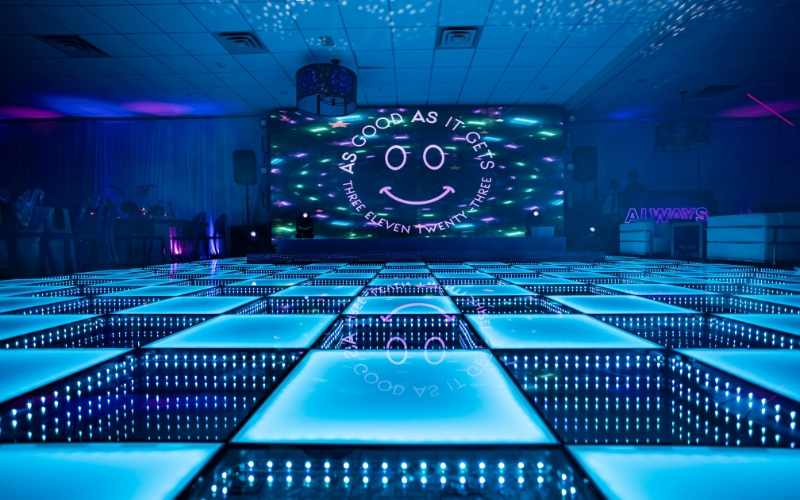
Renting a dance floor is about more than choosing a color and deciding how large it should be. The floor needs to fit the venue, support the expected number of guests, complement the event design, and be installed safely.
Asking the right questions early can help you avoid unexpected costs, scheduling problems, sizing mistakes, and design limitations. It also gives the rental company the information needed to recommend the right floor instead of simply providing the first available option.
Working with an experienced provider can make the process much easier. A professional team can help evaluate the venue, guest count, event style, installation surface, and production schedule before recommending a solution. Explore our dance floor rentals in New Jersey to see the available styles and customization options.
Questions About the Dance Floor Itself
1. What Types of Dance Floors Do You Offer?
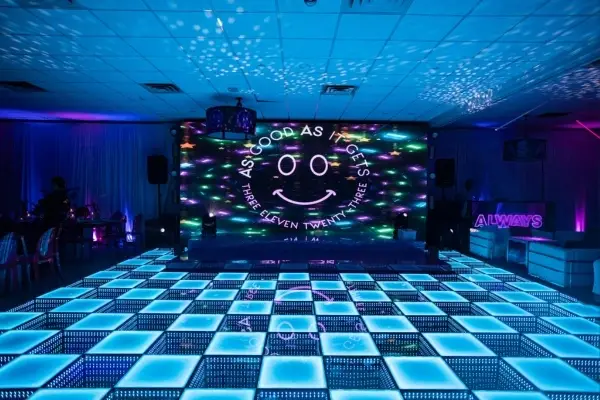
Start by asking what types of floors are available. Different materials and designs create very different experiences.
Common options include:
- Vinyl dance floors: Smooth, polished floors that can be produced in different colors, patterns, and custom designs.
- LED dance floors: Illuminated floors that add movement, color, and energy to the event.
- Static dance floors: Durable, classic surfaces designed to complement the venue without built-in lighting effects.
One of a Kind Events offers Frosted, Infinity, and Checkered LED dance floors, along with customizable vinyl floors and static options in multiple colors.
2. Which Dance Floor is Best for My Event?
The best dance floor depends on the event, venue, design, and atmosphere you want to create.
A vinyl floor may work well for a wedding, gala, or branded corporate event because it can be customized with names, logos, monograms, or graphics. An LED floor may be better for a high-energy celebration, nightlife-inspired event, or modern production. A static floor is a dependable choice when you want a clean, classic look.
The rental company should ask about your event before making a recommendation. There is no single floor that works best for every venue or occasion.
3. What Sizes Are Available?
Dance floors should be sized based on the expected number of dancers, not simply the total guest count.
Not every guest will be dancing at the same time, but a floor that is too small can feel crowded. A floor that is too large may make the event feel empty and take up space needed for tables, staging, or guest circulation.
General sizing examples may include:
- 50 guests: approximately 12 feet by 12 feet
- 100 guests: approximately 16 feet by 16 feet
- 150 guests: approximately 20 feet by 20 feet
- 200 guests: approximately 24 feet by 24 feet
These are starting points, not strict rules. The final size should account for the venue layout, event type, guest behavior, entertainment, and surrounding production elements. Read our entire guide on dance floor sizes.
4. Can the Dance Floor Be Customized?

Ask what level of customization is available and which floor types can support it.
Vinyl dance floors can often be customized with:
- Names
- Monograms
- Company logos
- Brand colors
- Patterns
- Event graphics
- Custom artwork
Customization can make the dance floor feel like part of the overall event design rather than a separate rental item. However, custom work may require additional production time, approved artwork, and specific file formats.
Ask when the final design must be submitted and whether you will receive a proof before production begins.
5. What Colors and Finishes Do You Offer?
The dance floor should work with the room instead of competing with it.
Ask about available colors, finishes, patterns, lighting effects, and surface styles. A glossy white vinyl floor can create a clean, modern look, while a darker static floor may blend more naturally into an elegant venue. Frosted LED floors create a softer glow, while Infinity and Checkered LED floors make a stronger visual statement.
Share your décor plans, lighting colors, furniture selections, and inspiration images with the rental company. This helps the team recommend a floor that supports the complete event design.
Questions About Installation and Logistics
6. Who Installs the Dance Floor?
Professional dance floors should be installed by a trained team that understands the product, venue surface, layout, and safety requirements.
Avoid assuming that delivery includes installation. Some companies may only drop off rental materials, while others handle the full process.
Ask whether the same company will manage:
- Delivery
- Installation
- Testing
- Final inspection
- Breakdown
- Removal
One of a Kind Events installs and manages its dance floors in-house, which allows the team to oversee the process from initial planning through post-event removal.
7. How Long Does Setup Take?
Installation time depends on the floor type, size, customization, venue access, and surface conditions.
Vinyl and static floors may take approximately one to two hours to install. LED floors may require two to four hours because the team must assemble the panels, connect power, test lighting effects, and confirm that the surface is level and secure.
Larger or more complex installations may take longer. Custom staging, lighting, video walls, or other production elements can also affect the schedule.
Ask for an estimated setup window and confirm when the venue will be available for vendor access.
8. Will the Floor Damage My Venue?
A properly installed rental floor should be designed to protect the venue surface.
However, the installation method may vary depending on whether the floor is being placed over hardwood, carpet, tile, concrete, or another material. Vinyl floors may require a suitable base beneath them, while modular floors need to be assembled evenly and securely.
Ask the rental provider:
- How the floor will be installed
- What materials will touch the venue surface
- Whether adhesive will be used
- How the team prevents scratches or residue
- Whether the venue has any installation restrictions
It is also smart to confirm the plan with the venue before the event.
9. Can It Be Installed Outdoors?
Dance floors can be installed outdoors, but the setup requires additional planning.
The surface should generally be flat, solid, dry, and stable. Concrete, patios, decks, and properly built platforms may work well. Grass, sand, gravel, and uneven ground usually require additional preparation.
Weather is another major factor. Rain, moisture, wind, heat, and temperature changes can affect the safety and performance of the floor, particularly when electrical components are involved.
Ask whether the provider requires a tent, covered area, weather backup plan, or alternative indoor location.
10. Do I Need a Subfloor?
A subfloor creates a stable, level base beneath the finished dance floor.
You may need one when the existing surface is:
- Grass
- Gravel
- Uneven pavement
- Soft ground
- Sloped
- Heavily carpeted
- Otherwise unsuitable for direct installation
A subfloor may also be necessary when the venue floor needs additional protection or when the dance floor must align with nearby staging.
The rental provider should inspect the installation area or review detailed photographs and measurements before confirming whether a subfloor is needed.
11. How Early Do You Arrive?
Ask when the installation team plans to arrive and how that timing fits with the venue schedule.
The team may need access several hours before guests arrive, especially for large, customized, or LED floors. Installation may also need to be coordinated with catering, décor, staging, lighting, entertainment, and audiovisual teams.
Provide the rental company with:
- Venue access time
- Event start time
- Guest arrival time
- Loading instructions
- Elevator or loading dock information
- Other vendor schedules
- Venue deadlines
Clear scheduling helps prevent crews from working over one another or delaying the event setup.
12. Who Removes Everything Afterward?
Confirm who is responsible for breakdown, cleaning, and removal after the event.
A full-service rental should typically include professional removal by the installation team. Ask when breakdown will begin, how long it will take, and whether the venue has a strict deadline for all equipment to be removed.
You should also ask whether there are restrictions involving glitter, confetti, adhesives, drinks, or other materials that could create excessive residue or damage.
One of a Kind Events handles the post-event breakdown and removal, allowing clients and venues to focus on the event rather than managing rental equipment afterward.
Questions About Safety and Quality
13. Is the Dance Floor Slip Resistant?
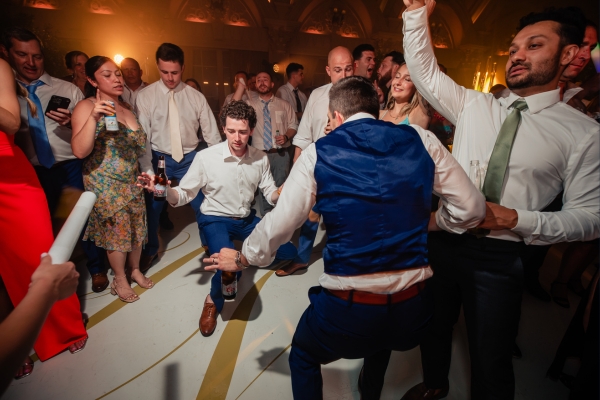
Safety should be one of the first things you ask about.
A professional dance floor should provide enough traction for guests to move comfortably without feeling slick or unstable. This is especially important at weddings, corporate events, and large celebrations where guests may be wearing heels, dress shoes, or formal footwear.
Ask what materials are used and whether the surface is designed for dancing. You should also confirm how spills are handled during the event and whether the floor requires any special maintenance once guests arrive.
14. Can It Handle Large Crowds?
Not every dance floor is designed for the same amount of activity.
Ask whether the floor can safely support the expected number of guests, especially if you are planning a large wedding, gala, corporate event, or high-energy celebration. The provider should consider the floor size, material, installation surface, and anticipated foot traffic.
A properly selected and installed floor should feel solid even when it is crowded. It should not flex excessively, shift, or create gaps between sections.
15. Is the Floor Level and Stable?
A dance floor should feel even and secure from edge to edge.
Uneven sections, loose panels, raised corners, or unstable transitions can create safety concerns and make the floor uncomfortable to use. This is why the condition of the existing venue surface matters so much.
Ask how the installation team checks the floor before the event begins. A professional team should inspect the completed setup, confirm that each section is secure, and address any uneven areas before guests enter the space.
16. How is the Floor Cleaned Between Events?
Dance floors should be thoroughly cleaned and inspected before every rental.
Ask how the provider handles cleaning, sanitizing, surface maintenance, and quality checks. The process may differ depending on whether the floor is vinyl, static, or LED.
The team should also inspect for damage, loose components, worn surfaces, and residue from previous events. A clean floor looks better in person and in photographs, while proper maintenance helps preserve safety and performance.
Questions About Design and Customization
17. Can You Add Our Monogram?
A custom monogram can turn the dance floor into a focal point of the room.
Ask whether the provider can add names, initials, a wedding date, or a custom monogram to the floor. Monograms are especially popular for weddings, anniversaries, galas, and milestone celebrations.
You should also ask about design deadlines, font choices, color options, and proof approval. Finalizing these details early gives the production team enough time to prepare the artwork correctly.
18. Can You Print Our Company Logo?
Custom logo floors can help reinforce branding at corporate events, product launches, fundraisers, and conferences.
Ask whether the logo can be printed in full color, whether brand guidelines can be followed, and what artwork files are required. Vector files are often preferred because they can be enlarged without losing quality.
It is also important to confirm how the logo will be positioned. The placement should remain visible without being blocked by staging, furniture, performers, or other production elements.
19. Can the Dance Floor Match Our Event Theme?
The dance floor should feel connected to the rest of the event design.
Ask whether the provider can match your color palette, décor, branding, venue style, or creative theme. A modern black-and-white design may work well for one event, while another may call for soft neutrals, bold graphics, or an illuminated LED floor.
Share mood boards, invitation designs, floral plans, stage concepts, and room renderings when available. The more context the provider has, the easier it is to recommend a floor that fits the entire experience.
20. Can Lighting Be Coordinated With the Dance Floor?
Yes, and it can make a major difference.
Lighting and dance floor design work best when they are planned together. The right lighting can enhance the floor’s color, texture, movement, and visual impact. Poorly coordinated lighting can wash out a custom design or compete with an LED floor.
Ask whether the provider can coordinate the dance floor with uplighting, moving lights, stage lighting, and room effects. LED dance floors can be especially effective when they are integrated into the larger lighting production rather than treated as a standalone feature.
A cohesive approach helps the room feel intentional and avoids the disconnected look that can happen when multiple vendors are working separately.
Questions About Pricing and Booking
21. What is Included in the Rental Price?
Do not assume every quote includes the same services.
Ask for a clear breakdown of what is included in the rental price. Depending on the provider, the quote may cover:
- The dance floor itself
- Delivery
- Installation
- Custom graphics
- Subflooring
- Electrical requirements
- On-site support
- Breakdown
- Removal
- Cleaning
A detailed quote makes it easier to compare options accurately. A lower starting price may not be the better value if important services are added later.
22. Are Delivery and Setup Included?
Delivery and installation should be confirmed before booking.
Ask whether these services are included in the quoted price or charged separately. Travel distance, loading access, stairs, elevators, union labor requirements, and limited setup windows can all affect the final cost.
You should also ask whether removal is included. A complete rental should clearly explain what happens before, during, and after the event.
23. How Far in Advance Should I Book?
Booking early gives you more options.
For most events, reserving a dance floor at least four to six weeks in advance is a good starting point. Popular dates, custom floors, large installations, and peak wedding or holiday seasons may require more notice.
Custom graphics and venue coordination also take time. Booking earlier allows the provider to confirm measurements, finalize artwork, coordinate access, and plan the production schedule without rushing.
Last-minute rentals may still be possible, but availability and customization options may be limited.
24. Can I Bundle Other Event Production Services?
Bundling production services can simplify planning and create a more cohesive event.
Ask whether the company can provide additional elements such as:
- Custom staging
- Professional lighting
- LED video walls
- Audiovisual production
- Scenic design
- Entertainment
- Branded displays
Working with one experienced production team can reduce communication problems, scheduling conflicts, and design inconsistencies. It also allows the dance floor, stage, lighting, and visual content to be planned as one connected experience.
This is often easier than hiring separate vendors for every part of the room.
25. What Happens If My Plans Change?
Events change, so it is important to understand the provider’s policies.
Ask what happens if you need to change the date, venue, floor size, design, or installation location. You should also discuss weather plans if any part of the event is outdoors.
Key questions include:
- Can the reservation be transferred to another date?
- Can the floor size be adjusted?
- What happens if the venue changes?
- Are custom design fees refundable?
- What is the weather cancellation policy?
- How late can final details be updated?
Clear and early communication gives the provider more flexibility to help. Waiting until the last minute may limit the available options.
Why Asking These Questions Matters
A dance floor affects more than the look of the room. It influences guest movement, safety, setup timing, event flow, and the overall atmosphere.
Asking detailed questions helps you:
- Choose the right floor for the event
- Receive a more accurate quote
- Avoid unexpected fees
- Plan around venue restrictions
- Reduce setup delays
- Improve the guest experience
- Coordinate the floor with lighting, staging, and décor
It also helps you understand whether you are working with a basic rental provider or an experienced event production company.
A production company can evaluate the dance floor as part of the full event environment. Instead of piecing together several vendors, you can coordinate the floor, staging, lighting, video walls, and other elements through one team.
That often leads to better communication, smoother installation, and a more polished result.
Rent a Dance Floor Today
Asking the right questions before renting a dance floor can prevent surprises and lead to a much smoother event.
The best floor should fit the venue, support the expected number of dancers, complement the event design, and be installed safely. Pricing, customization, setup requirements, power needs, and weather plans should all be discussed before the rental is finalized.
Start the conversation early and share as much information as possible about your venue, guest count, timeline, and design goals. An experienced team can then recommend the right floor type, size, finish, and production approach.
Explore our dance floor rentals in New Jersey to compare available options and start planning a floor that fits your event.