Event truss is the aluminum framework used throughout professional event production to position lighting, video, audio, signage, and other equipment around a stage or event space. You have probably seen it above concert stages, surrounding LED walls, or supporting lighting at weddings, conferences, and corporate events.
Truss can be supported from the ground using towers and bases or suspended from approved rigging points inside a venue. The right setup depends on what needs to be supported, the size of the span, where the equipment will be positioned, and what the venue allows.
For events that require a complete production setup, One Of A Kind Events provides stage rentals in New Jersey with staging, truss, lighting, video, and related production elements coordinated together.
This guide covers what event trusses are, the main types used in event production, common applications, different support configurations, and the factors that determine weight capacity and safe use.
What is an Event Truss?
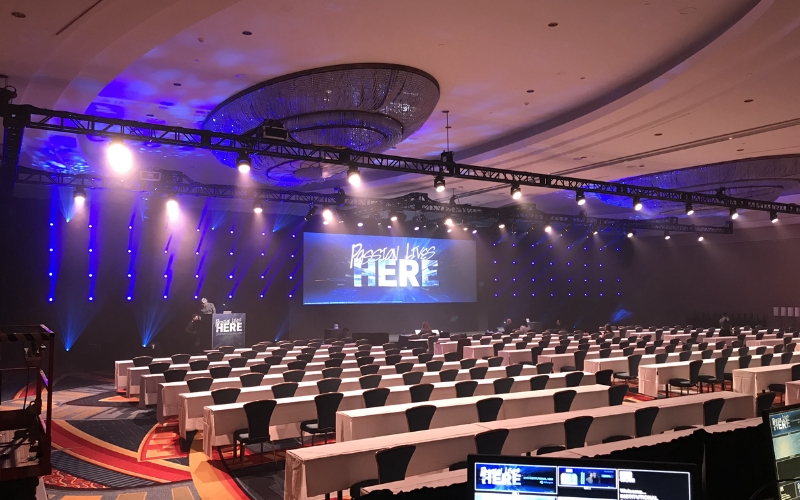
Event truss is a structural framework used to support or position equipment during live events. Most professional event trusses are made from aluminum because it provides the strength needed for production applications without making each section unnecessarily heavy to transport and assemble.
A typical truss section consists of larger tubes called main chords, which run along its length. Smaller diagonal braces connect those chords and help create the rigid structure. Individual sections are then joined together using connectors designed for that particular truss system.
Truss is modular, so production teams can combine straight sections with corners, junctions, towers, and bases to create different layouts.
How Event Truss Works
A truss often spans between two or more support points. Equipment attached to that span adds weight, which the truss transfers toward those supports.
The distance between support points is called the span.
Where the equipment is positioned matters too. One heavy fixture mounted in the center creates a different loading condition than several smaller fixtures spread evenly across the truss.
A concentrated weight is called a point load, while weight spread across a larger portion of the truss is considered a distributed load.
Truss can also bend slightly under load. This is known as deflection. How much deflection occurs depends on factors such as the truss model, span, load, and configuration.
The important distinction is simple: event truss is not just decorative aluminum framing. It is a structural production component.
Different Types of Event Truss

Event truss comes in several configurations. Ladder, triangle, and box truss are three of the most common.
Ladder Truss
The ladder truss has two main chords connected by diagonal braces, giving it a flat profile that resembles a ladder.
It can be used for lighting, displays, and simpler production structures where a larger three dimensional truss is unnecessary. Because of its flat shape, its orientation can be especially important depending on how the system is being used.
Triangle Truss
Triangle truss uses three main chords arranged in a triangular shape.
Its three dimensional construction gives it different structural characteristics from ladder truss while keeping the overall profile relatively compact. It is commonly used in lighting, display, exhibition, and event production applications.
Box Truss
The box truss uses four main chords arranged in a square or rectangular shape.
This is one of the most recognizable types of event truss. It is commonly used for stage lighting, LED walls, towers, overhead grids, and larger production systems.
Its shape also allows sections to be incorporated into many different layouts, making box truss especially common in professional event production.
| Truss Type | Shape | Common Uses |
| Ladder truss | Flat, two chord | Lighting and display setups |
| Triangle truss | Three sided | Lighting and production structures |
| Box truss | Four sided | Lighting grids, LED walls, towers, stages |
The shape alone does not determine how much weight a truss can hold. Two pieces of box truss can have very different capacities depending on their size, construction, span, configuration, and manufacturer specifications.
What is an Event Truss Used For?
Event truss is primarily used when production equipment needs to be elevated, positioned across an open span, or integrated around a stage.
Stage Truss Lighting
Lighting is one of the most common uses for event truss.
A stage truss lighting setup lets production teams position fixtures above, behind, or beside a stage instead of relying entirely on floor mounted lights.
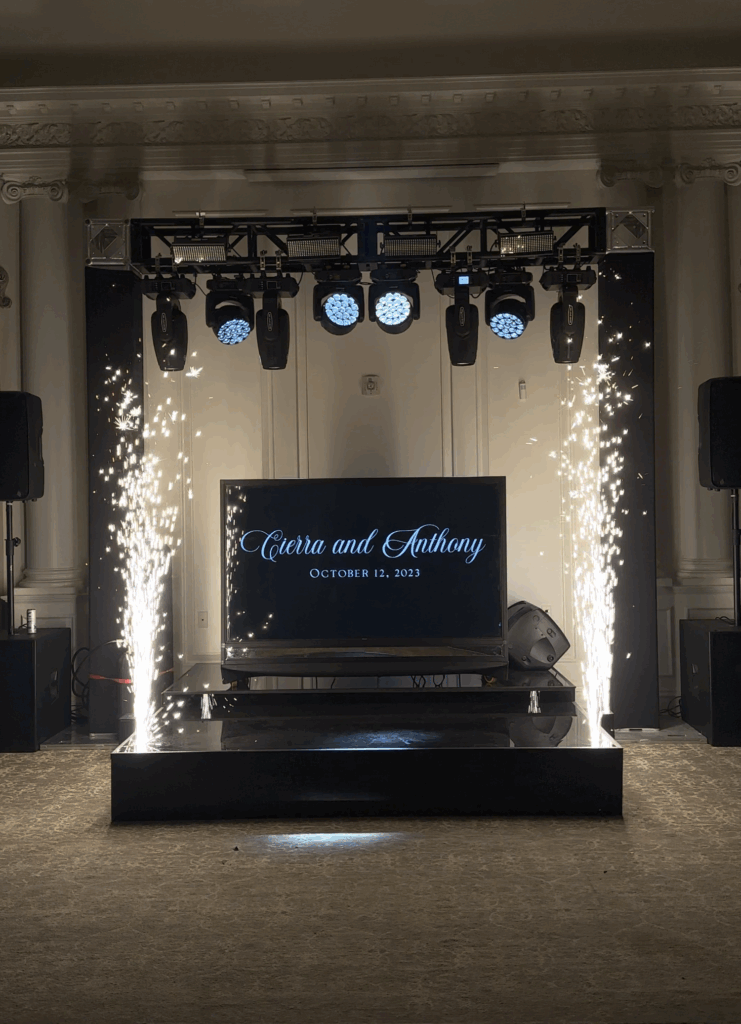
Common fixtures can include:
- Moving head lights
- Wash lights
- Spotlights
- Effect lighting
- Audience lighting
Positioning matters because the height and angle of a fixture determine what it can illuminate and how the stage appears from different parts of the room.
A complete stage lighting truss system may combine horizontal spans, towers, fixtures, cabling, controls, and other production equipment. The truss provides the structural framework that allows those components to be positioned where the lighting design requires them.
LED Video Walls
Truss is also frequently used with LED video walls.
Depending on the setup, the truss may support the display, surround it, or connect the screen visually and structurally with the stage and lighting design.
An LED wall can represent a significant load once the individual panels, rigging hardware, cabling, and supporting components are considered. Larger screens contain more panels and therefore create different structural requirements than smaller displays.
The screen size, weight, attachment points, and complete support system all need to be considered when LED video is incorporated into a truss setup.
Audio Equipment
Some audio equipment can also be suspended or elevated using truss systems designed for that purpose.
This can help position speakers where they provide better coverage while keeping large equipment away from audience areas or important sightlines.
Audio equipment also adds to the total load on the structure. Lighting, video, audio, cabling, and hardware all need to be considered together rather than as separate systems with separate weight limits.
Scenic Elements and Branding
Truss can also support visual elements such as:
- Signs
- Scenic panels
- Backdrops
- Sponsor displays
- Branded elements
- Decorative production pieces
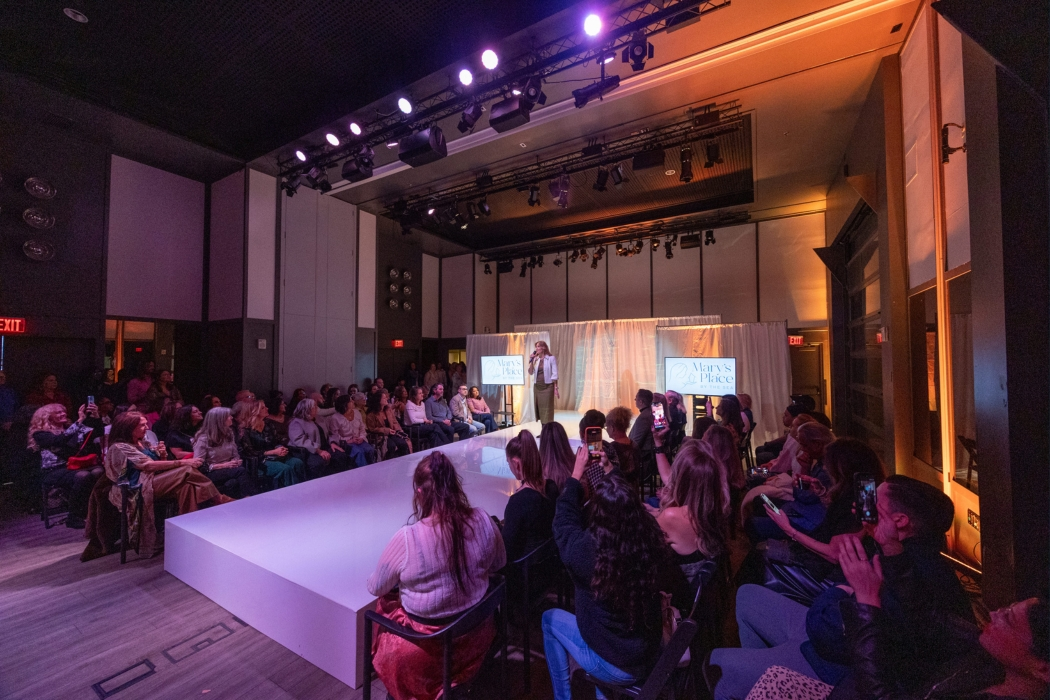
This is particularly common at conferences, product launches, galas, fashion shows, and corporate events where branding needs to be integrated with the technical production.
Even when an element is relatively lightweight, its attachment method and position still matter.
Stage and Truss Systems
Stage and truss are commonly used together, but they do different jobs.
A stage supports people and equipment from below.
A truss system positions equipment above, beside, or around the stage.
For example, a stage might support a DJ, band, speaker, or presentation setup while truss above it carries lighting or video equipment.
Designing the stage and truss as one system helps production teams coordinate sightlines, equipment placement, stage dimensions, lighting positions, and the overall room layout.
Ground Supported vs Suspended Truss
The event truss does not always hang from the ceiling. Some systems are supported from the floor, while others are suspended from structural rigging points within the venue.
Ground Supported Truss
Ground supported truss uses towers, bases, or other structural components to transfer loads down to the floor or ground.
A simple setup might consist of two vertical towers supporting a horizontal truss span. Larger systems can create grids or more complete structures around a stage.
Ground supported systems are often used when appropriate overhead rigging points are unavailable or when the production requires a self supporting structure.
Common applications include:
- Stage lighting
- LED walls
- Concert setups
- Corporate presentations
- Fashion shows
- Trade shows
Ground support does not mean the setup is automatically simple. Tower height, span length, total equipment weight, floor conditions, and overall stability still have to be considered.
Suspended or Flown Truss
Suspended truss, also called flown truss, is positioned overhead using approved structural rigging points.
Ballrooms, theaters, arenas, and convention centers may have dedicated points designed for event production. Suspending the truss can keep towers and other supports off the floor while allowing equipment to be positioned throughout a larger area.
However, equipment cannot simply be attached to any ceiling structure.
Available rigging points, their locations, allowable loads, ceiling height, and venue restrictions all affect what can be installed.
This is why the same production design may need to be adjusted when moving from one venue to another.
How Event Truss is Connected
The event truss is normally assembled from modular sections.
A complete system may use:
- Straight sections
- Corners
- Junctions
- Towers
- Base plates
- Couplers
- Pins
- Manufacturer specific connectors
Straight sections extend the span, while corners and junctions allow the structure to change direction or connect multiple sections.
The connection hardware is part of the structural system. Components from different truss manufacturers or product lines should not automatically be treated as interchangeable just because they appear similar.
Event Truss Weight Capacity and Safety
There is no single answer to how much weight event trusses can hold.
Truss capacity depends on the exact product and how it is being used.
How Much Weight Can Event Truss Hold?
There is no universal weight capacity for event truss.
Several factors determine what a particular system can support:
- Truss model
- Span length
- Support configuration
- Load location
- Number of loads
- Truss orientation
- Total equipment weight
Span is particularly important. As the distance between support points changes, the amount and type of load that can be supported can also change.
Load position matters for the same reason. One heavy object in the middle of a span affects the structure differently than multiple lighter objects spread across it.
That means asking how much a piece of box truss can hold without knowing anything else about the setup does not provide enough information.
Point Loads vs Distributed Loads
A point load places weight at a specific position.
For example, one heavy fixture attached near the middle of a truss creates a concentrated point load.
A distributed load spreads weight across more of the span. Several lighting fixtures positioned evenly along the truss are a common example.
Two setups can have the same total weight while affecting the truss differently because that weight is positioned differently.
Understanding Manufacturer Load Tables
Truss manufacturers publish load information for individual products and configurations.
A load table may include:
- Span length
- Uniformly distributed load
- Center point load
- Multiple point load configurations
- Expected deflection
These numbers apply to the specific truss and conditions shown in the manufacturer’s documentation.
They should not be transferred to another truss simply because it has the same basic shape or looks similar.
You cannot determine how much a truss can safely support based on appearance alone.
The truss model, span, support method, equipment, and actual loading arrangement all matter.
Can Trusses Be Modified?
Event truss should not simply be cut, drilled, welded, or otherwise altered because a different attachment point or dimension would be convenient.
The chords, braces, welds, connectors, and overall geometry work together as one structural assembly.
Drilling removes material. Cutting a brace changes the structure. Adding an unapproved weld alters something that was originally manufactured to perform in a specific way.
So, can trusses be modified?
Structural modifications or repairs should only be made according to appropriate manufacturer or engineering guidance. Truss should not be casually modified in the field.
If a different layout is needed, compatible sections, corners, junctions, and connectors designed for that system are generally the appropriate way to create it.
Event Truss Inspection
Event trusses are repeatedly transported, assembled, loaded, disassembled, and stored. That makes its physical condition important.
Inspection may look for issues such as:
- Bent main chords
- Damaged braces
- Cracked or damaged welds
- Visible deformation
- Damaged connectors
- Missing hardware
- Previous unauthorized modifications
Damage does not have to look dramatic to matter. A damaged connection or bent structural member can affect how the truss fits together and performs under load.
Truss is designed to be reusable, but every system still needs to be in appropriate condition, assembled correctly, and used within the limitations of the specific equipment.
Event Truss Cost and Choosing a System
How Much Do Trusses Cost?
There is no single price for event truss.
The cost depends on the type of truss, section length, overall size, manufacturer, and the additional components needed to create the final system.
Pricing can also change based on whether the setup requires:
- Corners or junctions
- Base plates
- Vertical towers
- Connection hardware
- Specialized support components
Buying individual pieces of truss is also very different from renting a complete event truss system.
When buying truss, you are primarily paying for the physical components themselves.
When renting a production system, the price may also include:
- Installation
- Production crew
- Rigging
- Lighting equipment
- LED video walls
- Transportation
- Setup
- Breakdown
Frequently Asked Questions About Event Truss
What is Event Truss Used For?
Event trusses are used to support and position production equipment such as lighting fixtures, LED video walls, audio equipment, signage, backdrops, and scenic elements.
It can be installed above, beside, or around stages and other event areas. If you are also planning the platform itself, our stage size guide explains how to choose the right stage dimensions for your event.
What is the Difference Between Stage and Truss?
A stage creates an elevated surface that supports performers, speakers, DJs, equipment, and other people or objects from below.
Truss is a structural framework typically used to position production equipment above, beside, or around the stage.
The two are often designed together as part of the same event production system.
What is Stage Truss Lighting?
Stage truss lighting refers to lighting fixtures mounted or positioned using a truss structure.
This can include moving lights, wash fixtures, spotlights, effects lighting, and other fixtures positioned above or around the stage.
How Much Weight Can Event Truss Hold?
There is no universal weight capacity.
Capacity depends on the specific truss model, span length, support configuration, load position, truss orientation, and the equipment being supported.
Manufacturer specifications and load information should be used for the exact truss system involved.
How Much Do Trusses Cost?
Truss pricing varies based on type, size, length, manufacturer, and the components required.
Rental costs may also include towers, rigging, crew, transportation, installation, lighting, video equipment, setup, and breakdown.
Can Trusses Be Modified?
Structural event truss should not be casually cut, drilled, welded, or altered.
Any structural modification or repair should follow appropriate manufacturer or engineering guidance because changing the truss can affect how it performs under load.
Can an LED Wall Be Hung From Truss?
Yes, LED walls can be supported from truss systems designed for the specific screen and load.
The size and weight of the LED wall, rigging hardware, span, support configuration, and other equipment on the structure all need to be considered.
Is Event Truss Always Suspended From the Ceiling?
No.
Event truss can be suspended from approved venue rigging points, but it can also be supported from the ground using towers, bases, and other structural components.
The right configuration depends on the venue and production requirements.
Conclusion
Event truss gives production teams a flexible structural system for positioning lighting, LED video walls, audio equipment, scenic elements, and other event components.
Different truss types and configurations exist because every production has different requirements. The span, equipment loads, support method, venue conditions, and overall layout all affect how a truss system should be designed and used.
Truss also works best when it is planned together with the rest of the production. Staging, lighting, video, audio, and truss all influence equipment placement, sightlines, and how the final event space functions.
For events requiring a complete stage and truss setup, One Of A Kind Events provides stage rentals in NJ with staging and production elements coordinated around the needs of the event.