Custom event builds are what turn a standard event space into something guests have not seen before. Every memorable event usually has one visual moment, branded feature, or immersive detail that makes people stop, look, take photos, and remember the experience.
Sometimes that means a custom stage. Sometimes it is an immersive lounge. Sometimes it is a giant branded prop. Sometimes it is an entire room transformed into another world.
The common denominator is simple: someone had an idea, and that idea had to be designed, built, transported, installed, and brought to life.
A custom event build is any physical event element created specifically for your event, brand, theme, or guest experience. It can be decorative, functional, interactive, or all three.
If you’re looking to create something completely unique for your event, One Of A Kind Events designs and builds custom event fabrications throughout New Jersey.
Quick Answer: What Does a Custom Event Build Include?
A custom event build can include:
- Scenic environments
- Custom stages
- Branded lounges
- Fabricated props
- Custom signage
- Printed graphics
- Aisle runners
- Entry displays
- Photo opportunities
- Product displays
- Interactive installations
- Custom furniture
- Branded walls
- Themed rooms
- Custom built photo booths
Every project is built specifically around the event, the brand, and the guest experience. The goal is not just to make something look cool. It is to create something that fits the space, supports the event, and gives guests a reason to engage.
It All Starts With an Idea
Most clients do not come in with engineering drawings, material specs, or exact build plans. Usually, they come in with a feeling, a theme, a rough concept, or one sentence that starts the whole process.
They may say:
“We want it to feel like MTV.”
“Can we make guests feel like they’re in the 80s?”
“Will you build a giant baseball?”
“Can we brand the whole room?”
“How can we make the entrance unforgettable?”
That is where the custom build process begins. The idea does not have to be fully formed yet. It just needs a direction.
From there, the job is to translate the idea into something that can actually be designed, produced, installed, and used during the event. A strong custom build is not just creative. It is buildable, durable, safe, on-brand, and practical for the venue.
Step 1: Understanding the Vision
Before anything gets designed, the vision needs to be clear. That means understanding the goal of the event, the audience, the venue, the brand, the budget, and the timeline.
A custom build for a corporate product launch will have different needs than a custom aisle runner for a wedding. A branded lounge for a gala will be different from an 80s-themed room or a life-size baseball display.
The early questions usually sound like this:
- What feeling should guests have when they walk in?
- What areas will be photographed the most?
- What needs to be functional, not just decorative?
- Does the piece need to be reused?
- Will it be indoors or outdoors?
- How much space does the venue allow?
- How quickly does everything need to be installed?
These answers shape the entire project. They help determine the design direction, materials, size, structure, branding, and production plan.
Step 2: Turning Ideas Into Renderings
Once the vision is clear, the idea starts becoming visual. This may include sketches, renderings, layout planning, material direction, branding placement, and client approvals.
Renderings are especially helpful because they remove guesswork. Instead of trying to imagine what a custom lounge, stage, branded room, or entrance display might look like, the client can see the concept before it is built.
This is where decisions become easier. The team can review colors, scale, logos, placement, textures, lighting, and how the build works within the room.
For example, a custom lounge may need to feel immersive without blocking guest flow. A branded room may need large graphics, furniture, lighting, and photo moments. A custom entrance may need to look impressive while still allowing people to move through comfortably.
Renderings help catch those details early, before anything goes to print or fabrication.
Step 3: Choosing the Right Materials
After the design direction is approved, the right materials need to be chosen. This is where creativity meets practicality.
Custom event builds can use materials like wood, foam, metal, acrylic, printed graphics, vinyl, fabric, and LED elements. The right choice depends on how the piece will be used, where it will be installed, how long it needs to last, and whether it needs to be moved or reused.
A giant prop may need to be lightweight enough to transport but strong enough to stand safely. A branded wall may need crisp printed graphics. A custom aisle runner may need the right surface and finish for the venue. A themed lounge may need a mix of fabric, graphics, furniture, lighting, and scenic pieces.
Indoor vs. outdoor use also matters. So does durability, transportation, setup time, and how the piece will look in photos and video.
The best material is not always the most expensive one. It is the one that fits the creative idea, the event environment, and the way guests will interact with it.
Step 4: Building Everything
Once the design, materials, and approvals are locked in, the project moves into production. This is the fabrication stage, where the custom pieces are actually made.
Depending on the build, this may include printing, painting, carpentry, assembly, finishing, branding, and quality checks. This is where a digital idea becomes a physical object guests can walk through, sit in, stand beside, photograph, or interact with.
A custom build may involve printed graphics for a branded wall, painted scenic elements for a themed room, fabricated props for a photo opportunity, or assembled structures for a lounge or stage feature.
This stage is all about detail. Edges, finishes, colors, logos, scale, stability, and installation needs all matter. The final piece needs to look good, hold up during the event, and match the approved concept as closely as possible.
Step 5: Installation and Event Setup
Custom event builds are not finished when they leave the shop. They still need to be transported, assembled, adjusted, and installed correctly inside the actual event space.
This stage includes delivery, on-site assembly, stage setup, graphic placement, lighting integration, and final styling. Even a great custom piece needs the right setup to look polished in the room.
Once everything is in place, the team checks the details. Are the graphics straight? Is the lighting hitting the right areas? Does the build feel stable? Does it photograph well? Are any last-minute adjustments needed?
The final walkthrough matters because this is where the build becomes part of the full event experience.
Examples of Custom Event Builds
Custom Branded Lounge
A custom branded lounge can turn an empty area into a polished guest experience. This might include custom walls, branded furniture, signage, lighting, graphics, and photo-ready details.
Lounges work well for corporate events, VIP areas, conferences, galas, and brand activations because they give guests a place to gather while still keeping the brand visible.
MTV-Themed Event Space

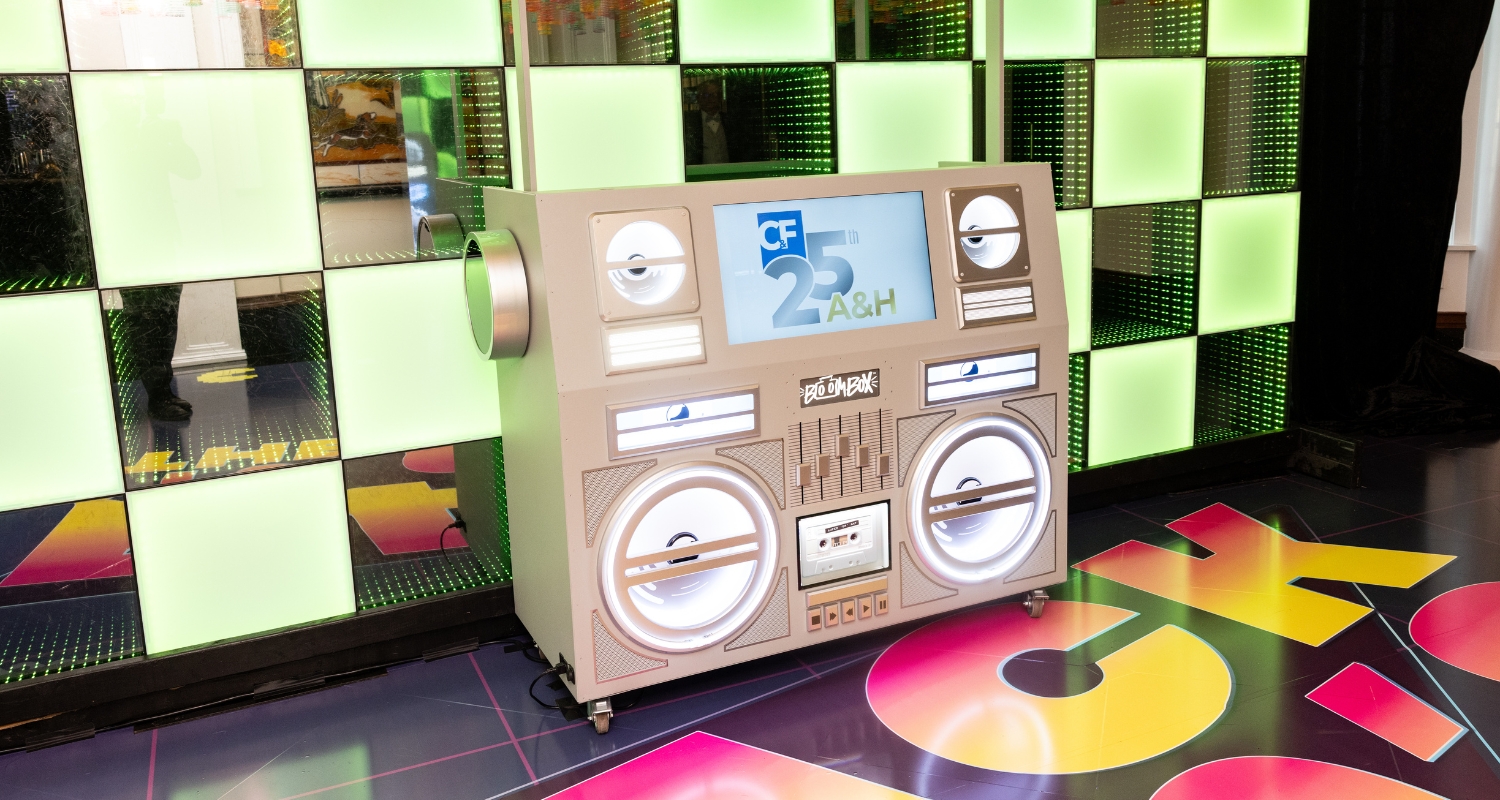
A themed event space can completely transform a room. For an MTV-style setup, the build might include bold graphics, retro details, custom signage, lounge pieces, lighting, and branded visual moments.
The goal is to make guests feel like they have stepped into a specific world instead of just walking into another event room.
Custom Aisle Runners
Custom aisle runners are a simple but powerful way to personalize a ceremony, entrance, or branded walkway. For weddings, they can include names, monograms, dates, patterns, or design elements that match the event style.
For corporate events, aisle runners can include logos, brand colors, campaign graphics, or messaging that guides guests into the experience.
Giant Baseball and Bat Display
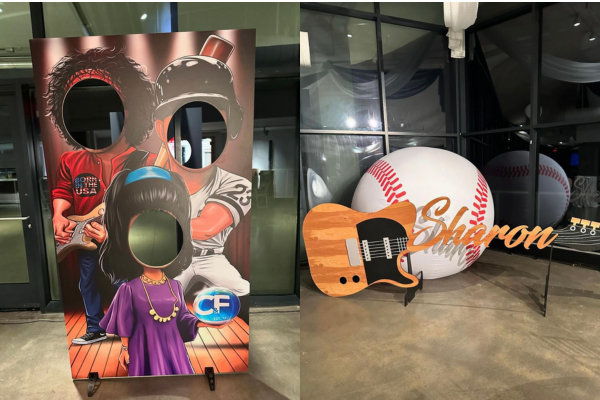
Oversized props are built to get attention. A giant baseball and bat display can become a centerpiece, photo opportunity, or themed installation for sports events, fundraisers, brand activations, or corporate parties.
These kinds of fabricated props make the event feel larger than life and give guests something memorable to interact with.
Life-Size Playing Cards
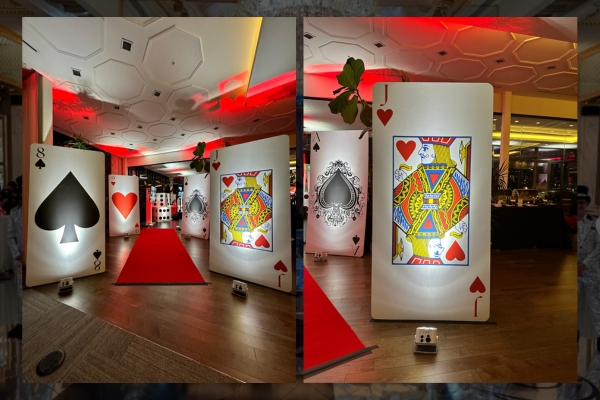
Life-size playing cards can be used as interactive décor, themed signage, or photo opportunities. They work especially well for casino themes, game-night events, school events, fundraisers, and immersive party designs.
Because they are visual and easy to recognize, they help reinforce the theme without needing much explanation.
Fully Branded Event Rooms
A fully branded event room takes the idea beyond one sign or one backdrop. The walls, graphics, furniture, signage, lighting, stage elements, and guest touchpoints can all be designed around the same brand or theme.
This type of custom build is ideal for product launches, corporate events, conferences, brand activations, and themed experiences where the room itself needs to feel intentional.
Why Custom Builds Matter
Custom builds matter because they keep your event from looking like every other event. They give guests something specific to notice, photograph, share, and remember.
They also help strengthen brand recognition. Instead of adding a logo to a generic setup, a custom build can make the entire environment feel connected to the brand, theme, or occasion.
For sponsors, custom builds can create more valuable visibility. Guests, they create more immersive moments. As for hosts, they make the event feel more polished, thoughtful, and one-of-a-kind.
The right custom build can improve:
- Brand recognition
- Guest engagement
- Photo opportunities
- Social sharing
- Event immersion
- Sponsor value
- Overall event atmosphere
Why Work With One Of A Kind Events?

One Of A Kind Events is not just building objects. The team helps turn ideas into real event experiences.
That includes design, problem-solving, renderings, fabrication, printing, installation, lighting, staging, and production support. Instead of separating the creative idea from the technical execution, everything can be planned together.
That matters because custom builds often connect to other parts of the event. A branded wall may need lighting. A themed room may need staging. A custom lounge may need furniture, graphics, and layout planning. A large prop may need safe placement and clear sightlines.
With one partner helping guide the process, the final result is more cohesive from concept to installation.
Frequently Asked Questions About Custom Event Builds
What is a custom event build?
A custom event build is a physical event element designed and produced specifically for an event, brand, theme, or guest experience. It can include props, signage, lounges, stages, backdrops, branded walls, displays, or full themed environments.
How long does a custom build take?
The timeline depends on the size, materials, complexity, approvals, and installation needs. Simple printed graphics may move faster, while larger scenic builds, themed rooms, or fabricated props need more planning and production time.
Can custom builds be branded?
Yes. Custom builds can include logos, colors, patterns, messaging, product visuals, sponsor branding, and event-specific graphics.
Can they be reused?
Many custom builds can be designed for reuse, especially branded displays, props, scenic walls, and touring elements. Reuse depends on the materials, storage, transportation, and how the piece is built.
Can you build something from just an idea?
Yes. Many projects begin with a rough idea, theme, sketch, reference image, or simple description. From there, the concept can be developed into a rendering, production plan, and finished build.
What materials are used?
Materials can include wood, foam, metal, acrylic, vinyl, fabric, printed graphics, lighting elements, and mixed media. The right materials depend on the design, venue, timeline, budget, and whether the build needs to be reused.
Can custom builds include lighting?
Yes. Lighting can be built into or planned around custom event builds to make the finished piece more dramatic, visible, and photo-ready.
Do you install everything?
Yes. Custom builds often include transportation, on-site assembly, installation, adjustments, and final walkthroughs to make sure everything is ready for the event.
Conclusion: From an Idea to an Unforgettable Event
Great custom event builds do not start with blueprints. They start with a conversation.
Whether you have a rough idea, a sketch, a theme, or just a vision for how you want guests to feel, the right team can turn that concept into something real, physical, and memorable.
If you’re ready to create a one-of-a-kind event, One Of A Kind Events designs, fabricates, and installs custom event fabrication for conferences, corporate events, weddings, product launches, brand activations, and more.