

Wedding songs for DJs and live bands combine the flexibility of a professional DJ with the energy of live musicians. Saxophonists, percussionists, violinists, guitarists, and vocalists can add recognizable melodies, solos, and custom arrangements throughout the celebration.
The DJ controls the music, timing, and transitions while the musicians bring selected songs to life. Explore our DJ and live band combinations to create a more dynamic wedding experience.
How DJ and Live Music Performances Work

A successful DJ and live music performance should feel coordinated, not like two separate acts competing for attention.
The DJ provides the foundation. They play the original tracks, manage transitions, read the room, take requests, and control the pace of the reception. Live musicians then perform over selected songs or join the DJ during planned sections of the night.
The DJ Controls the Flow
The DJ remains responsible for keeping the event moving. That includes:
- Selecting and mixing songs
- Moving smoothly between genres
- Adjusting the music based on guest reactions
- Coordinating introductions and formalities
- Managing the volume and energy of the room
- Shortening or extending songs when needed
Because the DJ can quickly change directions, the performance remains flexible even when the wedding timeline shifts.
Bands Add Live Energy
Live bands can perform:
- Recognizable hooks and melodies
- Improvised solos
- Rhythmic fills
- Acoustic introductions
- Custom first-dance arrangements
- High-energy parts during choruses and buildups
They do not have to play throughout every song. In many cases, the strongest performances happen when the musician enters at the right moment, makes an impact, and then gives the DJ room to continue the set.
Coordination Happens Before the Wedding
The DJ and musicians should discuss the music before the event. They may need to coordinate:
- Song keys
- Beats per minute
- Performance cues
- Solo sections
- Song lengths
- Volume levels
- Transitions between live and recorded music
Some experienced performers can improvise in the moment, but advance planning creates cleaner transitions and reduces the chance of awkward pauses.
What Makes a Song Good for Collaboration?
Not every wedding song needs live instrumentation. The best collaborative choices give musicians enough space to add something meaningful without making the arrangement feel crowded.
A Recognizable Instrumental Hook
Songs with familiar melodies are ideal because guests quickly recognize what the musician is playing. A saxophonist, violinist, or guitarist can recreate the main hook while the DJ maintains the original vocals and beat.
A Consistent, Danceable Rhythm
A steady beat makes it easier for live musicians to lock into the track. Dance, pop, disco, funk, Latin, and electronic songs often work particularly well because the rhythm is clear and predictable.
Space for Live Solos
Songs with instrumental breaks, extended choruses, or simple verses give musicians room to improvise. The DJ can also loop or extend part of the track to create a longer solo section.
A Familiar Chorus
Guests respond most strongly to songs they already know. A familiar chorus gives the musician a natural moment to enter while encouraging everyone on the dance floor to sing along.
A Flexible Arrangement
The best collaboration songs can be shortened, extended, slowed down, or introduced acoustically. This allows the DJ and musicians to adapt the arrangement to a first dance, entrance, open-dance set, or finale.
Opportunities to Build Energy
Strong wedding songs usually have a clear buildup and release. Live percussion, saxophone, violin, or guitar can join during the buildup and help make the chorus feel even bigger.
DJ and Saxophone Wedding Songs
Saxophone is one of the most popular instruments to pair with a wedding DJ. It works well with house music, pop, disco, funk, R&B, and dance tracks.
A saxophonist can play the main melody, add short fills between vocal lines, or improvise over an instrumental section. The DJ keeps the beat moving while the saxophonist performs among the guests or directly on the dance floor.
This Girl
“This Girl” is a natural fit for live saxophone because the track already features a bold, recognizable brass melody. A saxophonist can reinforce the hook and improvise during the instrumental sections.
One Kiss
“One Kiss” has a steady house beat and an uncluttered arrangement. The saxophone can add smooth fills during the verses before becoming more expressive during the chorus.
Treasure
“Treasure” combines funk, pop, and disco influences. Its rhythm gives a saxophonist plenty of room to perform upbeat melodies without overpowering the vocals.
September
“September” is a familiar wedding favorite with strong horn parts and a chorus most guests recognize immediately. A live saxophonist can recreate the original melodies or add new solos between vocal sections.
Levitating
“Levitating” has a clean disco-inspired groove that works well with live instrumentation. Saxophone can add short rhythmic accents during the verses and a more prominent solo later in the track.
Crazy in Love
The opening horn line makes “Crazy in Love” instantly recognizable. A saxophonist can perform the hook live while the DJ controls the original beat, vocals, and transitions.
Why Saxophone Works With a DJ
Saxophone can move between romantic and energetic moments. It may be used for a smooth cocktail-hour performance, a live entrance, or an interactive dance-floor set.
The instrument is also mobile, allowing the performer to leave the stage and engage directly with guests.
DJ and Live Percussion Wedding Songs
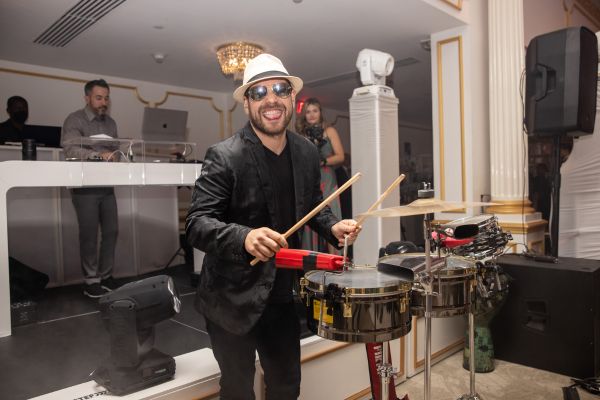
Live percussion can make a familiar dance track feel completely different. Bongos, congas, drums, and electronic percussion add movement, volume, and visual energy without replacing the original beat.
The percussionist usually works alongside the track rather than trying to copy every drum sound. They may add fills during transitions, join during a buildup, or reinforce the rhythm when the chorus drops.
Pepas
“Pepas” has a gradual buildup followed by an explosive chorus. A percussionist can start with restrained rhythms and increase the intensity as the track approaches its biggest moments.
Danza Kuduro
“Danza Kuduro” already has a strong Latin rhythm, making it a great match for congas, bongos, or live drums. The percussionist can reinforce the beat and add improvised fills throughout the song.
Mi Gente
“Mi Gente” uses a repetitive, driving rhythm that gives live percussion plenty of room. Additional drums can make the track feel larger without disrupting its recognizable groove.
We Found Love
“We Found Love” offers clear buildups and drops. A percussionist can enter gradually, build tension during the verse, and perform more aggressively when the chorus begins.
Levels
“Levels” works well because of its consistent electronic beat and extended instrumental sections. Live percussion can make the track feel more like a festival or concert performance.
Yeah!
“Yeah!” has a strong rhythm and familiar club energy. Drums or electronic percussion can emphasize the chorus, add fills, and make the track feel more interactive.
How Percussion Builds Energy
Live percussion is often most effective in short, focused sets. The performer can join the DJ once the dance floor is already active and help take the energy to another level.
Using percussion during every song may become repetitive. Saving it for selected buildups, choruses, and transitions makes each appearance feel more intentional.
DJ and Violin Wedding Songs
Violin can be used for both emotional wedding moments and energetic reception performances. A violinist may play a custom ceremony arrangement, perform during the first dance, or join the DJ later in the night.
The style of the performance depends on the song. Romantic tracks may use a softer, more traditional arrangement, while pop and electronic songs allow the violinist to perform with greater intensity.
Romantic Ceremony and First-Dance Songs
A Thousand Years
“A Thousand Years” is a natural choice for ceremonies and first dances. The violin can carry the main melody while the DJ plays an instrumental or lightly arranged version underneath.
Perfect
“Perfect” works well as a slow, romantic violin performance. It can be played during the ceremony, cocktail hour, or first dance.
Lover
“Lover” has a gentle rhythm and recognizable melody. A violinist can perform it acoustically or alongside the original track for a more layered sound.
Upbeat Reception Songs
Rather Be
“Rather Be” already includes prominent string elements, making it an easy fit for live violin. The performer can recreate the main melody before adding more expressive variations.
Clarity
“Clarity” builds from emotional verses into a powerful electronic chorus. The violin can begin softly and gradually increase its intensity as the song develops.
Wake Me Up
“Wake Me Up” blends acoustic and electronic styles. A violinist can perform the recognizable melody while the DJ controls the beat and dance-floor energy.
Moving From Romantic to Energetic
One advantage of hiring a violinist is versatility. The same performer can provide elegant ceremony music earlier in the day and return for a more energetic performance during the reception.
The arrangements should still be planned separately. A ceremony performance usually requires restraint, while an open-dance set allows for louder, faster, and more interactive playing.
DJ and Guitar Wedding Songs

Guitar works particularly well for songs with recognizable riffs, rock influences, or acoustic introductions. A guitarist can begin a song alone before the DJ brings in the original recording, or play live over selected parts of the track.
This creates a smooth bridge between a live-band feeling and a traditional DJ set.
Mr. Brightside
“Mr. Brightside” has one of the most recognizable guitar openings in modern wedding music. A guitarist can perform the riff live while the DJ brings in the drums and vocals.
Don’t Stop Believin’
The opening of “Don’t Stop Believin’” is immediately familiar. While the original begins with piano, a guitarist can create an acoustic introduction before transitioning into the full track.
Livin’ on a Prayer
“Livin’ on a Prayer” has prominent guitar parts and a chorus that encourages guests to sing. Live guitar can add energy during the buildup and final chorus.
Valerie
“Valerie” has a clean rhythm and retro feel that works well with guitar. The musician can add chord patterns, rhythmic fills, and short solos while the DJ maintains the vocals and beat.
Shut Up and Dance
“Shut Up and Dance” features upbeat guitar throughout the arrangement. A live guitarist can reinforce the main riff and make the track feel more like a concert performance.
Dancing in the Dark
“Dancing in the Dark” offers a recognizable rock sound with enough space for live guitar. It can work especially well for New Jersey weddings looking to include a familiar crowd favorite.
Acoustic Introductions and Live Transitions
A guitarist does not need to play over the entire recording. One of the most effective approaches is to begin with an acoustic or stripped-down introduction.
After a verse or chorus, the DJ can smoothly bring in the original track or a dance remix. This creates a noticeable shift in energy and gives guests a reason to move toward the dance floor.
Live guitar can also connect two songs. The guitarist may hold a familiar riff while the DJ changes tracks, creating a transition that feels planned rather than abrupt.
How to Choose Songs for Your DJ and Live Band
A good collaborative playlist should reflect the couple’s taste while making sense for the performers involved.
Consider the Musicians You Are Hiring
Choose songs that work naturally with the available instruments.
A saxophonist may be best suited for house, funk, disco, and pop. A guitarist can strengthen rock songs and acoustic arrangements. Percussion works well with Latin, electronic, and high-energy dance music.
Start with the performers, then choose songs that allow them to contribute something meaningful.
Match Songs to Each Part of the Wedding
Not every selection belongs in the same part of the day.
Softer violin or guitar arrangements may work during the ceremony and cocktail hour. Live vocals can make formal dances feel more personal. Saxophone and percussion are often better once the dance floor is open.
Organizing the playlist by moment makes the entertainment feel intentional. Need help choosing the right track for your reception introduction? Explore our guide to wedding entrance songs for ideas that fit your style and set the tone for the celebration.
Balance Romantic, Classic, and Modern Songs
A wedding playlist should give different generations something to enjoy.
Combine romantic selections for formal moments with classic dance songs and newer hits. This gives the musicians a wider range of material and helps the DJ adjust to the crowd.
Ask About Custom Arrangements
Experienced DJs and musicians may be able to shorten songs, create instrumental openings, combine multiple tracks, or adjust a song to fit a specific performance.
Couples should explain the feeling they want rather than focusing only on the exact recording. Before choosing your entertainment team, review our guide to questions to ask DJs so you know what to discuss before booking. The performers may recommend an arrangement that works better live.
Do Not Overcrowd Every Song
Live instruments should improve the music, not compete with it.
Some tracks already have dense production and little room for additional parts. Others may sound better when the DJ plays them without live accompaniment.
Using musicians selectively makes their appearances feel more exciting.
Plan a DJ and Live Music Wedding Experience
Wedding songs for DJs and live bands combine the flexibility of a professional DJ with the energy of live musicians. Saxophonists, percussionists, violinists, guitarists, and vocalists can add recognizable melodies, solos, and custom arrangements throughout the celebration.
The DJ controls the music, timing, and transitions while the musicians bring selected songs to life. Explore our DJ and live band hybrid to create a more dynamic wedding experience.