Successful events are not about renting the most equipment or adding every enhancement available. They are about choosing the right elements for the space, the audience, and the experience you want to create.
A wedding may need a dance floor, entertainment, and personalized lighting, while a corporate conference may rely more heavily on staging, audio, video, and branded displays. A gala, fundraiser, product launch, or private celebration will have its own priorities.
This event rental checklist will help you identify what your event actually needs, organize those decisions in the right order, and avoid spending money on rentals that do not support your goals.
Define Your Event Before Renting Anything

Before requesting quotes or choosing specific equipment, define the basic structure of your event. Your event type, attendance, and venue will influence nearly every rental decision that follows.
Event Type
Start by identifying what kind of event you are planning and what guests will be expected to do once they arrive.
A wedding typically revolves around formalities, dinner, entertainment, and dancing. A corporate event may need a stage, presentation technology, branded displays, and networking areas. Fundraisers and galas often combine speeches, sponsor recognition, auctions, dinner, and entertainment.
Conferences may require multiple microphones, large video displays, reliable audio, and clear sightlines. Product launches tend to prioritize branding, staging, lighting, and dramatic visual reveals. Private parties may focus more heavily on music, social spaces, photo opportunities, and interactive entertainment.
The event type gives you a practical starting point. Instead of asking what rentals look impressive, ask what the event needs to function well.
Guest Count
Your expected attendance affects almost every rental on the checklist.
Guest count helps determine:
- The appropriate dance floor size
- The number of tables and chairs
- The required audio coverage
- The size and height of the stage
- The amount of lounge seating
- The number of interactive stations
- The size and placement of video screens
- The amount of open space needed for comfortable movement
A setup designed for 75 guests will not necessarily work for 300. Too little equipment creates congestion and limits visibility, while oversized rentals can make the room feel empty or take up valuable space.
Use the most accurate guest estimate available, then confirm final quantities once attendance numbers become clearer.
Venue Considerations
The venue determines what is possible, what is already included, and what additional rentals may be required.
First, determine whether the event is indoors or outdoors. Outdoor events may require weather protection, level flooring, additional power, and equipment rated for exterior use. Indoor venues may have stricter limits involving ceiling height, rigging, sound levels, or open flames.
Ask the venue what equipment and furnishings are already available. Some locations provide tables, chairs, stages, audio systems, or basic lighting. Others provide little beyond the room itself.
You should also confirm:
- Ceiling height and overhead restrictions
- Available electrical service
- Existing audio and visual equipment
- Loading dock or service entrance access
- Elevator dimensions
- Setup and breakdown windows
- Noise restrictions
- Décor and installation rules
Load-in access is especially important for large stages, LED video walls, dance floors, and custom scenic pieces. A narrow doorway, limited elevator, or short setup window can completely change the production plan.
Build the Foundation of Your Event
Once the event details are clear, start with the rentals that create the physical layout. Staging, dance floors, tables, chairs, and lounge furniture shape how guests move through the room before décor, lighting, or entertainment is added.
Staging
A stage rental creates a focal point and improves visibility for speakers, performers, presentations, ceremonies, and award recipients.
The right stage size depends on how it will be used. A single speaker may only need a compact platform, while a panel discussion, band, fashion show, or awards ceremony will require considerably more room.
Consider:
- The number of people using the stage
- Equipment placed on the stage
- Audience sightlines
- Stage height
- Steps and accessibility
- Podiums or presentation furniture
- LED walls or scenic backdrops
- Available room around the stage
The stage should feel proportional to both the room and the audience. It needs to be large enough to function comfortably without overwhelming the event space.
Dance Floors
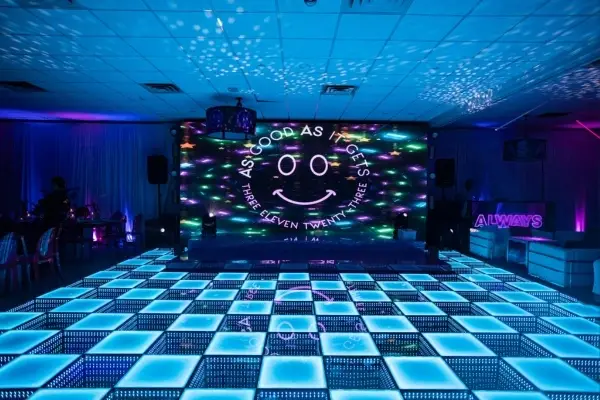
A dedicated dance floor rental gives guests a clear place to gather and helps create energy during weddings, galas, celebrations, and corporate parties.
Dance floor size should be based on the number of guests likely to dance at the same time, not simply the total attendance. Placement also matters. A dance floor positioned near the DJ, entertainment, and main seating area will usually feel more inviting than one placed in an isolated corner.
Options may include:
- Traditional wood or neutral flooring
- Vinyl-wrapped dance floors
- Custom-branded floors
- LED dance floors
- Glossy or mirrored finishes
- Checkered or themed designs
A dance floor can also become a major visual feature. Custom graphics, monograms, patterns, and lighting can help it feel connected to the rest of the event design.
Tables and Chairs
Tables and chairs affect guest comfort, room capacity, traffic flow, and the overall appearance of the event.
The right setup depends on the event format. Seated dinners require a different layout than conferences, cocktail receptions, networking events, or ceremonies.
Common options include:
- Round dining tables
- Rectangular banquet tables
- Cocktail tables
- Communal tables
- Conference tables
- Ceremony seating
- Specialty chairs
- High-top seating
Leave enough room for guests, servers, performers, and production crews to move comfortably. Packing too many tables into the room can make even a large venue feel cramped.
Lounge Furniture
Lounge furniture gives guests an alternative to traditional table seating and helps create more relaxed social areas.
Sofas, ottomans, coffee tables, benches, and accent chairs work especially well near cocktail areas, photo activations, bars, and quieter sections of the venue. They can also help define large open spaces without building permanent walls or structures.
For corporate events, lounge seating can support networking and informal conversations. At weddings and private celebrations, it gives guests a comfortable place to step away from the dance floor without leaving the event.
Choose furniture that supports both the event style and the expected guest behavior. The goal is not simply to fill empty space, but to create areas people will actually use.
Plan the Guest Experience
After the room layout is established, think about how guests will interact with the event. Entertainment, photo experiences, interactive activations, and specialty enhancements help turn a well-designed space into a memorable experience.
Entertainment
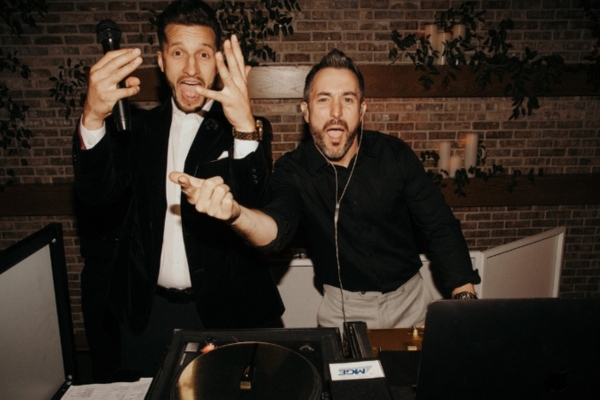
Entertainment shapes the energy and pacing of an event.
A professional DJ can manage music throughout the event, respond to the crowd, and help move guests between important moments. Live musicians can add energy, atmosphere, or sophistication during ceremonies, cocktail hours, dinners, and dancing.
An experienced MC helps keep the event organized. They can introduce speakers, announce formalities, explain activities, manage transitions, and make sure guests know what is happening next.
These roles can work independently or together. The right combination depends on the event schedule, audience, and desired atmosphere.
Consider whether your event needs:
- A DJ
- A professional MC
- Live musicians
- A DJ and live music hybrid
- Ceremony or cocktail-hour performers
- Specialty entertainers
- Background music between scheduled moments
Entertainment should support the flow of the event rather than feel like a separate attraction added at the last minute.
Photo Booths
Photo booths give guests an activity they can enjoy at their own pace while also creating shareable memories.
Options range from traditional open-air booths to glam booths, 360 video booths, AI experiences, and fully customized corporate activations. The best choice depends on your audience and the type of content you want guests to create.
Before booking a photo booth, consider:
- Available floor space
- Backdrop size
- Guest capacity
- Digital versus printed photos
- Custom graphics
- Social sharing
- Props
- Branding opportunities
- Placement within the venue
A photo booth should be easy to find without blocking entrances, walkways, or major event activities.
Interactive Experiences
Interactive experiences give guests something to do beyond watching a presentation, eating dinner, or listening to music.
Depending on the event, these may include:
- Digital photo activations
- Live social media displays
- Games or competitions
- Branded content stations
- Guest message walls
- Interactive video displays
- Live performers
- Product demonstrations
- Custom-built activations
These experiences are especially useful at corporate events, product launches, trade events, and fundraisers where participation matters.
The activity should be simple to understand and easy to join. If guests need a long explanation before participating, many will walk past it.
Specialty Enhancements
Specialty enhancements help emphasize important moments and create visual impact.
Indoor cold sparklers can add energy to entrances, first dances, awards, and reveals when they are permitted by the venue. Dancing on the Clouds creates a low-lying fog effect around the dance floor, making first dances and formal moments feel more dramatic.
Oversized letters can display initials, company names, event themes, or branded messages. Monograms can be projected onto walls, dance floors, backdrops, or scenic elements to personalize the space.
These enhancements are most effective when they support a specific moment or design goal. Using too many at once can make the event feel visually disconnected.
Don’t Overlook Production
Furniture and décor establish the physical setting, but production determines how the event looks, sounds, and feels once guests arrive.
Audio, lighting, video, staging, DJ booths, and scenic elements should be planned as one connected system. When each rental is selected separately, the result can feel inconsistent or create technical conflicts.
Audio Systems
Clear audio is essential for speeches, presentations, announcements, ceremonies, and entertainment.
The appropriate system depends on:
- Room size
- Guest count
- Venue acoustics
- Event format
- Number of speakers
- Live music requirements
- Indoor or outdoor use
A small private event may only need a basic speaker and microphone setup. A conference, awards program, or large wedding may require multiple speakers, wireless microphones, mixers, monitors, and dedicated audio technicians.
The goal is even coverage throughout the room. Guests should not struggle to hear in the back while those near the speakers are overwhelmed by volume.
Lighting
Lighting influences how guests experience the entire room. It can highlight architecture, guide attention, create atmosphere, and make the event look better in photos and video.
Common event lighting options include:
- Uplighting
- Stage lighting
- Pinspot lighting
- Moving lights
- Dance floor lighting
- Monogram projection
- Accent lighting
- Architectural lighting
- Intelligent lighting effects
Lighting should change with the event. A conference presentation may need bright, controlled stage lighting, while a wedding reception may transition from warm dinner lighting to a more energetic dance floor atmosphere.
Good lighting design supports the room instead of competing with it.
LED Video Walls

LED video walls provide bright, scalable displays for presentations, videos, branding, live camera feeds, sponsor logos, and visual effects.
Unlike a standard projection screen, an LED wall can remain visible in brighter rooms and can be built in different dimensions to suit the stage or venue.
They are commonly used for:
- Corporate presentations
- Conferences
- Product launches
- Award ceremonies
- Fashion shows
- Weddings
- Sponsor recognition
- Live entertainment
The physical wall is only part of the plan. The content must also be designed for the screen’s exact dimensions and viewed from the expected audience distance.
Custom DJ Booths
A DJ booth does more than hide equipment. It can become part of the visual design and create a stronger focal point near the dance floor.
Options may include:
- Video DJ booths
- Branded corporate booths
- Furniture-style booths
- Scenic or themed designs
- LED-integrated booths
- Custom-built structures
The booth should match the event rather than look like unrelated equipment placed in the room. Branding, lighting, finishes, and screen content can all help connect it to the surrounding design.
Placement is equally important. The DJ needs a clear view of the dance floor and direct communication with the MC, entertainment team, and production crew.
Stage Backdrops
A stage backdrop gives the audience a clean visual focus while helping hide venue walls, equipment, or backstage activity.
Backdrops may be created with:
- Fabric
- Printed graphics
- Scenic panels
- Custom fabrication
- LED video walls
- Branded signage
- Dimensional logos
- Decorative lighting
The backdrop should be designed around the stage dimensions, camera angles, lighting, and type of event. Corporate events may prioritize brand visibility, while weddings and galas may focus more heavily on texture, color, and atmosphere.
A well-designed stage backdrop helps the entire production look intentional.
Branding and Personalization
Branding and personalization turn standard rentals into elements that feel specific to your event.
For weddings and private celebrations, this may mean using names, initials, custom colors, meaningful graphics, or design details that reflect the hosts. For corporate events, branding helps reinforce the company, campaign, product, or event message throughout the room.
Custom graphics can be applied to video content, dance floors, signs, backdrops, and photo booth templates. Fabrication can produce dimensional logos, branded structures, scenic walls, custom displays, and one-of-a-kind focal points.
LED content can feature:
- Company logos
- Sponsor messages
- Presentation graphics
- Event schedules
- Animated backgrounds
- Social media content
- Product visuals
- Custom transitions
Floor wraps can transform a standard dance floor or stage surface with patterns, branding, monograms, or event-specific artwork. Branded DJ booths can integrate logos, motion graphics, video, and custom finishes into the entertainment setup.
Event signage should also be considered part of the design. Welcome signs, directional signs, schedules, sponsor displays, and branded photo moments help guests understand the space while reinforcing the event identity.
Sponsor recognition is especially important at fundraisers, conferences, and corporate programs. Logos should be visible without overwhelming the main event design. LED walls, stage graphics, printed signage, and interactive displays can provide recognition in a polished and organized way.
Scenic elements bring everything together. Custom panels, structures, backdrops, arches, branded installations, and dimensional pieces can transform an ordinary venue into a space that feels completely designed for the event.
The most effective personalization is consistent. Instead of adding a logo to every available surface, choose a clear visual direction and repeat it thoughtfully across the rentals, production, and guest experience.
The Rentals People Forget
Large rentals usually get booked first. Smaller logistical items are easier to overlook, but they often determine whether the event runs smoothly.
Depending on the venue and event format, you may need:
- Podiums for speakers and presentations
- Pipe and drape to divide spaces or hide equipment
- Stanchions and crowd-control barriers for lines and entrances
- Easels for seating charts, schedules, or welcome signs
- Coat racks for colder-weather events
- Registration counters for conferences and corporate programs
- Extension cords and power distribution
- Cable ramps to protect cords and reduce tripping hazards
- Charging stations for guests
- Backup microphones
- Wayfinding signage
These details may not be visually exciting, but they solve real problems. Review the guest journey from arrival through departure and note where people will check in, wait, walk, gather, charge devices, or need directions.
Should You Rent Everything From One Company?
Working with one event production and rental company can simplify the entire process, especially when staging, lighting, entertainment, video, scenic design, and custom rentals need to work together.
Instead of coordinating several delivery windows and installation teams, you have one schedule, one crew, and fewer vendors to manage. Communication is clearer, the visual design is more consistent, and technical decisions can be made as part of one larger plan.
It also makes event-day problem-solving faster. When the same team understands the layout, equipment, schedule, and creative direction, adjustments can be handled without several vendors trying to determine who is responsible.
Event Rental Planning Timeline
6–12 Months Before
Reserve major production items early, especially for large or date-sensitive events. This may include staging, dance floors, LED video walls, custom fabrication, lighting, and large scenic installations.
3–6 Months Before
Book entertainment and guest-facing enhancements, such as DJs, MCs, live musicians, photo booths, specialty effects, and interactive experiences.
1 Month Before
Finalize attendance, room layouts, furniture quantities, stage requirements, branding, screen content, signage, and the event schedule.
Final Week
Confirm delivery and installation times, venue access, power requirements, vendor contacts, load-in instructions, and breakdown procedures. A final walkthrough can catch spacing or access issues before event day.
Plan Your Event From the Ground Up
The best events are built in a logical order. A well-organized event rental checklist helps prevent last-minute surprises, keeps vendors aligned, and creates a smoother experience for guests.
Whether you are planning a wedding, corporate event, gala, fundraiser, or private celebration in New Jersey, One Of A Kind Events can help coordinate everything from entertainment and event production to custom rentals and event design.
Event Rental Checklist
Keep your planning on track with a printable checklist covering staging, lighting, entertainment, furniture, production, and the details that are often overlooked before event day.
Download the Checklist →