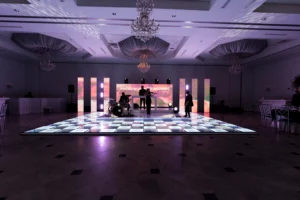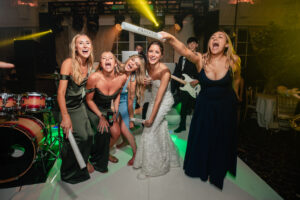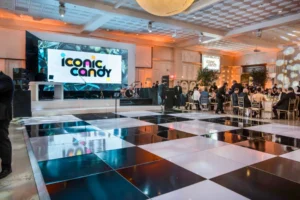
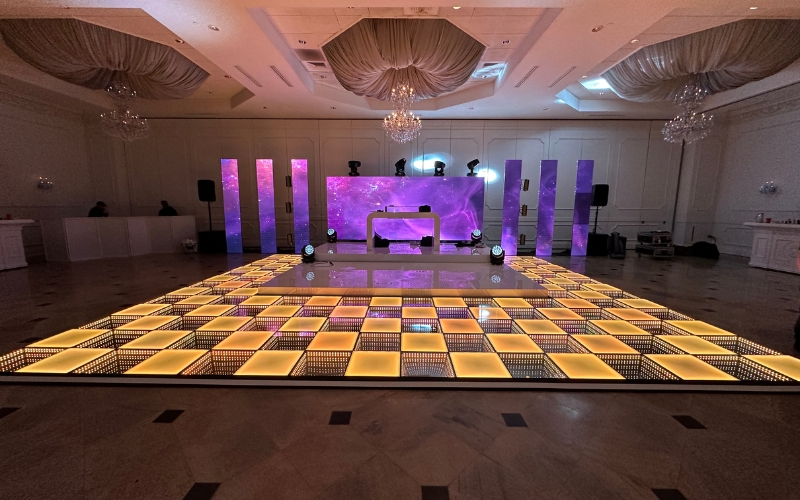
A dance floor around a stage can make the entire event feel more connected, energetic, and easy to follow. The stage and dance floor are two of the biggest energy points in a wedding, mitzvah, gala, or private event. The stage holds the entertainment, while the dance floor is where guests respond to it.
When both are planned together, the room feels intentional instead of pieced together. The DJ, band, MC, LED wall, lighting, and dance floor all work as one experience. Guests know where to look, where to gather, and where the party is happening.
If your venue does not have the right dance floor already in place, One Of A Kind Events can help you explore custom dance floor rentals that fit your guest count, room layout, and entertainment setup.
Why the Stage and Dance Floor Should Be Planned Together
The Stage Leads the Energy

The stage is usually where the event’s biggest entertainment moments begin. The DJ, MC, band, or live musicians help guide introductions, speeches, first dances, parent dances, live sets, and high-energy party moments from this area.
That makes the stage more than just a platform. It becomes the command center for the room. When the stage is placed well, guests naturally know where the energy is coming from and where their attention should go.
This is especially important at weddings and private events where the entertainment needs to lead the night without feeling forced.
The Dance Floor Reacts to the Entertainment
The dance floor should feel connected to the entertainment, not pushed too far away or placed awkwardly off to the side. Guests are more likely to dance when the floor feels like part of the action.
If the DJ or band is too far from the dance floor, the room can feel disconnected. The music may still sound good, but the energy does not land the same way.
A smart layout keeps the performers and guests close enough to feed off each other. That connection helps the dance floor feel more inviting from the first song to the last.
A Strong Layout Makes the Whole Room Feel Intentional
When the stage and dance floor are aligned, the room has a clear focal point. Guests know where to look during announcements, where to gather during dancing, and where the main event moments will happen.
This matters in ballrooms, tents, banquet halls, and large event spaces. Without a clear layout, the room can feel scattered. With the right stage and dance floor placement, the entire space feels more polished and easier to navigate.
Start With the Type of Entertainment
DJ-Only Setup
A DJ-only setup usually needs less stage space than a full band, but it still benefits from being centered with the dance floor. The DJ and MC should be visible enough to guide announcements, build energy, and keep guests connected to the flow of the event.
The DJ booth should not feel hidden or pushed into a corner. It should feel like part of the main entertainment area.
Planning notes:
- Keep the DJ close to the dance floor
- Avoid placing the booth too far into a corner
- Leave room for speakers, lighting, and cable paths
- Consider a clean backdrop or LED wall behind the DJ
A clean DJ setup near the dance floor can make the entire room feel more energetic, especially when lighting and production are planned around it.
Live Band Setup
Live bands need more depth and width than a standard DJ setup. Musicians need room for instruments, monitors, microphones, drums, keys, guitars, horns, speakers, and movement.
A cramped band setup can affect both the look and feel of the performance. The band may not have enough space to move naturally, and equipment can start to crowd the front of the room.
Planning notes:
- Give the band enough room to perform comfortably
- Keep the dance floor directly in front of the stage when possible
- Plan speaker placement around guest tables
- Make sure guests can see the performers from key areas
When the dance floor sits directly in front of a live band, guests feel like they are part of the performance instead of just listening from a distance.
DJ and Live Band Hybrid

A DJ and live band hybrid needs the most coordination because the setup may include a DJ, MC, sax player, percussionist, vocalist, drummer, or rotating performers.
This type of entertainment can bring a lot of energy to the room, but the layout has to support it. If performers are spread too far apart, the setup can feel disjointed. If the stage is too small, it can feel crowded.
Planning notes:
- Keep performers visually connected
- Leave clear space for musicians to move
- Plan transitions between DJ sets and live features
- Make sure the dance floor feels connected to both the DJ and musicians
For events with a DJ, live band, or hybrid entertainment setup, custom stage rentals can help create the right performance area without forcing the entertainment into a layout that does not fit the room.
Choose the Right Dance Floor Placement
Directly in Front of the Stage
Placing the dance floor directly in front of the stage is usually the strongest layout for weddings, mitzvahs, and high-energy events. It creates a natural connection between the performers and guests.
This setup helps the DJ, MC, or band lead the room more easily. Guests can see the entertainment, respond to the music, and feel like the dance floor is part of the main experience.
Best for:
- DJs
- Live bands
- DJ/live band combos
- LED walls
- Grand entrances
- Packed dance floor moments
This layout works especially well when the event is built around dancing, live music, and big entertainment moments.
Centered in the Room With the Stage at One End
A centered dance floor with the stage at one end works well in ballrooms and banquet halls. It gives the room symmetry and keeps the entertainment visible from multiple seating areas.
Guests can sit around the dance floor while still facing the stage. This helps the room feel balanced during dinner, speeches, and dancing.
Best for:
- Formal receptions
- Galas
- Corporate events
- Award dinners
- Large weddings
This layout is also helpful when the dance floor needs to serve as the visual center of the room.
Dance Floor Between the Stage and Guest Tables
Placing the dance floor between the stage and guest tables keeps the entertainment visible while giving guests easy access to the floor.
This layout works well when you want the dance floor to feel active throughout the night. Guests can move from their seats to the dance floor naturally, without feeling like they are crossing into a separate part of the venue.
Best for:
- Weddings with mixed-age guests
- Events with dinner and dancing
- Venues with long rectangular layouts
This setup can also help create smoother transitions between speeches, formal dances, and open dancing.
Avoid Placing the Dance Floor Too Far From the Stage
Distance can hurt the energy of the event. If guests have to walk across the room to dance, or if they cannot clearly see the DJ, MC, or band, the party can feel disconnected.
The dance floor should feel close enough to the stage that guests feel invited into the action. When the stage and floor are separated too much, the entertainment can start to feel like background noise instead of the center of the celebration.
Think About Guest Flow Around the Dance Floor
Guests Need Clear Paths to Enter and Exit
The dance floor should be easy to reach from guest tables, bars, lounges, and restrooms. If guests have to squeeze between tables or walk around equipment, they may be less likely to get up and dance.
Clear paths make the floor feel more welcoming. Guests should be able to enter and exit naturally without disrupting seated guests or crossing through service areas.
A strong layout makes movement feel easy, which helps keep the party flowing.
Avoid Trapping Guests Between Tables and Equipment
Speakers, stages, lighting stands, and cables should never block natural walking paths. When equipment crowds the edges of the dance floor, guests can feel boxed in.
The goal is to create a clean entertainment zone without making the dance floor difficult to access. This means planning space for production equipment before the room layout is finalized.
A little extra planning can prevent awkward bottlenecks, blocked views, and cluttered walkways.
Keep Service Paths in Mind
Catering staff, planners, photographers, and videographers also need space to move. If their only path cuts through the dance floor or directly in front of the stage, the layout can become distracting.
Service paths should be considered early. Servers need access to tables, photographers need clean angles, and videographers need room to capture key moments without blocking guests.
A good layout supports everyone using the room, not just the entertainment team.
Match the Dance Floor Size to the Stage
A Large Stage Needs a Dance Floor That Can Hold Its Own
If the stage is wide, tall, or visually bold, a tiny dance floor can feel mismatched. The room may look unbalanced, and the entertainment area can feel too heavy on one side.
A larger stage usually needs a dance floor with enough presence to match it. That does not always mean choosing the biggest floor possible. It means choosing a size that feels proportionate to the stage, guest count, and room.
When the stage and dance floor are scaled together, the whole setup feels more natural.
A Small Stage Can Still Work With a Strong Dance Floor
A smaller stage can still make a major impact when the dance floor, lighting, and backdrop are planned together.
For example, a simple DJ stage or low platform can pair well with a custom dance floor when the entertainment area has clean lighting, strong symmetry, and a polished backdrop. The stage does not need to overpower the room to feel effective.
The key is making sure the stage and dance floor feel connected visually.
The Dance Floor Should Feel Proportionate to the Room
Bigger is not always better. A dance floor that is too large can feel empty, especially early in the night. A floor that is too small can feel crowded too quickly and limit guest movement.
The right size depends on guest count, room shape, entertainment type, and how many people you expect to dance at once.
For a closer look at stage dimensions, performer space, and layout planning, use our stage sizing guide before choosing the final setup.
Plan for Sightlines
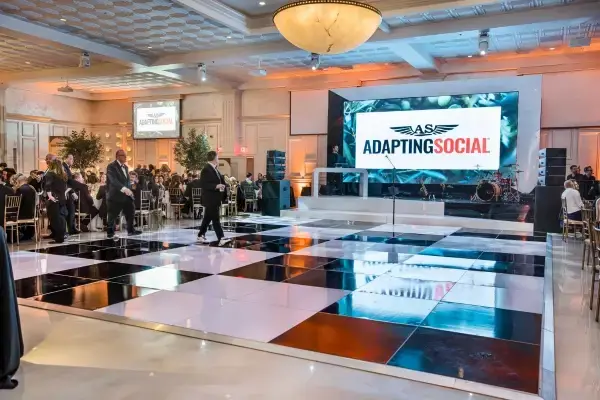
A dance floor around a stage only works well when guests can actually see what is happening. The layout should support the entertainment, but it should also make the room comfortable for guests who are seated, standing, dancing, or moving through the space.
Sightlines matter during speeches, performances, first dances, live sets, and major party moments. If the stage is blocked or the dance floor is awkwardly placed, guests can feel disconnected from the event.
Guests Should Be Able to See the Stage
Tables, floral pieces, columns, bars, and lounge furniture should never block the main view of the entertainment. The stage should feel visible from the areas where guests are seated and from the places where they naturally gather.
This is especially important when the stage is used for more than music. If the MC is making announcements, the band is performing, or a couple is sharing a special moment near the entertainment area, guests should not have to lean around centerpieces or stand up just to see.
A good layout keeps the stage clear, visible, and connected to the rest of the room.
The Dance Floor Should Not Block Every Important View
The dance floor should be the center of the party, but it should not make the rest of the room harder to use. Guests should still be able to see speeches, performances, and formal dances even if they are seated.
This matters during first dances, parent dances, toasts, live music, and special entertainment moments. The goal is to make the dance floor feel active without turning it into a visual barrier.
When the dance floor and stage are planned together, guests can enjoy the energy without losing sight of the moments that matter.
Consider the Photographer and Videographer Angles
A clean stage and dance floor layout makes a huge difference for photos and video. Photographers and videographers need space to capture the couple, crowd, performers, dance floor, lighting, and room design.
If the layout is cluttered, the best shots can be blocked by speakers, stands, cables, décor, or furniture. If the stage and dance floor are aligned well, the media team can capture cleaner angles and stronger wide shots.
The final gallery and highlight video will usually look better when the entertainment area feels intentional from the start.
Use Lighting to Connect the Stage and Dance Floor
Stage Lighting Highlights the Entertainment
Lighting helps the DJ, MC, band, or performers stand out instead of disappearing into the room. Even a great stage can fall flat if the entertainment area is too dark or unevenly lit.

Stage lighting can create focus during announcements, speeches, introductions, and live performances. It helps guests know where to look and makes the entertainment feel like a central part of the event.
For DJs, bands, and hybrid setups, lighting also adds energy. It turns the stage into a performance space instead of just a place for equipment.
Dance Floor Lighting Invites Guests In
Dance floor lighting helps guests feel like the party has started. It can make the space feel warm, dramatic, elegant, or high-energy depending on the style of the event.
Soft lighting can work well during formal dances. More dynamic lighting can build energy later in the night. Color changes, movement, and reflections can all help the dance floor feel more active and inviting.
The goal is to make guests want to step onto the floor, not feel like they are entering an empty space.
LED Walls and Dance Floors Can Work Together
LED video walls, lighting columns, and LED dance floors can create one connected visual experience when they are planned around the stage. This works especially well for mitzvahs, galas, corporate events, and high-energy weddings.
The visuals should feel coordinated, not overwhelming. The LED wall can support the entertainment, while the dance floor carries that energy into the room.
When the goal is to make the dance floor feel like the center of the party, custom dance floor rentals in NJ can be paired with lighting, staging, and video elements for a more complete event design.
Frequently Asked Questions About Dance Floors Around Stages
Should the Dance Floor Be in Front of the Stage?
In most cases, yes. Placing the dance floor in front of the stage creates a direct connection between the entertainment and the guests.
This works especially well for DJs, live bands, and DJ/live band hybrid setups because the performers can lead the energy while guests respond directly in front of them.
How Close Should the Dance Floor Be to the Stage?
The dance floor should be close enough that guests feel connected to the DJ, MC, or band. However, there still needs to be enough space for speakers, monitors, lighting, performers, and safe movement.
The right distance depends on the venue, stage size, entertainment setup, and guest flow.
Can You Have a Stage Without a Dance Floor?
Yes, but it depends on the event. Conferences, galas, award ceremonies, and speaking events may need a stage without a dance floor.
For weddings, mitzvahs, and private parties, the stage usually works best when it is visually connected to the dance floor.
What Comes First, the Stage or the Dance Floor?
They should be planned together. The type of entertainment usually determines the stage needs, while guest count, room shape, and event flow help determine the dance floor size and placement.
Planning one without the other can lead to spacing issues, blocked views, or a disconnected room layout.
How Do You Make a Dance Floor Feel Connected to the Stage?
Use placement, lighting, symmetry, backdrop design, and clear sightlines. The stage should feel like it is leading the dance floor, not sitting separately from it.
The strongest setups make the entertainment area feel like one complete experience.
Do LED Dance Floors Work Well With Stages?
Yes. LED dance floors can work very well with stages, especially when the stage has LED walls, lighting columns, or high-energy entertainment.
The key is making sure the visuals feel coordinated instead of overwhelming. The stage, dance floor, and lighting should support each other.
What Size Dance Floor Do I Need Around a Stage?
The right size depends on guest count, entertainment type, room layout, and how many guests are expected to dance at once.
A DJ-only wedding may need a different layout than a full band or hybrid entertainment setup. The dance floor should feel proportionate to the stage, room, and overall event energy.
Conclusion
The dance floor and stage should never feel like separate pieces. Together, they shape the energy of the event, guide guest attention, support entertainment, and create the visual center of the room.
When the two are planned together, the room feels more connected. Guests know where to look, where to gather, and where the party is happening. The entertainment looks better, the dance floor feels more inviting, and the final photos and videos feel more polished.
For weddings, mitzvahs, galas, and private events, One Of A Kind Events can help pair custom stage rentals with the right dance floor layout so the entertainment area looks polished, feels connected, and works for the full event experience.