The honest answer to how long should the dance floor be open at wedding receptions: most weddings keep it open for 2.5 to 4 hours, and 3 hours is the sweet spot for a standard 5–6 hour reception. The right number for your wedding depends on a handful of things — guest mix, venue curfew, how your timeline is built — which we’ll break down below.
Already know what you need? We handle wedding dance floor rentals for every size reception — LED, vinyl, and custom-designed floors, sized to your guest count and installed by our team.
The Short Answer
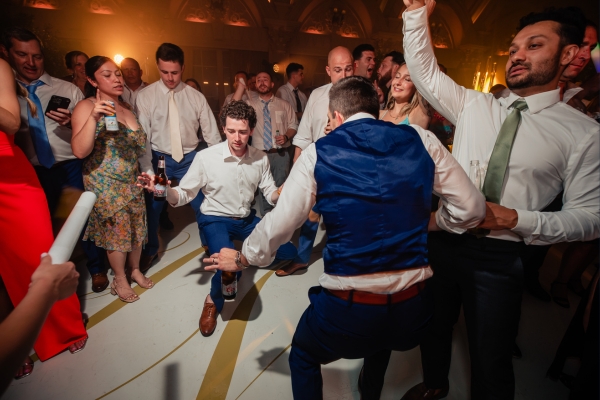
Three hours is what most weddings should plan for. It’s long enough to build energy, hit the peak, and close out on a high note without dragging.
Anything shorter and the floor feels rushed. Anything longer and you risk the energy fizzling before guests leave — which is the last thing you want them to remember.
Here’s how it usually breaks down:
- 2 to 2.5 hours works for shorter receptions or older-skewing guest lists. If most of your crowd is stepping out by 10 PM anyway, don’t overbook the floor.
- 3 hours is the sweet spot for a typical 5–6 hour evening reception. Enough runway to actually have a moment.
- 4+ hours makes sense for late-night weddings, younger crowds, destination weddings, or any celebration where guests are clearly in it until close.
Why This Range Exists
Every reception follows the same basic energy curve: build, peak, taper. You can’t fight it. The first 20 to 30 minutes are about getting people on the floor. The middle is the peak — when everyone’s there, drinks are flowing, and the photos write themselves. The final stretch is the taper, where you ride the wave out with closers and crowd anthems before the lights come up.
A 3-hour open lets all three phases breathe. Cut it shorter and you skip the peak. Stretch it longer and you sit in the taper too long, which is when people start finding their coats.
When the Dance Floor Should Actually Open
Open the floor after dinner service is finished and the formal moments are done — toasts, cake cutting, and the parent dances. That’s the cue.
For a wedding with a 5 PM ceremony and a 6 PM reception start, the floor typically opens between 8:30 and 9:30 PM. Cocktail hour eats the first 60 to 75 minutes, dinner runs about 60 to 90 minutes, formalities take another 20 to 30, and then you’re opening up.
Why Opening Too Early Backfires
Opening before dinner ends sounds harmless, but it kills the night. A few guests get on the floor between courses, the rest are still eating, the energy is fragmented, and once people sit back down — they don’t get back up. You’ve burned through your best 30 minutes before the room is even ready.
Wait until the room is fed, focused, and ready to commit. Then open it big.
First Dance Is the Soft Open
Your first dance, parent dances, and the bridal party joining in — those aren’t the “open.” Those are the soft open. A good MC bridges from those moments straight into the actual floor opening with a song that pulls everyone up. Done right, you go from a slow first dance to a full floor in under five minutes.
7 Factors That Decide Your Number
The 3-hour default is a starting point. Here’s what should push you up or down from there:
- Total reception length. A 4-hour reception can’t realistically support a 3-hour dance floor — the math doesn’t work once you account for dinner. A 6-hour reception gives you room. An 8-hour all-day celebration can support 4+ hours easily.
- Guest age mix. A wedding where most guests are 25–40 will dance longer than one where most guests are 60+. Plan for who’s actually in the room, not who you wish was.
- Venue curfew or noise ordinance. Some venues hard-stop at 10 PM. Others let you go until 1 AM. This is the first thing to check, not the last.
- Hours booked with your DJ, band, or MC. Your entertainment package directly caps your dance floor. If you’ve booked a DJ for 4 hours and dinner alone runs 90 minutes, you’ve got 2.5 hours of dancing — not 4.
- Dinner format. Plated dinners run longer and push the floor open later. Stations and buffets move faster and free up the timeline. Family-style sits in the middle.
- Cultural and family traditions. A hora, a tarantella, a money dance, a Korean pyebaek follow-up — these extend the dancing portion of the night and should be built into the timeline, not squeezed in.
- After-party or send-off plans. If you’re doing a sparkler send-off at 11 PM or moving to an after-party, you don’t need a 4-hour floor. Close it strong at the 3-hour mark and use the last 30 minutes for the send-off.
A Real Hour-by-Hour Breakdown of a 3-Hour Dance Floor
Here’s what a well-paced 3-hour floor actually looks like from the inside.
First 30 Minutes: Fill the Floor
Open with songs that are impossible to sit through. This isn’t the moment for deep cuts. You want crowd-pleasers — the songs every age group recognizes within five seconds. The goal is a full floor by minute 10.
30 to 90 Minutes: Peak Energy
This is your hour. Biggest hits, group moments, the songs that get phones out. If you’ve planned line dances, surprise performances, or a genre shift, this is where they go. The room is committed and ready for anything.
90 Minutes to 2.5 Hours: Sustain
Throw in one or two slower songs here. People need a breather, a drink, a bathroom break — and if you don’t give it to them, they’ll take it anyway and not all of them come back. Two well-placed slow songs reset the floor without losing the room.
Final 30 Minutes: Closers and Last Call
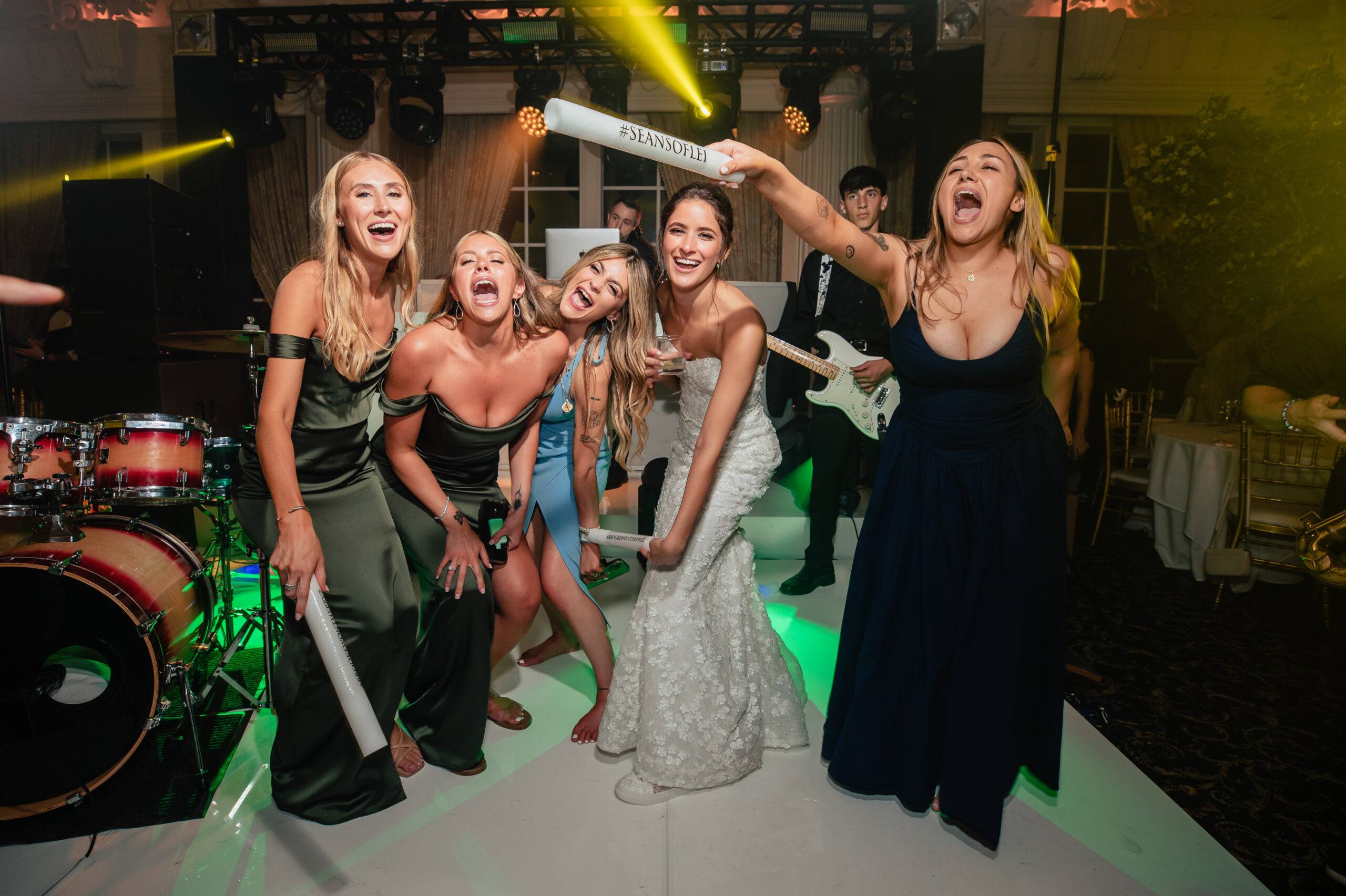
The last 30 minutes are anthems and shout-along songs. “Don’t Stop Believin’.” “Sweet Caroline.” Something everyone screams along to. End on a note where the last image in the room is a full floor, hands up, lights on the couple.
Why Pacing Beats a Playlist Every Time
A playlist runs the songs you picked in advance. A good MC and DJ run the room. They watch who’s on the floor, who’s leaving, what just landed and what fell flat — and they adjust in real time. That’s the difference between a packed floor at last call and an empty one at 10:45.
Signs You Should Extend or Wrap Early
Even with a perfect plan, the night sometimes asks for an audible. Here’s how to read it.
Floor Is Packed at Last Call
If your final 30 minutes are slammed — full floor, hands up, every song landing — and you’ve got budget and venue room left, extending 30 to 60 minutes can be worth it. Talk to your DJ and venue contact in advance about whether overtime is available and what it costs. Don’t try to negotiate at 11:45 PM with sweat in your eyes.
That said, don’t extend just because you can. Ending while the room is begging for more is a better memory than dragging it out until the last 12 guests are slow-swaying to a half-empty floor.
Floor Empties Mid-Reception
If you’re 90 minutes in and looking at six people on the floor, that’s not a “push through” moment — that’s a “wrap early” moment. Read what’s actually happening:
- Did dinner run long and burn the energy?
- Are guests outside, on phones, in the bathroom line?
- Is the music landing or missing?
Sometimes the right call is to close the floor for 15 minutes, do something — a toast, a surprise performance, a song everyone in the family knows — and reopen with intent. Other times it’s smarter to end on a high note 20 minutes early and let guests leave happy.
How a Good Entertainment Team Reads the Room
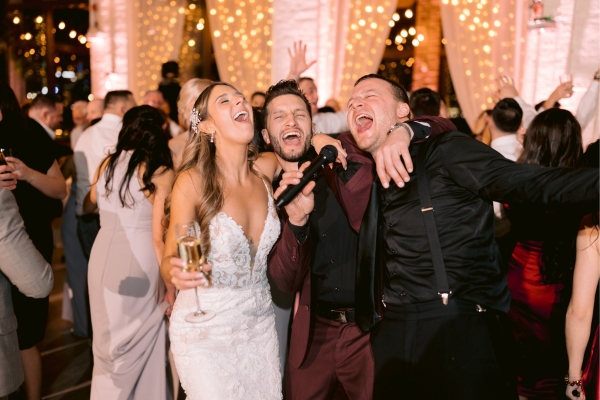
Pros aren’t running a setlist. They’re watching the floor, the bar, the tables, the door — and adjusting the next song based on what they see. If three people walked off during the last track, the next one needs to bring them back. If the floor is at capacity, don’t change the energy. If you spot the bride’s grandparents heading for their coats, don’t drop the dirtiest song in the catalog.
The MC and DJ working together is what turns “we had a DJ” into “everyone is still talking about the dance floor.”
Common Wedding Dance Floor Timing Mistakes
Most of these are easy to avoid once you know to look for them.
Opening the Floor Before Dinner Ends
Covered earlier, but worth repeating: don’t do it. Wait until the room is fed, focused, and ready.
No Clear “The Floor is Open” Moment
If your MC doesn’t make a defined call — something like “the dance floor is officially open, let’s get up here” — guests don’t know it’s time. They drift. The first 10 minutes that should be your best 10 are spent waiting for permission.
Booking 4 Hours of DJ Time but Only Getting 2 Hours of Dancing
A 4-hour DJ booking that has to cover cocktail hour, dinner background, formalities, and dancing isn’t 4 hours of dance floor. It’s maybe 2 to 2.5. If you want 3 hours of actual dancing, book 5 to 6 hours of entertainment — and be specific with your vendor about what those hours need to cover.
Stacking Formalities Into the Dancing Hours
Cake cutting, bouquet toss, garter toss, anniversary dance, last-minute speech from an uncle — pile all of those into the back half of the reception and you’ve just sliced your dance floor into 15-minute chunks. The floor can’t build momentum if you keep interrupting it. Front-load the formalities or commit to a clean break, then leave the dance floor alone.
Underestimating Venue Curfew and Breakdown Time
A 12 AM curfew doesn’t mean you’re dancing until 12. It means the venue needs to be cleared and broken down by 12 — which often means last song by 11:30, lights up at 11:35, guests out by 11:50. Build that backwards into your timeline so you’re not surprised by a hard stop.
How the Dance Floor Itself Affects How Long Guests Stay On It

Most timing conversations focus on the clock. But the physical dance floor is a bigger variable than people realize. Three hours on the right floor feels like one. Three hours on the wrong one feels like five.
Size Matters More Than Couples Think
A floor that’s too small creates a bottleneck — guests look at it, see no room, and don’t bother. A floor that’s too big always looks empty, even with 40 people on it, which kills the visual energy and makes the rest of the room hesitant to join. The math is roughly 3 to 4 square feet per dancing guest, with about a third of your guest list on the floor at any given time.
Not sure what size you need? Our dance floor sizing guide breaks it down by guest count, venue layout, and how much of your crowd will actually be dancing.
Visual Impact Pulls Guests On Earlier
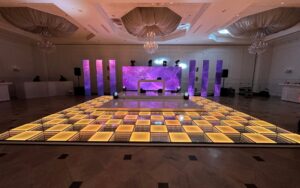
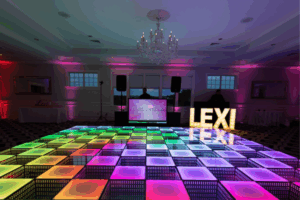
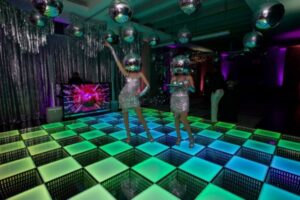
A plain rented parquet floor is functional. A custom LED floor, a monogrammed vinyl wrap, or an infinity-edge design is a centerpiece. When the floor is part of the room’s design, guests are drawn to it from the moment they walk in. They take photos on it before dancing even starts, which means they’re already comfortable being on it when the music drops. That changes how fast it fills and how long they stay.
If you’re planning your wedding locally, our dance floor rentals in New Jersey include LED, vinyl, and custom-printed options sized to your guest count and reception layout.
Surface and Comfort Over Three Hours
A dance floor that feels great for 20 minutes but is rough on heels for the next two hours is a problem you only notice when the floor starts thinning out at hour two. Surface quality, joint smoothness, and how it’s installed matter more than couples expect. Slip-resistant, level, comfortable underfoot — those aren’t extras, they’re the difference between a 3-hour floor and a 2-hour floor.
Curious what’s actually under your feet? Here’s what a wedding dance floor is made of and why the materials matter more than couples expect.
How We Approach Dance Floor Timing at Our Weddings
The reason any of this works is upstream of the actual reception. The night runs well because the planning was good.
We Build the Timeline With Your Vendors, Not Around Them
Before the wedding date, we coordinate directly with your venue, planner, and other vendors to lock in floor open and close times, identify curfew limits, and align on when formalities happen relative to dancing. No surprises on the day.
Our MCs Are Trained to Open and Close on Cue
The transition from first dance to open floor, the sequencing of formalities, the moment to call the last song — those are all rehearsed and intentional. Our wedding MCs aren’t reading a script, they’re running the room with a plan.
Floors Sized and Designed for Your Reception
We’re a full-service dance floor rental company, which means we don’t just drop a floor and leave. We size it to your guest count, design it to fit the room and your aesthetic, and handle setup and breakdown so it’s never something you have to think about.
Planning your wedding in New Jersey? Get a custom dance floor quote.
Tell us your guest count, venue, and date — we’ll send back options sized to your reception, with pricing for LED, vinyl, and custom designs. Contact us today to get started.