
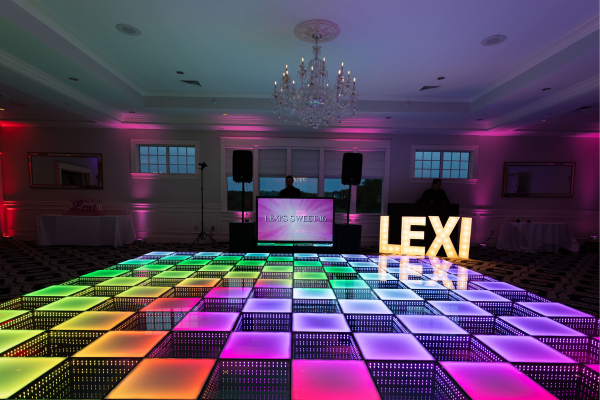
What are dance floors made of? It depends on the type, but most dance floors are built from materials like acrylic panels, vinyl surfaces, wood subfloors, aluminum framing, and LED components. Those materials affect how the floor looks, how it performs, how safe it feels underfoot, and how well it holds up throughout an event.
That is why the material side actually matters more than most people think. If you are planning an event and want a floor that truly fits your space, style, and guest experience, professional dance floor rentals make the process much easier and much more reliable.
Types of Dance Floors
Not all dance floors are built the same. The materials and construction can vary a lot depending on the style of floor, the kind of event, and the visual effect you want.
LED Dance Floors
LED dance floors are built for energy and visual impact. They light up, create movement, and add a more immersive feel to the room, which makes them especially popular for high-energy celebrations and modern event designs.
Vinyl Dance Floors
Vinyl dance floors are known for their clean, polished look and strong customization potential. They are a popular option for weddings, branded events, and upscale parties where design matters just as much as function.
Static Dance Floors
Static dance floors focus more on a classic, elegant appearance without lighting effects. They are often chosen for events that want a timeless look, strong durability, and a straightforward setup.
What Each Dance Floor Is Made Of
The main difference between dance floor types is not just how they look. It is how they are built. The structure underneath, the surface material on top, and the way the panels connect all play a role in performance and appearance.
LED Dance Floors Materials

LED dance floors are usually made with tempered glass or durable acrylic panels on the surface, depending on the design and build. Under that top layer, they include LED light modules, circuit boards, internal wiring, and control systems that power the lighting effects and keep the visuals working properly throughout the event.
The frame beneath the panels is often made from aluminum or steel so the floor stays stable under constant foot traffic. A non-slip top layer is also important, because the floor needs to look dramatic without becoming slick or unsafe. So while people often think of LED floors as just a cool lighting feature, they are really engineered systems built to balance durability, safety, and visual performance.
Technology Inside LED Floors
The lighting side is where LED floors become much more technical than standard dance floors. Many use programmable lighting systems that allow the floor to change color, pulse, animate, or sync with the atmosphere of the event.
Some setups also use DMX controllers, which are commonly used in professional event lighting. These controllers help manage patterns, timing, transitions, and syncing effects. Add in power distribution systems and internal components that keep everything running evenly, and it becomes clear that an LED dance floor is not just a floor with lights inside it. It is a structured production element designed to handle both movement and technology at the same time.
Vinyl Dance Floors Materials

Vinyl dance floors are typically built with a printed vinyl wrap on the surface, a smooth protective laminate coating, and a wood or composite panel base underneath. Depending on the setup, they may use adhesive backing or a modular panel system to create a clean, finished look across the full floor.
One of the biggest reasons people choose vinyl is customization. This is the style most often used for logos, monograms, names, branding, or custom color designs. It gives events a polished, high-end appearance without feeling bulky, and it stays relatively lightweight while still having the structure needed for a stable dance surface.
Static Dance Floors Materials

Static dance floors are usually made from hardwood or engineered wood panels with a laminate or matte finish coating on top. Underneath, they often rely on a reinforced support system and interlocking panel construction so the floor stays secure during heavy use.
This type of floor is built for durability and a more classic look. It can handle a lot of foot traffic, holds up well over time, and works especially well for events that want a clean, elegant setup without lighting effects or printed graphics competing for attention.
How Custom Dance Floors Are Made
A custom dance floor does not start with the final look. It starts with planning. The size, materials, finish, and installation method all need to match the event itself, not just the visual idea.
Design and Planning
The first step is figuring out the layout based on the guest count, venue dimensions, and how the floor will actually be used. A wedding dance floor may need to feel elegant and central, while a corporate floor may need more branding and more room for movement.
Material choice matters here too. Some events need a glossy custom vinyl surface. Others need the visual impact of LED panels. Some just need a durable floor that fits the room and handles traffic well without overcomplicating the setup.
Fabrication Process
Once the plan is set, the floor components are prepared to match the design. That can include cutting panels to size, printing custom vinyl graphics, configuring LED elements, and assembling the structural frame that supports everything underneath.
This is where quality starts to show. Good fabrication means cleaner seams, better alignment, stronger support, and a more finished appearance once the floor is fully installed.
Installation and Setup
At the venue, the surface needs to be leveled first so the dance floor sits evenly. Then the panels are locked together, secured in place, and checked for stability before the event begins.
With LED floors, setup also includes testing the lighting systems, power flow, and control functions. That part matters a lot. A poor setup can lead to uneven panels, weak connections, movement underfoot, or sections that do not sit flush. That is not just a visual problem. It can also create safety issues and affect how comfortable the floor feels once people start dancing.
Why Materials Matter for Your Event
The material choice affects much more than appearance. It plays a direct role in safety, performance, and how the event feels once the room is full.
A slip-resistant surface and stable panel system help guests feel comfortable moving on the floor. That matters whether you are hosting a formal first dance or a packed high-energy party. The finish also shapes the visual tone. A glossy vinyl floor feels sleek and refined. An LED floor feels bold and immersive. A static floor feels classic and understated.
Materials also change the guest experience. At a wedding, a custom vinyl floor with a monogram can make the room feel more personal and styled. At a corporate event, a branded floor can reinforce the overall presentation and create a stronger visual identity. In a nightclub-style setting, LED panels can raise the energy fast and make the floor feel like part of the entertainment.
Venue compatibility matters too. Some floors work better indoors, while others may require extra support or subfloor planning for outdoor use. So when people ask what dance floors are made of, the better question is often what the event needs the floor to do. That is what should drive the choice.
Common Questions About Dance Floor Materials
Are dance floors made of real wood?
Some are, and some are not. Static dance floors are often made with hardwood or engineered wood panels, while other styles may use composite bases, vinyl surfaces, acrylic panels, or LED components depending on the design.
So the answer really depends on the type of floor. A classic wood-look floor may involve real wood or engineered materials, while a custom vinyl or LED floor is built very differently.
Are LED dance floors safe to walk on?
Yes, when they are professionally built and installed correctly, LED dance floors are designed to be safe for guests to walk and dance on. They typically include durable top panels and slip-resistant surfaces to help with traction and stability.
The key factor is setup quality. A properly installed LED dance floor should feel secure, level, and well-supported throughout the event.
Can dance floors be customized?
Yes. This is one of the biggest reasons people rent them in the first place. Vinyl dance floors are especially popular for customization because they can feature logos, monograms, names, branding, color themes, and other design details.
Customization can also show up in LED floors through lighting patterns, color effects, and visual style. So whether the goal is elegant, branded, modern, or bold, there is usually a way to tailor the floor to the event.
What is the most durable type of dance floor?
Static dance floors are often viewed as one of the most durable options because they are built for strength, stability, and high foot traffic. Their wood-based panel construction and reinforced support systems make them a dependable choice for events that need a classic floor with strong performance.
That said, durability also depends on build quality, setup, and how the floor will be used. A well-made LED or vinyl floor can still perform extremely well when matched to the right event.
Can dance floors be used outdoors?
Yes, but outdoor installation usually requires more planning. The surface underneath matters a lot. Concrete, patios, and other solid, level areas are usually the best fit, while grass or uneven ground may require a subfloor for proper support.
That is important for both appearance and safety. Even a great dance floor can become a problem if it is placed on an unstable surface.
Why Work With One of a Kind Events
When the dance floor is a major visual and functional part of the event, experience matters. One of a Kind Events handles dance floor production in-house, which helps keep quality control tighter from design through installation.
They also offer custom dance floor options, multiple floor styles, and full setup and breakdown, which makes the process easier for clients who do not want to piece everything together on their own. Whether the event is a wedding, a corporate function, or a private celebration, having a team that understands both the design side and the practical setup side can make a big difference.
Final Thoughts on Dance Floor Materials
The materials behind a dance floor affect much more than people realize. They shape the look, the feel, the durability, the safety, and the overall guest experience.
The right choice depends on the kind of event you are planning. Some events need a polished custom vinyl floor. Others need the energy of LED effects. Others simply need a clean, durable setup that works. That is why rentals usually make more sense than trying to buy or piece together something yourself.
If you want a dance floor that looks right, performs well, and is set up correctly from the start, working with a professional dance floor rental company is the smartest move. Explore your options and get a setup tailored to your event.