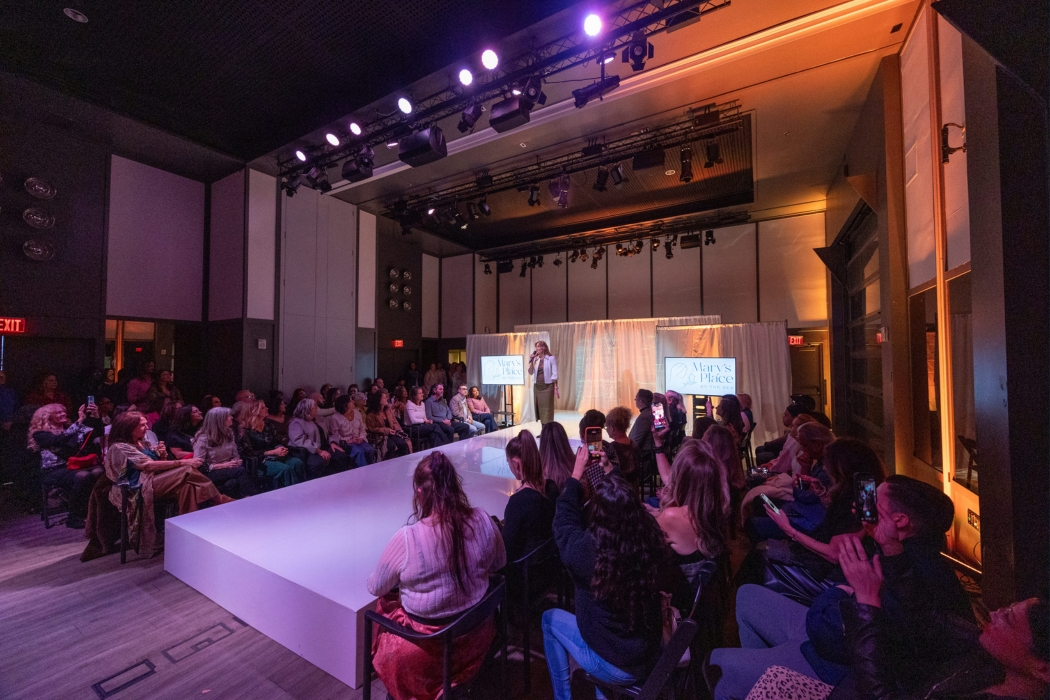
A thrust stage extends outward from the main stage area and into the audience. Instead of keeping all of the action at one end of the room, part of the platform moves directly into the guest space.
That layout can work especially well when models, performers, speakers, or other participants benefit from getting closer to the audience. Guests may be positioned along multiple sides of the extended platform, creating a different viewing experience than a traditional stage.
Planning an event that needs a custom stage layout? Explore One Of A Kind Events’ stage rentals in New Jersey for staging designed around your venue, audience, and production.
Quick Answer: What is a Thrust Stage?
A thrust stage is a stage configuration where part of the performance platform extends forward into the audience. Guests are typically positioned along two or three sides of that extended section instead of viewing everything from one direction.
Thrust stages can be used for:
- Fashion shows
- Live performances
- Corporate presentations
- Awards programs
- Product reveals
- Speaking events
- Experiential productions
The shape can vary. Some thrust stages use a simple straight extension, while others use T shapes, wider end sections, or more customized layouts.
The defining feature is that the stage projects outward from the primary performance area and brings the action farther into the audience.
How Does a Thrust Stage Work?
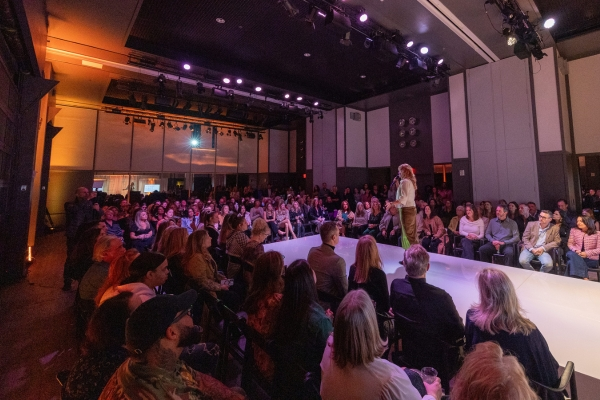
A thrust stage usually starts with a main stage area and adds an extension that projects into the room.
That extension gives presenters, performers, or models more space to move while also changing where the audience can be positioned.
Main Stage Area
The main stage remains the primary performance or presentation area.
Depending on the event, it may contain:
- Entrances
- Scenic elements
- LED video walls
- Speakers
- Musicians
- Production equipment
Participants can begin on the main stage and then move onto the extended section when the program calls for it.
Thrust Extension
The thrust is the section that projects into the audience.
Instead of everyone onstage remaining several rows away from most guests, the extension allows them to move farther into the room.
For a fashion show, that might mean models walking directly between two sections of seating. For a corporate event, a speaker could move away from the main presentation area and engage with more of the room.
Audience Placement
One of the biggest differences with a thrust stage is how guests can be arranged around it.
Audience members may sit along both sides of the extension, around the end, or in a combination of positions based on the stage shape and venue.
That creates more viewing angles than a stage that is only seen from the front.
Thrust Stage vs Traditional End Stage
Both layouts can work extremely well. The right choice comes down to what needs to happen during the event.
Traditional End Stage
A traditional end stage sits at one end of the room with the audience primarily facing it from one direction.
This layout makes sense when the event has one clear focal point and relies heavily on elements such as:
- Presentation screens
- Scenic backdrops
- Panels
- Keynote speakers
- Bands
- Large video displays
Guests remain in front of the primary stage area throughout most of the program.
Thrust Stage
A thrust stage takes part of that platform and extends it into the audience.
That changes how guests experience what is happening onstage. People may be viewing performers or presenters from the front, sides, and sometimes around the end of the thrust.
Neither configuration is automatically better.
A traditional end stage may make more sense for a presentation centered around a large screen. A thrust may make more sense when movement, interaction, visibility, or audience proximity is a major part of the event.
Why Use a Thrust Stage?
The biggest reason to use a thrust stage is to change the relationship between the stage and the audience.
Instead of treating the stage as a separate area at the front of the room, the platform becomes part of the guest environment.
Bringing the Action Closer to Guests
A thrust stage allows people onstage to move physically closer to more of the audience.
For a fashion show, models can walk directly between guests. At a live performance, an entertainer can move away from the main stage. At a corporate event, a presenter may be able to address different sections of the room more naturally.
That proximity can make the event feel more engaging.
Creating More Viewing Angles
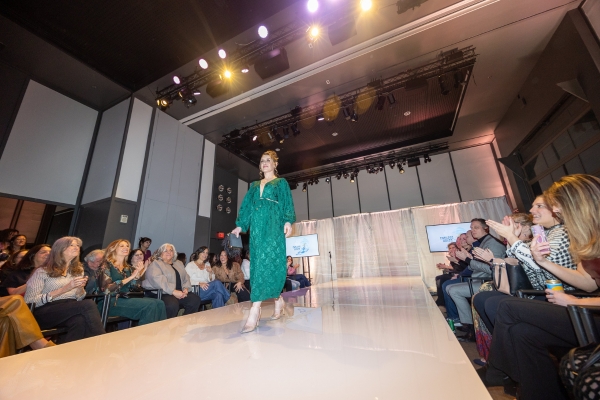
With a standard stage, most guests are viewing the action from roughly the same direction.
A thrust creates additional angles.
Guests sitting along the sides can see performers, models, or presenters as they move past them rather than only seeing them from a distance.
This is one reason the configuration works particularly well for fashion shows, where movement and visibility are central to the experience.
Making the Stage Part of the Room
A thrust stage can make the production feel less separated from the audience.
The platform extends directly into the seating or standing area, which can make guests feel more connected to what is happening.
It also changes how the room itself is laid out. Seating, aisles, lighting, photography, and audience circulation may all be designed around the stage rather than simply placed in front of it.
Creating a Strong Visual Layout
The shape of the stage can become part of the event design.
A long runway creates strong visual lines through a room. A T shaped stage can create a wider presentation area at the end. Other custom configurations can be designed around the venue and the type of movement required.
The stage is no longer only a platform. Its shape helps define the look and flow of the entire space.
Example: Our T Shaped Thrust Stage for Born to Runway
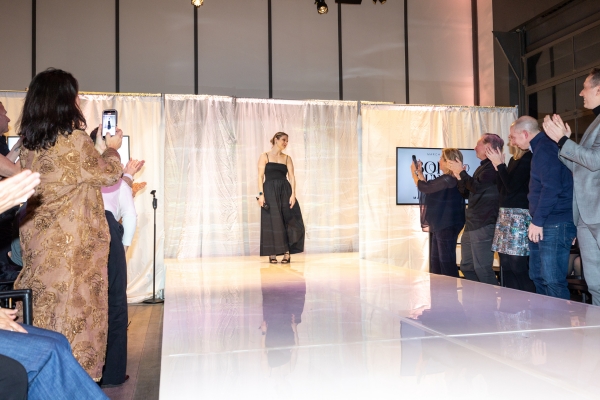
A good example is the inaugural Born to Runway fashion show at The Asbury Hotel in Asbury Park.
For that event, One Of A Kind Events provided a sleek, all white acrylic T shaped runway. The event drew more than 180 ticket holders, and the extended layout placed the runway directly within the audience instead of keeping the models confined to a traditional stage at the front of the room.
The long central runway gave the models a clear path through the audience, while the wider section at the end created an additional presentation area. Guests were positioned alongside the runway, allowing them to experience the fashion show from much closer viewing angles.
The white acrylic surface also made the stage itself part of the visual design rather than treating it as a purely functional platform. The finished runway created a clean focal point through the room while supporting the movement that the fashion show required.
The event is a strong example of why a thrust stage is not simply about adding more stage space. The shape of the platform changed the audience layout, the way the models moved through the venue, and how guests experienced the show.
See the full Born to Runway Asbury Park event recap for more photos and details from the production.
Why the T Shape Worked for This Event
For Born to Runway at The Asbury Hotel, the T shaped configuration made sense because the stage was designed around movement and audience visibility.
The long center runway brought models directly through the room instead of keeping the entire show at one end. Guests could sit along both sides of the runway, putting them much closer to the models as they passed.
The wider section at the end created another presentation point where models could pause, turn, and be seen from different parts of the room.
The finish mattered too. One Of A Kind Events used a sleek, all white acrylic runway, making the stage itself part of the event design rather than simply a platform underneath the show.
The open layout also created strong photography opportunities. With guests positioned around the runway and models moving through the room, photographers could capture the show from the front, sides, and wider room perspectives.
See our Born to Runway Asbury Park event recap for more photos and details from the production.
Where Are Thrust Stages Commonly Used?
Thrust stages work especially well for events where movement and audience proximity are important.
Fashion Shows
Fashion shows are one of the most recognizable uses.
A runway can extend directly into the audience, allowing models to move between seating sections while giving guests views from both sides.
Live Performances
Performers can use the extension to move away from the main stage and get closer to the crowd.
That can make concerts, showcases, and other live performances feel more connected to the audience.
Corporate Events
Thrust stages can also work for corporate events involving keynote speakers, product reveals, awards programs, and presentations.
A presenter can move farther into the room instead of remaining behind a lectern or at the back of the stage.
Special Event Productions
Custom thrust layouts can also be used for galas, brand activations, showcases, and other productions where the stage itself contributes to the experience.
What Should Be Considered When Designing a Thrust Stage?
A thrust stage needs to work with the entire room, not just the main stage area.
Venue Floor Space
A thrust takes up more floor space because part of the platform extends into the audience.
The layout needs to leave enough room for seating, tables, aisles, production equipment, and guest circulation.
Stage Width and Length
The extension needs enough room for the people using it without becoming oversized for the venue.
A fashion runway may need significant length, while a speaker extension could be much shorter.
Not sure how large your platform should be? Our stage size guide explains common dimensions and the factors that affect stage sizing.
Audience Sightlines
Guests may be viewing the stage from several directions.
The production team should consider what people can see from the front, sides, and end of the extension.
Screens, scenic elements, speakers, and other equipment should not block important views.
Entrances and Movement
The stage should support how people actually need to move during the event.
For a fashion show, that includes where models enter, how they travel down the runway, where they turn, and how they exit.
The same applies to speakers and performers.
Lighting
Lighting has to cover the entire thrust.
Someone walking away from the main stage may move through several different positions, so lighting cannot be focused only on the primary stage area.
Cameras and Photography
Thrust stages can create great camera angles, but camera positions should be planned early.
Photographers and video crews need clear views without blocking guests or interfering with movement around the stage.
Does a Thrust Stage Have to Be T Shaped?
No.
A thrust stage simply needs to extend from the primary stage area into the audience. A T shape is one possible configuration, but it is not the definition of a thrust stage.
Common layouts can include:
- Straight extensions
- T shaped stages
- Wider platforms
- Custom geometric configurations
The best shape depends on the venue, audience layout, and what needs to happen onstage.
Frequently Asked Questions About Thrust Stages
What is a thrust stage?
A thrust stage extends from the main stage into the audience, allowing guests to view the action from multiple sides.
Is a runway a thrust stage?
It can be. Many fashion show runways function as thrust stages because they project from a main staging area into the audience.
Does a thrust stage have audience seating on three sides?
Often, but not always. Seating depends on the shape of the stage, venue layout, and type of event.
Can a thrust stage be T shaped?
Yes. A T shaped stage includes a wider section at the end of the extension and works especially well for fashion shows and other movement focused productions.
Are thrust stages only used for fashion shows?
No. They can also be used for concerts, corporate events, awards programs, product reveals, presentations, and other live events.
Can a thrust stage be customized?
Yes. The dimensions, shape, surface, finish, fascia, lighting, and scenic integration can all be planned around the event.
Conclusion
A thrust stage brings part of the performance area directly into the audience, creating closer interaction, additional viewing angles, and a more integrated room layout. From a simple straight extension to the custom T shaped runway used for Born to Runway, the configuration can be adapted around the venue and what needs to happen during the event.
Planning an event that needs a custom stage? Explore One Of A Kind Events’ stage rentals in New Jersey for staging built around your room, audience, and event design.