

Stage fascia is the finished treatment applied to the visible front and sides of an event stage.
The stage deck itself is built for function. It needs to support presenters, performers, equipment, scenic elements, and whatever else is happening onstage. The fascia is what helps that structure look finished once guests enter the room.
Depending on the event, fascia may be simple and neutral or become part of the overall branding and scenic design. It can help hide the stage structure, create a cleaner finished edge, match the event design, carry graphics or logos, and visually connect the stage with the rest of the production.
Planning an event that needs professional staging? Explore One Of A Kind Events’ stage rentals in NJ for custom stage configurations, finishes, and complete event production.
What is Stage Fascia?
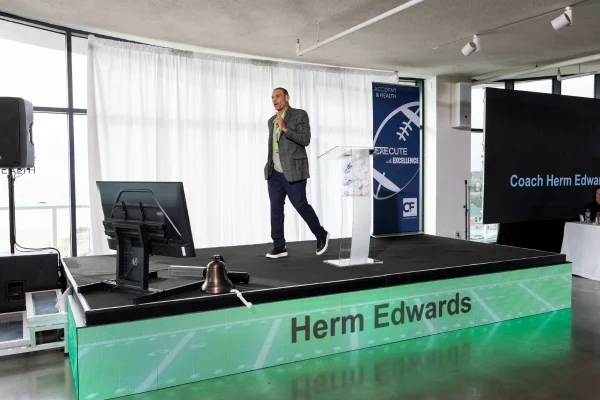
Stage fascia is the finished surface that covers the outward facing vertical edge of an elevated stage.
It usually runs across the front of the stage and may continue around the visible sides depending on how the stage is positioned in the room.
The stage itself creates the platform. The fascia finishes the part guests actually see from the floor.
Where is Stage Fascia Installed?
Stage fascia can be installed along:
- The front of the stage
- Exposed sides
- Stage extensions
- Runways
- Risers
- Other visible elevated platforms
Not every edge needs the same treatment.
If part of the stage is against a wall, hidden backstage, or blocked by scenic elements, that area may not need the same finished surface as the portions facing the audience.
Stage Fascia vs Stage Skirting
Stage fascia and stage skirting serve similar purposes, but they are not exactly the same thing.
Both help hide the structural components underneath or around the stage. The main difference is how they look and how much they become part of the design.
What is Stage Skirting?
Stage skirting is generally fabric that hangs around the edge of the platform.
Its main purpose is to conceal the legs, supports, cables, and other components underneath the stage.
It is often simple, flexible, and relatively neutral.
How Fascia is Different
Stage fascia is typically a more finished and structured treatment.
Depending on the event, it may include:
- Rigid panels
- Printed graphics
- Vinyl
- Custom surfaces
- Mirrored finishes
- Lighting
- Fabricated scenic elements
Instead of simply hiding what is underneath the stage, fascia can become part of the visual design itself.
That is especially useful for corporate events, branded productions, awards programs, and larger events where the front of the stage is highly visible.
Why is Stage Fascia Used?
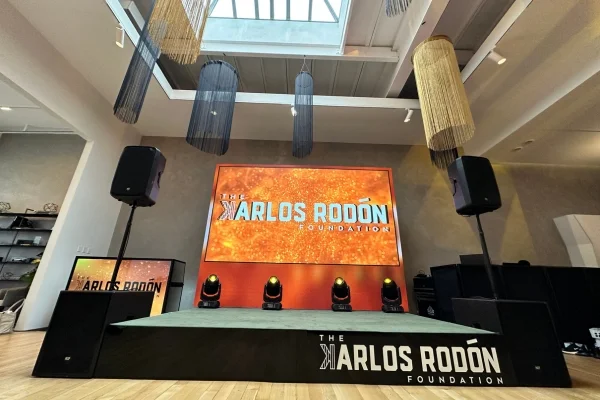
The most basic reason is simple: an exposed stage can look unfinished.
Fascia turns a functional platform into something that feels more intentional within the room.
Hiding the Stage Structure
Event stages are built from decks, legs, supports, hardware, and other structural components.
Those pieces are necessary, but they are usually not what the audience should be looking at.
Fascia creates a clean surface along the visible edge so the stage framework stays out of sight.
Creating a Finished Stage
Even a well built stage can look incomplete when the front and sides are left exposed.
Fascia closes off those visible edges and helps the stage feel like part of the finished environment rather than a temporary structure placed in the room.
This can matter even with a very simple setup.
A clean black or white finish may be enough to make the stage look considerably more polished.
Supporting the Event Design
Stage fascia can also support the larger design of the event.
It may match the colors used in the backdrop, scenic structures, LED wall content, dance floor, DJ booth, or other elements throughout the room.
A simple black finish may intentionally disappear into the background.
A custom branded fascia may do the opposite and become one of the more visible design elements onstage.
What Can Stage Fascia Look Like?
There is no single standard appearance for stage fascia.
The finish depends on the event, stage design, branding, and how prominent the stage needs to be within the room.
Simple and Neutral Finishes
Some stages are meant to stay visually quiet.
A simple black, white, or neutral fascia can create a finished appearance without pulling attention away from the presenters, performers, scenic backdrop, or screen content.
This works especially well when the stage itself is not supposed to be a major design feature.
Branded Stage Fascia
Corporate events can use the front of the stage as additional branding space.
That may include:
- Company logos
- Event names
- Sponsor branding
- Campaign graphics
- Custom colors
- Printed designs
Instead of leaving the front of the platform unused, the fascia becomes part of the visual identity of the event.
This can be especially effective on stages that are photographed frequently or remain visible throughout a conference, awards program, or presentation.
Custom Scenic Finishes
For larger productions, the fascia can be incorporated into a more detailed scenic design.
That may include dimensional panels, metallic finishes, mirrored surfaces, custom shapes, illuminated details, or materials that match scenic elements elsewhere onstage.
In these cases, the fascia is no longer just covering the stage structure.
It becomes part of the scenic environment.
How Stage Size and Height Affect the Fascia
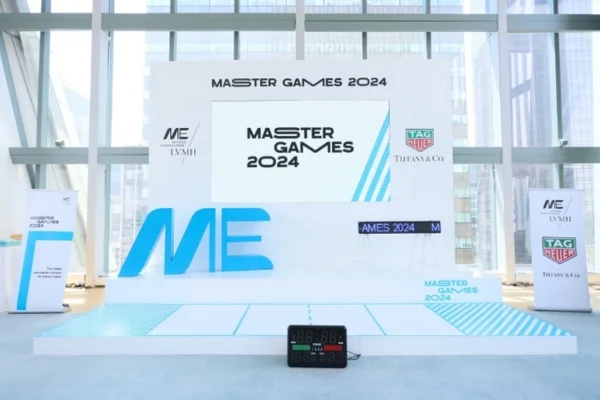
The amount of fascia required depends directly on the size and elevation of the stage.
A long, elevated stage creates much more visible surface than a small platform or low riser.
That means stage dimensions affect both how much fascia is needed and how noticeable it becomes.
Stage Height Changes the Visual Impact
The taller the stage, the more prominent the front face becomes.
On a low platform, the fascia may only occupy a small portion of the audience’s view.
On a taller stage, that front surface can become a major visual element.
That is why the finish becomes increasingly important as the stage height increases.
Not sure what stage dimensions make sense for your event? Use our stage size guide to compare common configurations and understand how stage width, depth, and height affect the overall setup.
Planning Stage Fascia Around the Stage Layout
Fascia should be considered while the stage is being designed, not added as an afterthought.
The layout determines where the finish can run, where it needs to stop, and how it interacts with other elements.
Stairs, Entrances, and Stage Access
Stage stairs, ramps, performer entrances, presenter access points, and other openings can interrupt the fascia.
The finish may need to wrap around those areas or stop cleanly where access is required.
This is especially important on stages with several entrances or multiple levels.
Stage Shape and Extensions
A basic rectangular stage is relatively straightforward.
More complex layouts require more planning.
Runways, curved sections, thrust stages, multiple risers, and stage extensions may all change how the fascia is built and installed.
The finish needs to follow the shape of the platform rather than looking like it was added separately.
Using a Stage Plot
For events involving performers, bands, presenters, instruments, or significant production equipment, the stage layout should already identify where everything needs to go.
That can help determine where stairs, access points, equipment, and scenic elements will interrupt the visible edge of the stage.
For a closer look at how performers, equipment, and stage positions are mapped before an event, see our guide to stage plots for live events.
How Stage Fascia Fits With the Rest of the Production
Stage fascia is only one part of the overall stage environment.
It needs to work with the other production elements around it, including:
- Backdrops
- LED video walls
- Lighting
- Scenic structures
- DJ booths
- Speakers
- Truss
- Branding
Coordinating the Stage From Top to Bottom
A finished stage might include branded fascia below, an LED wall or scenic backdrop behind it, and lighting or truss overhead.
Those pieces should feel like one coordinated design.
The fascia should not look like a separate decorative layer added after everything else was already planned.
Color, materials, branding, proportions, and lighting should all work together so the stage feels intentional from top to bottom.
If your stage design also includes overhead lighting, speakers, or suspended production equipment, our event truss guide explains how truss fits into a live event setup.
What Should Be Planned Before Choosing Stage Fascia?
Stage fascia should be planned after the basic stage layout is understood.
The production team needs to know how large the stage is, which sides guests will see, what branding is being used, and how the fascia will be delivered and installed inside the venue.
Stage Dimensions
The final width, depth, height, and shape of the stage should be confirmed first.
Those dimensions determine how much fascia is needed and how prominent the finished surface will be.
A taller or longer stage creates more visible area, while a small riser may only need a simple finish.
Visible Sides
Not every side of the stage necessarily needs fascia.
If the stage is positioned against a wall, the front and exposed sides may be the only areas visible to guests.
The production team should identify those sightlines early so time and materials are focused where they actually matter.
Branding Requirements
If the fascia will include logos, sponsor graphics, custom artwork, or printed designs, those assets should be prepared early.
The production team may need time to size the artwork, confirm placement, produce graphics, and coordinate the finish with the rest of the stage design.
Venue and Installation Requirements
Custom fascia still has to get into the venue and onto the stage.
Doorways, loading access, elevators, stage location, installation time, and venue restrictions can all affect how the finished pieces are built.
Larger custom panels may need to be fabricated in sections so they can be transported and assembled onsite.
Overall Event Design
The fascia should feel connected to the rest of the event.
Colors, finishes, graphics, lighting, backdrops, LED walls, and scenic elements should be considered together.
A simple stage may only need a clean neutral finish. A larger branded production may use the fascia as another major part of the visual environment.
Frequently Asked Questions About Stage Fascia
What is stage fascia?
Stage fascia is the finished surface applied to the visible vertical edge of an elevated stage.
Is stage fascia the same as stage skirting?
Not exactly. Stage skirting is usually fabric used to conceal the structure underneath a stage, while fascia can be a more rigid or custom finished surface that becomes part of the stage design.
Can stage fascia be branded?
Yes. Logos, event graphics, sponsor branding, custom colors, and printed designs can all be incorporated into stage fascia.
Does every event stage need fascia?
No. Whether fascia is needed depends on the stage design, venue, audience view, and overall production style. It is most useful when the exposed stage structure would otherwise be visible.
Can stage fascia include lighting?
Yes. Custom stage fascia can include illuminated details, LED lighting, or other lighting elements when those features are planned into the design.
Is fascia installed on every side of the stage?
Usually not. The visible front and exposed sides are typically the priority. Areas hidden against a wall or backstage may not need the same finished treatment.
Rent a Stage from One of a Kind Events
Stage fascia is the finished treatment around the visible edge of an event stage. It can simply conceal the underlying structure or become a larger part of the event branding and scenic design.
Planning an event that needs staging? Explore One Of A Kind Events’ stage rentals in New Jersey for professional stage configurations, custom finishes, and production built around your venue and event.