
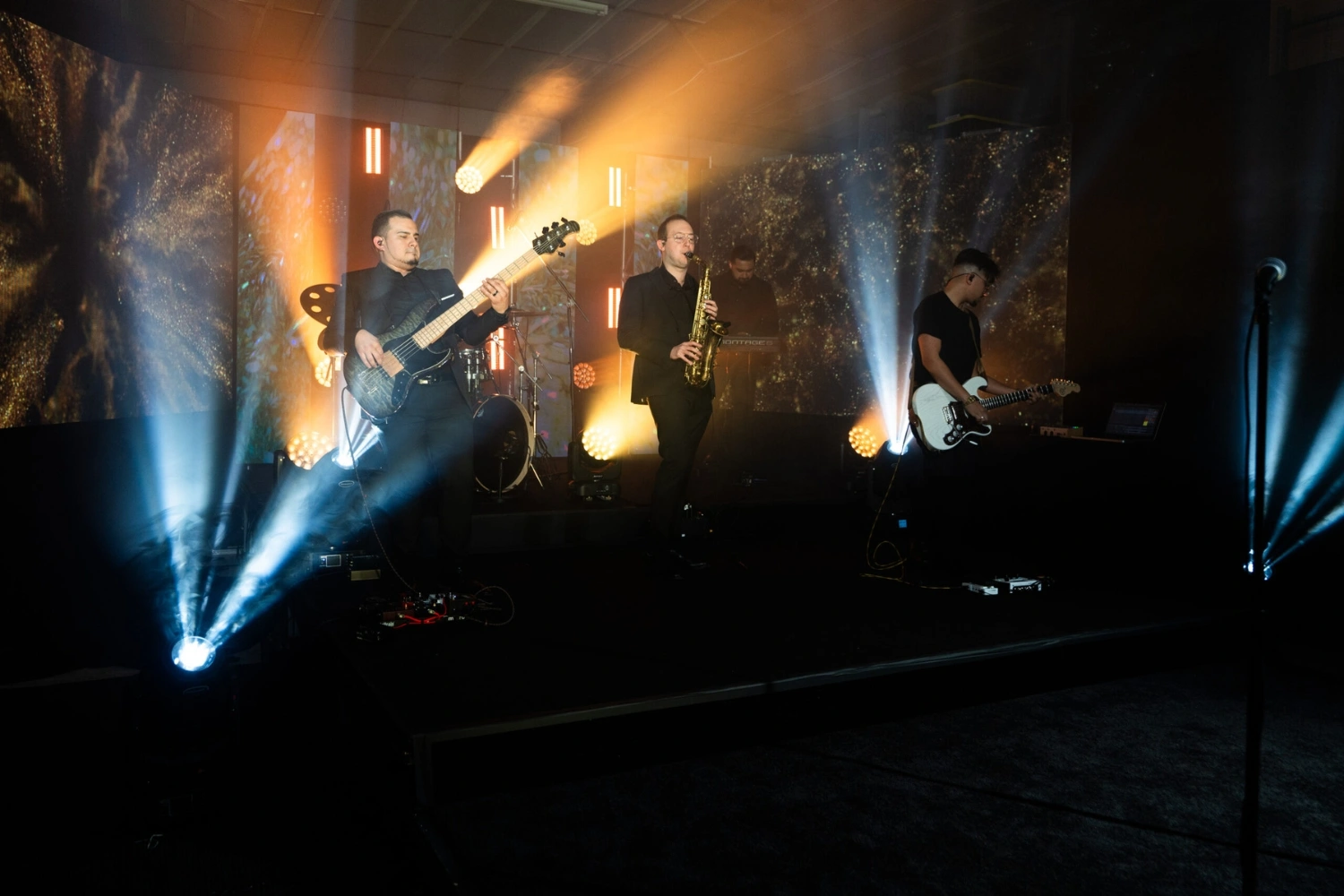
A stage crew shouldn’t have to figure out where a six-piece band, drum riser, keyboards, monitors, microphones, and power need to go while everyone is standing around waiting for soundcheck.
A stage plot gives the production team a visual map of the performance setup before equipment starts moving onto the stage. It helps everyone understand where performers and equipment belong, what needs to be prepared, and how the stage should be built around the act.
This guide explains what a stage plot shows, what should be included, and how bands, performers, venues, and production teams use one to build the stage correctly.
What is a Stage Plot?
A stage plot is a visual diagram showing where performers, instruments, microphones, monitors, risers, power connections, and other equipment should be positioned on a stage. Bands and performers provide stage plots so production teams can prepare the stage, audio system, power, and equipment layout before a performance.
Think of it as a physical map of the performance. It tells the crew where things go rather than leaving those decisions until setup or soundcheck.
A useful stage plot can help the production team understand:
- Where each performer will stand
- Which instruments and equipment will be on stage
- Where microphones and monitors are needed
- Where risers or elevated platforms belong
- Which areas need electrical power
- How much room the entire setup requires
The plot is normally reviewed before load-in so the production team can turn the performer’s requirements into an actual stage layout.
Who Uses a Stage Plot?
Stage plots are not limited to touring bands. They can be useful anywhere a live performance has multiple people, instruments, audio connections, or stage requirements.
They may be used by:
- Bands and individual musicians
- DJs and DJ/live-musician hybrids
- Audio engineers
- Stage managers
- Event production companies
- Venue production teams
- Festival crews
- Corporate entertainment teams
The more moving parts a performance has, the more useful the stage plot becomes.
What Should a Stage Plot Include?
A stage plot should make the performance setup understandable at a glance. It does not need to look elaborate. It needs to give the production team accurate information about the people, equipment, and physical layout they are preparing for.
Performers and Instruments
Start by showing who will be on stage and where they will be positioned.
Label each performer by name or role and identify their main instrument or function. Depending on the act, that might include:
- Lead and backing vocalists
- Drummer and drum kit
- Guitarists and bassists
- Keyboard players
- Horn or string players
- DJ or playback station
- Percussionists
- Musicians performing alongside a DJ
Placement matters for more than how the stage looks. Where performers stand can affect microphone locations, monitor coverage, cable paths, available walking space, and how comfortably everyone can move during the performance.
A six-person band packed into a stage layout designed for four people can create problems long before the first song starts.
Microphones and DI Inputs
The stage plot should show where microphones and other audio connections are expected.
That may include:
- Vocal microphones
- Instrument microphones
- Wireless microphone positions
- DI boxes
- Microphone stands
- Playback or instrument inputs
For example, a keyboard positioned stage right may require power and one or more DI connections in that area. A guitarist with an amplifier may need a microphone near the amp. Multiple vocalists may each need their own microphone and stand.
The stage plot does not need to contain every technical console detail. Those more specific channel-by-channel requirements are typically organized in an input list.
The stage plot shows where the sources are. The input list explains in greater detail what needs to connect to the audio system.
Monitors and In-Ear Monitor Positions
Performers also need to hear what is happening on stage.
A stage plot should identify floor monitors, often called wedges, and show which performer each monitor is intended to serve. If the act uses in-ear monitors instead, those requirements can also be noted.
Monitor placement matters because every performer may need a different listening position. A lead singer at center stage has different needs than a drummer several feet behind them or a keyboard player positioned off to one side.
Planning those locations in advance helps provide the performers with usable monitoring without unnecessarily crowding the stage with speakers, stands, and cables.
Amplifiers and Backline
Any significant backline equipment should also appear on the stage plot.
This may include:
- Guitar amplifiers
- Bass rigs
- Keyboard rigs
- Drum equipment
- Percussion equipment
- Specialty instruments
- Other performer equipment
It should also be clear when possible who is providing the equipment.
If the performer is bringing a guitar amp, the production team needs to know it will arrive with the act. If a drum kit, keyboard stand, or amplifier is expected from the venue or production company, that should be communicated in advance rather than discovered during load-in.
That simple distinction can prevent a surprisingly large number of day-of-event problems.
Risers and Stage Platforms
Some performances require more than one flat stage surface.
A stage plot may call for:
- Drum risers
- Keyboard risers
- Elevated DJ platforms
- Performer platforms
- Multiple stage levels
When risers are needed, useful details include their approximate dimensions, height, and position relative to the rest of the stage.
For example, placing the drummer on a rear-center riser changes the physical stage build. The production team has to account for the riser footprint, the remaining performance area, access to the platform, equipment placement, and sightlines.
This is one reason a stage plot should be reviewed before the staging configuration is finalized.
Planning a performance, corporate event, or live production? Explore One Of A Kind Events’ stage rentals in New Jersey for custom stage sizes, heights, platforms, and multi-level configurations.
Power Requirements
A stage plot should also identify where powered equipment will be used.
Common examples include:
- Guitar and bass amplifiers
- Keyboards
- Pedalboards
- DJ equipment
- Playback systems
- Electronic drums
- Other powered instruments or equipment
Marking these locations allows the production team to understand where electrical access will be needed before cables are routed across the stage.
The stage plot is not a replacement for a complete electrical or production power plan. Its job is to communicate where the performers need power, so the technical team can plan the proper solution.
Other Stage Equipment
Not every item needs its own technical category, but anything that affects the stage footprint should still be shown.
That can include:
- Music stands
- Performer chairs or stools
- Specialty instruments
- Playback stations
- Props
- Large equipment cases used during the performance
- Additional scenic or stage pieces
If an item takes up meaningful space or requires a connection, the production team should know about it.
How to Read a Stage Plot
Creating the stage plot is only half of the equation. Someone on the production side needs to be able to look at it and understand what the performer is asking for.
A good plot should make that process simple.
Stage Left and Stage Right
One of the easiest things to misunderstand is stage direction.
Stage left and stage right are described from the performer’s perspective while facing the audience.
That means:
- Stage left is the performer’s left
- Stage right is the performer’s right
- Center stage is the central performance area
Someone sitting in the audience will see stage left on their own right-hand side.
Using these terms consistently matters when crews are positioning equipment, running audio lines, placing monitors, or discussing changes during setup.
Symbols, Labels, and Placement
Stage plots often use simple shapes or symbols instead of detailed illustrations.
For example:
- Microphones may be shown with a simple mic symbol
- Monitor wedges may appear as triangles
- Amplifiers may be rectangles
- Drum kits may use circles or a labeled drum icon
- Risers may be shown as outlined platforms
- Power locations may use an electrical symbol or clear label
There is no prize for making a stage plot look complicated.
Consistency and clarity matter more than design. A production crew should be able to understand the document quickly without guessing what each symbol means.
If a symbol could be confusing, label it.
How Production Teams Use a Stage Plot

Once the stage plot reaches the production team, it becomes a planning document.
The crew isn’t simply looking at where the drummer stands. They’re interpreting how every placement decision affects the stage, audio system, power, cabling, and available working space.
Planning the Stage Layout
One of the first questions is simple: Does everything actually fit?
The production team can compare the stage plot with the available stage dimensions and evaluate:
- Performer spacing
- Instrument footprints
- Riser placement
- Stage entrances and exits
- Equipment locations
- Walking paths
- Remaining working space
A stage that works perfectly for a DJ may be too shallow for a full drum kit, keyboard rig, amplifiers, monitors, and six musicians.
If the setup requires more room or a different configuration, identifying that before the event is much easier than discovering it during setup.
For more on determining the right footprint, see our stage size guide.
Preparing Audio Equipment
The audio team can use the stage plot to begin estimating what needs to be positioned around each performer.
That may include:
- Vocal and instrument microphones
- DI boxes
- Microphone stands
- Floor monitors
- Audio cabling
- Connections to amplifiers or backline equipment
For a more complicated act, the stage plot will usually work alongside an input list or other technical documentation.
The plot answers where the audio sources will be located. The supporting documents provide the finer details of how those sources need to be connected and managed.
Planning Cable and Power Locations
Every piece of equipment on the stage creates a physical chain of requirements.
A keyboard player’s position may determine where the keyboard sits, where its audio connections need to reach, where electrical power is required, and how those cables can be routed without interfering with another performer.
The same applies to amplifiers, DJ systems, monitors, microphones, and playback equipment.
Production teams can use the stage plot to begin thinking through that chain:
performer location → equipment location → audio connection → power requirement → cable route
Planning those relationships before setup helps keep the stage cleaner, reduces unnecessary cable runs, and gives the crew a much better idea of what needs to be prepared before the performers arrive.
Building Risers and Stage Levels
If a performance includes a drum riser, elevated keyboard position, raised DJ platform, or another stage level, the production team needs to know before the stage is built.
Riser size, height, and placement affect the overall stage footprint, performer spacing, equipment placement, and access. These details are much easier to plan in advance than change during soundcheck.
Preparing Before the Performers Arrive
A good stage plot lets the production crew start building the setup before the performers are standing on stage.
Depending on the event, the team can begin:
- Positioning equipment
- Building risers
- Running cables
- Preparing microphones
- Placing monitors
- Organizing power
The goal is simple: when the performers arrive, the stage should already be close to the setup they need.
Stage Plot vs. Input List: What’s the Difference?
A stage plot and input list usually work together, but they serve different purposes.
| Stage Plot | Input List |
| Shows where equipment goes | Shows what audio sources are connected |
| Visual diagram | Channel-by-channel list |
| Performer and equipment placement | Microphone and DI requirements |
| Monitor and riser locations | Input numbers and audio details |
| Power locations | Equipment and source information |
The stage plot is the map. The input list is the audio inventory.
The stage plot helps the crew understand the physical layout. The input list gives the audio team the technical details needed to connect those sources to the sound system.
Stage Plot vs. Technical Rider
A technical rider is a broader document describing the technical requirements for a performance.
It may include:
- Stage plot
- Input list
- Backline requirements
- Audio requirements
- Lighting requirements
- Power needs
- Additional production notes
A stage plot can be part of a technical rider, but the two are not interchangeable. The stage plot focuses specifically on the physical arrangement of the performance.
Example Stage Plot for a Live Band
Check out our live band above on one of our stage plots.
A six-piece wedding band stage plot might show:
- Drums — rear center on a riser
- Bass — stage left
- Guitar — stage right
- Keyboard — rear stage right
- Lead vocalist — front center
- Second vocalist — front stage left
- Vocal microphones
- Monitor wedges
- Guitar and bass amps
- DI locations
- Power locations
- Riser dimensions
The finished graphic does not need to be complicated. It needs to make the setup clear.
What the Production Team Sees
The production crew reads more into that layout than simply where everyone stands.
- Drums on a riser → a platform needs to be built at rear center.
- Lead vocalist → microphone and monitoring are needed at center stage.
- Keyboard → audio connections and power are needed stage right.
- Guitar amp → space, cabling, and potentially a microphone are required.
- Six performers → the stage needs enough width and depth for everyone to perform comfortably.
A useful stage plot turns performer requirements into physical production decisions.
When Should a Stage Plot Be Sent?
Send the stage plot during the production advance, before staging and technical equipment are finalized.
Update it whenever there is a meaningful change to:
- Performer count
- Instruments
- Backline
- Performer positions
- Monitor requirements
- Risers
- Other production needs
The worst time to communicate a major setup change is during load-in.
Stage Plots for Weddings and Live Entertainment
Stage plots are useful well beyond touring concerts. Weddings can involve surprisingly complex performance setups, especially when entertainment includes:
- A full live band
- DJ and live musician combinations
- Saxophonists or percussionists
- Multiple vocalists
- Ceremony musicians
- Hybrid entertainment
- Custom staging
The same planning principles apply. The production team needs to understand who will be performing, where they need to be positioned, and what technical support surrounds them.
Building your wedding around live music? Explore One Sound, our wedding band in New Jersey and see how live entertainment can work alongside a complete event production.
Frequently Asked Questions About Stage Plots
What is the purpose of a stage plot?
A stage plot communicates where performers, instruments, microphones, monitors, power, and other equipment should be positioned so the production team can prepare the stage correctly.
Who creates the stage plot?
It is typically created by the artist, band, tour manager, production representative, or another person familiar with the performance setup.
Does every band need a stage plot?
Not necessarily, but it becomes increasingly useful as the number of performers, instruments, monitors, risers, and technical requirements grows.
Is a stage plot the same as an input list?
No. A stage plot shows the physical layout. An input list details the audio sources and connections required for the performance.
Is a stage plot part of a technical rider?
It can be. A technical rider may include the stage plot along with audio, lighting, backline, power, and other production requirements.
Does a stage plot need exact measurements?
Not for every item. Measurements are especially useful for risers, large equipment, required stage dimensions, and anything where spacing is important.
When should a stage plot be sent to the production team?
Send it before final production planning begins and provide an updated version whenever the performance setup changes.
Conclusion
A good stage plot removes guesswork before equipment reaches the stage.
When performer positions, microphones, monitors, power, risers, and equipment are communicated ahead of time, the production team can build around the actual needs of the performance instead of solving problems during setup.
Need a stage built around your entertainment or production requirements? Explore One Of A Kind Events’ stage rentals in NJ or contact our team to discuss your event.