
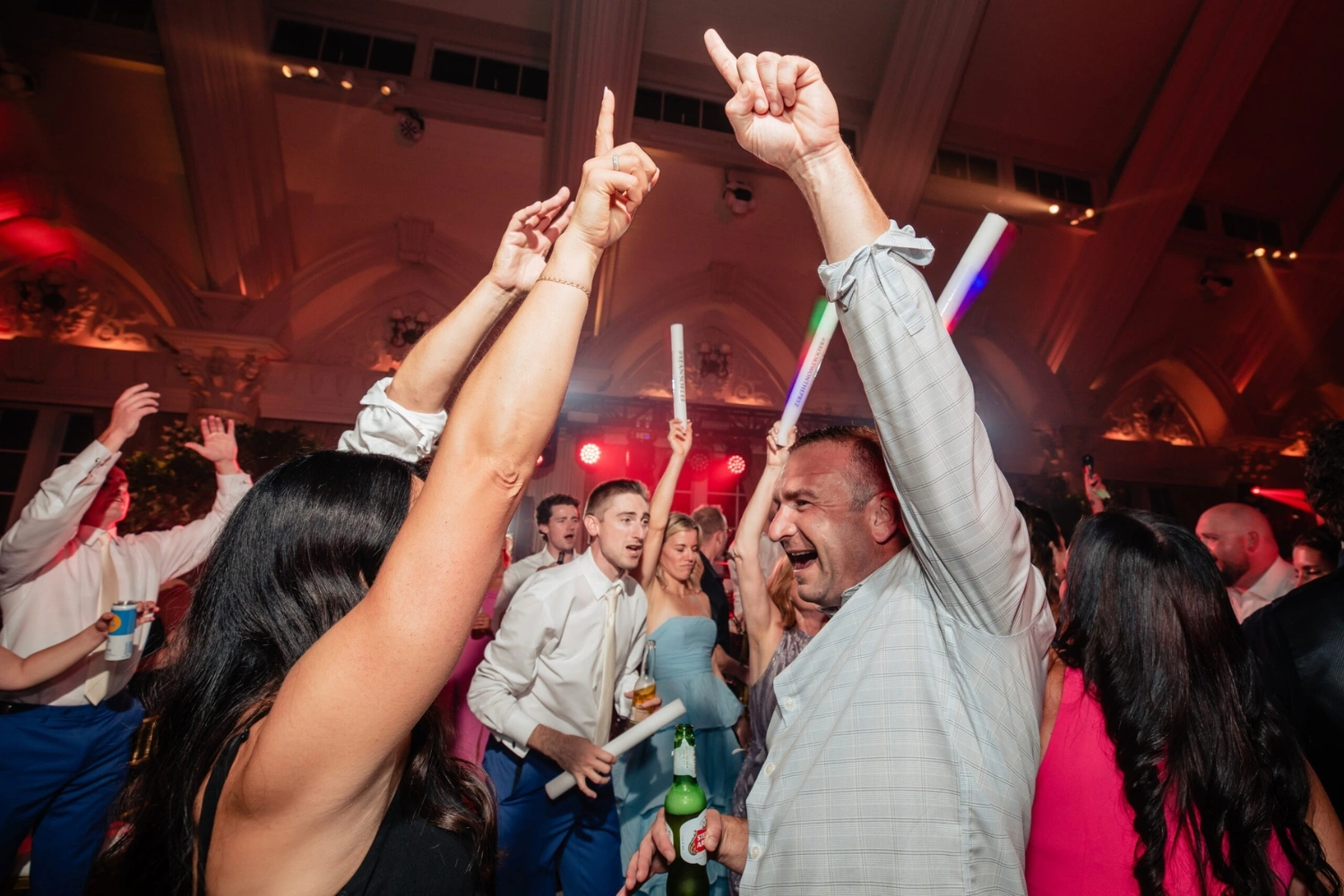
Wedding lighting is designed for the room, but cameras do not always see light the same way guests do.
A ballroom can look dramatic in person and photograph very differently depending on the color, brightness, direction, movement, and type of lighting being used.
Lighting can affect:
- Skin tones
- Background colors
- Shadows
- Exposure
- Motion
- Room details
- How décor appears
- The overall mood of the photo
That does not mean wedding lighting should be designed only for the camera. Good production considers both sides: how the room feels to guests and how important moments will look when they are photographed.
Planning lighting for your wedding? Explore One Of A Kind Events’ wedding lighting and event production options for a setup designed around your venue, timeline, and overall look.
Why Wedding Lighting Looks Different on Camera
Your eyes constantly adjust as you move through a room.
A camera has to capture a specific exposure and color balance at a specific moment. Because of that, lighting that feels comfortable in person can appear much brighter, darker, or more colorful in a photograph.
Brightness and Exposure
Wedding receptions often have several very different light levels in the same room.
A bright LED wall might sit behind a darker dance floor. A spotlight may hit the couple while the surrounding ballroom remains dim. Cold sparks may suddenly become one of the brightest objects in the frame.
The photographer has to decide what part of that scene should be exposed correctly.
In one photo, the priority may be the couple. In another, it may be the stage, room, or screen behind them.
Color and White Balance
Colored lighting can change the way almost everything appears on camera.
Blue, red, pink, purple, or amber light can affect the apparent color of:
- Skin
- Dresses and suits
- Flowers
- Table linens
- Walls
- Décor
Photographers can adjust white balance and edit color afterward, but the actual lighting environment still shapes the image they start with.
How Uplighting Affects Wedding Photos
Uplighting usually appears in the background of wedding photography rather than directly lighting the people in the photo.
Fixtures placed around the perimeter of the room add color to walls, columns, architectural details, and other surfaces.
That means uplighting can change the entire visual atmosphere behind the couple and their guests.
Colored Uplighting
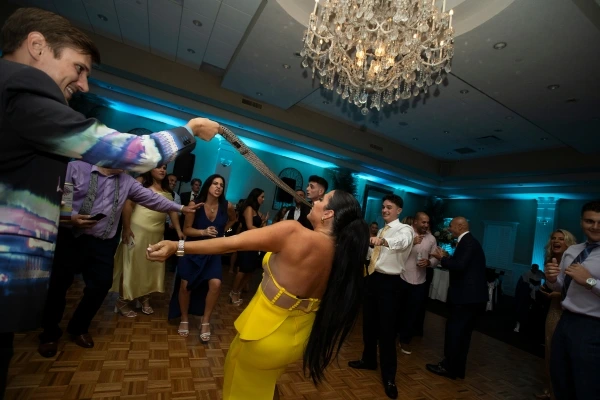
Blue, teal, pink, purple, amber, and other colors can give the same ballroom completely different personalities.
A teal room may photograph as cool and modern. A warm amber room can feel softer and more traditional. Purple or pink lighting can create a much more dramatic reception atmosphere.
The effect becomes especially noticeable in wide shots where the photographer is capturing the room along with the people.
Warm vs Cool Uplighting
Warm colors generally create warmer looking backgrounds, while blues and teals create a cooler environment.
Neither is automatically better for photography.
The right choice depends on the wedding design, venue, décor, and look the couple wants to create.
Want a closer look at how this effect works? Our guide to uplighting explains how fixtures are positioned and used to transform an event space.
How Dance Floor Lighting Affects Photography
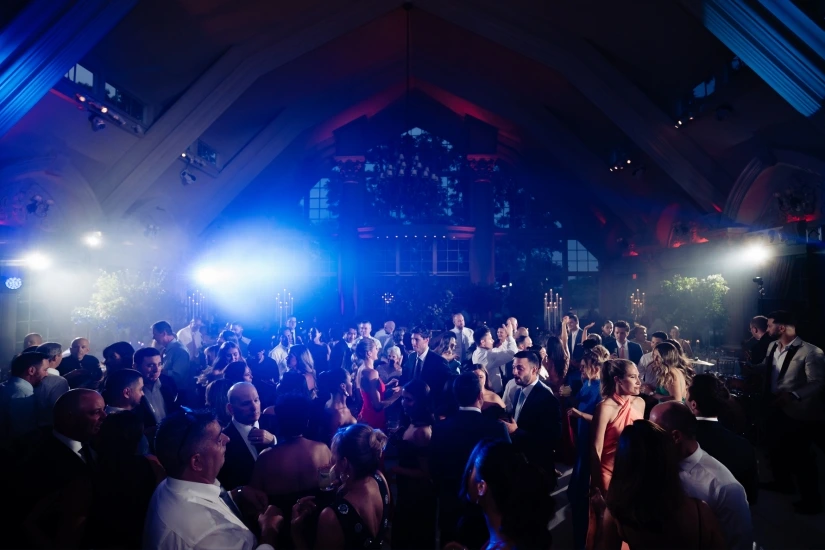
Once dancing starts, the lighting environment usually changes.
The room may become darker while moving fixtures, color changes, beams, and brighter effects take over the dance floor.
That is why reception party photos can look completely different from photos taken during dinner or speeches.
Colored Dance Floor Lighting
Strong colors are often part of the energy of the dance floor.
Red, blue, purple, and other saturated lighting can wash across guests and become part of the photograph itself.
That can create dramatic party images, but it also means skin, clothing, and surrounding décor may take on those colors.
For dance floor photography, that is often intentional. The goal is usually to capture the energy of the room rather than make every color look completely neutral.
Moving Lights
Moving fixtures continuously change position, angle, intensity, and sometimes color.
Because of that, two photos taken only a few seconds apart can look completely different.
One image may catch a bright beam behind the couple. Another may have a darker background. A third may capture a burst of color across the entire crowd.
That constant variation can make dance floor photography feel much more dynamic.
Bright Dance Floor Moments
Lighting can also help a crowded dance floor feel bigger and more energetic in photos.
Bright beams, backlighting, and strong color around the crowd create depth and help separate people from a dark ballroom.
A well lit wide shot can capture not only who is dancing, but the atmosphere of the entire reception.
How Stage and Spotlighting Affect Wedding Photos
Focused lighting can help direct attention toward the people or moments that matter most.
Instead of lighting the entire room equally, the production team can create stronger visual focus around the couple, speakers, or performers.
Lighting the Couple
Dedicated lighting can help the couple stand out from a darker background during moments such as:
- Introductions
- First dance
- Toasts
- Cake cutting
- Special performances
That separation can make the couple easier to photograph clearly while still preserving the mood of the room around them.
Lighting Speakers and Performers
Speakers, musicians, DJs, and performers also benefit from intentional lighting.
Relying only on dim ballroom lighting can leave faces too dark or force photographers to work against an uneven lighting environment.
Clear stage or presentation lighting gives the camera a more consistent subject to capture.
Strong Light From One Direction
The direction of the light matters too.
If most of the light comes from only one side, one side of a person’s face may be much brighter than the other.
More balanced coverage can make faces easier to photograph consistently while still keeping the scene dimensional.
How LED Walls Affect Wedding Photography
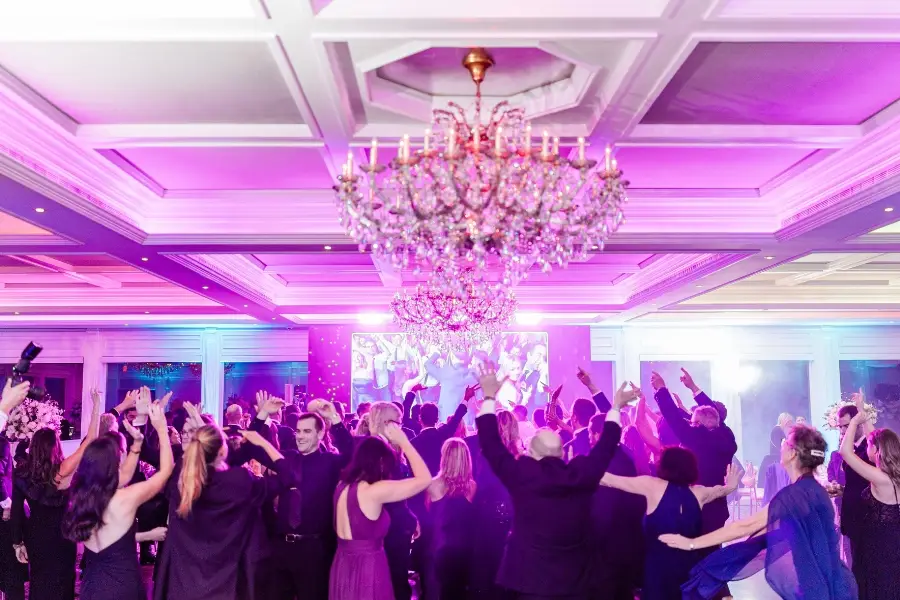
LED walls produce their own light, which means they can become one of the brightest parts of the room.
That can create impressive visual backgrounds, but the photographer has to account for the difference between the screen brightness and the people standing in front of it.
Bright Screens Behind Guests
If an LED wall is significantly brighter than the couple or guests, the camera may have to choose between exposing the people properly and preserving every detail on the screen.
That is why screen brightness and surrounding stage lighting work best when they are planned together.
Screen Content Changes the Background
The content on an LED wall can also completely change a photograph from one moment to the next.
A bright white graphic may create a very different background than deep blue, purple, or moving video content.
The screen is effectively another light source within the scene.
Coordinating Screen and Room Lighting
When the LED wall content and room lighting complement each other, the screen feels like part of the overall wedding environment.
Colors can carry from the screen into the room, or the surrounding lighting can provide enough separation that the people in front of the wall remain clearly visible.
For more on planning what actually appears on the display, see our guide to LED video wall content.
How Cold Sparks and Bright Effects Show Up in Photos
Cold sparks can create some of the most dramatic images of the reception.
They introduce bright points of light, movement, and contrast into an otherwise darker ballroom.
When they are timed well, the effect can frame the couple or highlight a major moment without needing to remain active throughout the event.
Timing Matters
Cold sparks are most effective photographically when the photographer knows when they are coming.
Common moments can include:
- Couple entrances
- First dances
- Stage reveals
- Major dance floor moments
Knowing the cue allows the photographer to choose a position, frame the shot, and be ready before the effect starts.
Bright Effects Change Exposure
Cold sparks are much brighter than most ambient wedding lighting.
When they fire, the camera suddenly has a much brighter element to account for.
That does not make them difficult to photograph, but it does make timing and preparation more important.
It is another good example of why the production team, planner, and photographer benefit from sharing the event timeline and knowing when major visual changes are coming.
How Haze Changes Wedding Lighting in Photos
Haze can make event lighting much more visible in photos, especially during dancing.
Without haze, guests may see the light fixture and the color it creates, but the beam itself may not be very noticeable as it moves across the room.
With a light amount of haze in the air, those beams become easier to see. That can create more depth in wide dance floor photos and make moving lights feel more dramatic.
Haze is also different from heavy theatrical fog. The goal is usually not to fill the room with a thick cloud. It is to add just enough atmosphere for the lighting beams to become visible.
Can Colored Lighting Make Skin Look Different?
Yes. Strong colored lighting can change how skin tones appear in photos.
Red lighting may add warm or red highlights. Blue lighting can make skin appear cooler. Purple, pink, and other saturated colors can also reflect onto faces, clothing, and nearby surfaces.
That is not automatically a problem.
During dancing, those colors are often part of the atmosphere and can help make reception photos feel more energetic.
For formal portraits, speeches, first dances, and other important moments, cleaner or more neutral face lighting may be preferable when natural looking skin tones and facial detail are the priority.
Wedding Lighting for Formalities vs Dancing
The same lighting setup does not need to stay in place throughout the entire reception.
Different moments have different goals.
Formalities
During introductions, speeches, first dances, parent dances, and other formal moments, visibility usually matters most.
The photographer needs enough usable light to capture:
- Faces
- Expressions
- Movement
- Clothing details
- Important reactions
Lighting can still feel dramatic, but the couple, speakers, and other key people should remain easy to see.
Dancing
Once the dance floor opens, the lighting can become much more colorful and dynamic.
Moving lights, changing colors, beams, darker ambient conditions, and stronger effects can help create the energy people associate with the party portion of the reception.
At that point, the goal shifts away from clean presentation lighting and more toward atmosphere, motion, and excitement.
That is why a wedding does not need one lighting look from beginning to end.
Why Photographers and Production Teams Should Know the Timeline
The photographer benefits from knowing when major lighting changes and effects are going to happen.
The production team also benefits from knowing when important photography moments are coming up.
That coordination can matter during:
- First dances
- Toasts
- Entrances
- Cake cutting
- Parent dances
- Cold spark effects
- Major lighting changes
- Special performances
For example, if cold sparks are going to fire during the couple’s entrance, the photographer should know before the cue happens.
The same applies when the room is about to shift from cleaner lighting for speeches into a darker, more colorful dance floor look.
It does not need to be complicated. Everyone simply benefits from knowing when the visual environment is about to change.
What Couples Should Consider When Choosing Wedding Lighting
Wedding lighting should support the way you want the room to feel while also working with the moments that matter most throughout the night.
Think About the Mood You Want
Start with the overall feel of the wedding.
That might be:
- Warm
- Romantic
- Dramatic
- Colorful
- Energetic
- Clean
- Modern
The lighting should support that direction rather than feel disconnected from the rest of the design.
Think About Important Photography Moments
The lighting used while everyone is dancing does not necessarily need to be the same lighting used during a first dance or toast.
Think about which moments you want photographed clearly and which moments can feel more dramatic or colorful.
Consider the Venue
The room itself affects the final result.
Factors can include:
- Wall colors
- Ceiling height
- Chandeliers
- Existing venue lighting
- Windows
- Architectural details
The same lighting setup can look very different in two different venues.
Share Your Lighting Plans With the Photographer
If the reception will include dramatic lighting, LED video walls, cold sparks, haze, or other major effects, tell the photographer ahead of time.
That gives them a better idea of what the room will look like and when major changes are expected.
Frequently Asked Questions About Wedding Lighting and Photography
Does uplighting affect wedding photos?
Yes. Uplighting changes the color and appearance of walls, columns, and other background surfaces, which can significantly affect the overall look of wedding photos.
Can colored wedding lighting change skin tones?
Yes. Strong red, blue, purple, pink, or other colored lighting can cast those colors onto skin, clothing, and nearby surfaces.
Are moving lights bad for wedding photography?
No. Moving lights can create energetic and dramatic reception photos. The appearance simply changes constantly as the fixtures move, change color, and shift intensity.
Do LED walls affect wedding photography?
Yes. LED walls can be much brighter than the surrounding room and may change color throughout the event, so photographers often account for the screen when setting exposure.
Do cold sparks photograph well?
They can. Cold sparks create bright, dramatic visual moments, especially when the photographer knows when the effect will happen and can position themselves in advance.
Is neutral lighting better for wedding photos?
It can be useful for formal moments where natural looking skin tones and clear facial detail are important. Colorful lighting can work extremely well for dance floor photos and other atmosphere driven moments.
Conclusion
Wedding lighting does more than change how a ballroom looks to guests. It also affects the color, contrast, backgrounds, movement, and overall mood captured in wedding photography. Uplighting, dance floor effects, LED walls, focused lighting, haze, and cold sparks can all create very different results through a camera.
The goal is not to remove dramatic lighting for the sake of photography. It is to plan the lighting around the different parts of the wedding so formalities can be captured clearly while the reception still gets the energy, color, and atmosphere couples want.