Event design layout is the reason some events feel effortless while others feel chaotic. Most events don’t fail because of décor — they fail because of layout.
When the layout isn’t planned properly, you start to see problems like:
- crowded spaces
- awkward movement
- long lines
- guests unsure where to go
An effective event design layout controls how people move, interact, and experience the space. It’s the difference between an event that feels smooth and one that feels frustrating.
This guide covers:
- how to improve guest flow
- how to avoid layout mistakes
- how professionals design real, functional event spaces
At One Of A Kind Events, layout is built into every design plan — not added after. Every decision is intentional and designed to work in real venues with real guests.
Explore event design services from One Of A Kind Events to see how we turn layouts into real, functional environments.
What is an Event Design Layout?
An event design layout is the strategic placement of all the key elements within a space, including:
- stages
- dance floors
- DJ booths
- lounges
- bars
- activations
- guest seating
It’s not just about where things go — it’s about how everything works together in real space.
A strong layout considers movement, visibility, energy, and how guests interact with each part of the event.
View our event design layout example to see how concepts translate into real, functional event spaces and layouts.
Why Guest Flow Matters More Than You Think
Guest flow is one of the biggest factors in how an event actually feels.
When flow is poorly planned, it leads to:
- congestion
- missed moments
- disengaged guests
- frustration
Good Flow Feels Effortless
When a layout is done right, guests move naturally without thinking. They know where to go, where to stand, and how to engage with the event.
Bad Flow Creates Friction
When the layout is off, people hesitate. They crowd certain areas, avoid others, and the energy of the event drops.
Start With Your Event Goals
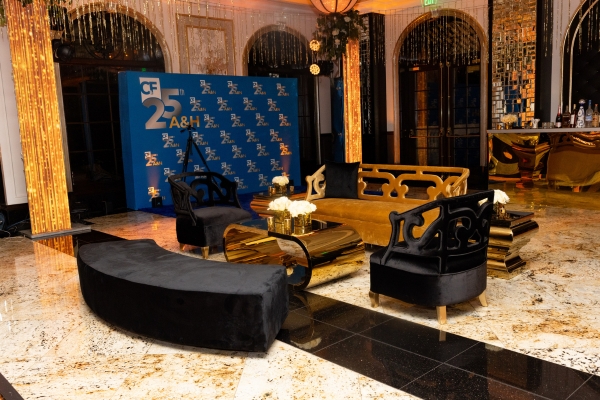
Every strong event design layout starts with a clear purpose.
Layout decisions should always support what the event is trying to achieve.
Define the Type of Event
Different events require completely different layouts. For example:
- wedding reception
- corporate networking
- presentation / keynote
- party / high-energy event
Match Layout to Experience
Once the goal is clear, the layout should reinforce it:
- networking → open space and easy movement
- wedding → centered dance floor and focal energy
- corporate → clear stage visibility and seating
When layout and purpose align, the event feels intentional and cohesive.
Know Your Guest Count and Space
One of the biggest layout mistakes is not properly matching the space to the number of guests.
Right Size vs Wrong Size
Getting the scale right is critical:
- too small = cramped and uncomfortable
- too big = empty and low energy
The goal is to create a space that feels full, but not crowded.
Understand Real Venue Dimensions
Venue capacity numbers can be misleading. What matters is the usable space.
You need to account for:
- tables
- bars
- staging
- production elements
All of these reduce the actual space available for your layout.
Core Layout Zones Every Event Needs
A strong event design layout is built around clearly defined zones that guide how guests move and interact.
Entrance & First Impression
The entrance sets the tone immediately. Guests should walk in and understand the space without confusion.
Main Focal Area

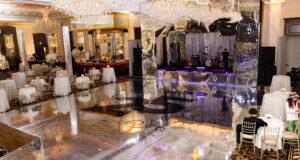
See the image above? The LED dance floor is the focal point. Our DJ and band hybrid stand right in the center as the focal of attention. Every event needs a clear focal point. This is where attention naturally goes.
Common focal areas include:
- dance floor
- stage
- LED wall
This is the center of energy for the event.
Main Focal Area
Every event needs a clear focal point. This is where attention naturally goes.
Common focal areas include:
- dance floor
- stage
- LED wall
This is the center of energy for the event.
High-Traffic Areas
These are the most active parts of the event and need to be placed carefully.
Examples include:
- bar
- photo booth
- food stations
If these areas are too close together, congestion builds quickly. Proper spacing keeps the flow smooth and the experience enjoyable.
How to Design for Better Guest Flow
A strong event design layout isn’t just about placing elements—it’s about guiding how people move through the space. When flow is intentional, the entire event feels smoother, more natural, and more enjoyable.
Create Clear Pathways
Guests should be able to move easily between key areas without confusion. Pathways between entrances, bars, dance floors, and seating should feel open and obvious—no guessing, no squeezing through tight spaces.
Avoid Bottlenecks
Bottlenecks are one of the fastest ways to ruin flow.
Common mistakes include:
- tight walkways
- poorly placed bars
- crowded entrances
When too many people are forced into one area, it slows everything down and creates frustration.
Separate High-Traffic Zones
Spacing matters more than people think.
Avoid stacking key areas like:
- bar + photo booth + entrance
These are all high-traffic zones. Keeping them separate allows guests to move freely without congestion.
Think in Movement, Not Just Placement
An effective event design layout isn’t static—it’s dynamic.
Instead of just placing elements in a room, think about how guests will move between them. The layout should naturally guide people from one experience to the next.
Think in Movement, Not Just Placement
An effective event design layout isn’t static—it’s dynamic.
Instead of just placing elements in a room, think about how guests will move between them. The layout should naturally guide people from one experience to the next.
Common Event Design Layout Mistakes
Even well-designed events can fall apart if the layout isn’t handled correctly. These are some of the most common mistakes that impact flow and overall experience.
Everything Pushed Against Walls
This is one of the biggest layout issues. When everything is placed along the perimeter, the center of the room feels empty and lifeless.
It kills energy where it should be strongest.
No Defined Focal Point
Every event needs a clear place where attention is directed.
Without a focal point, guests:
- don’t know where to look
- don’t know where to gather
- feel disconnected from the event
Overcrowding Key Areas
Trying to fit too many elements into one space creates tension.
Whether it’s too many tables, activations, or design features, overcrowding makes the event feel tight and uncomfortable.
Ignoring Sightlines
If guests can’t see what’s happening, they disengage.
Blocked views of the:
- stage
- DJ
- dance floor
can take away from key moments of the event.
How Professionals Approach Event Design Layout
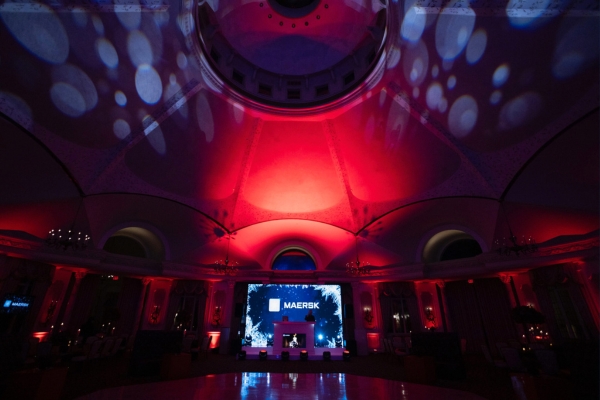
A professional event design layout is built with intention from the very beginning. It’s not something added at the end—it’s the foundation of the entire event. See the image above? Our uplighting combined with an LED video wall rental and DJ booth complete the room. The crowd knows the center piece to dance is directly in the middle of the event.
Layout Comes Before Décor
Design always starts with function.
Before colors, textures, or styling are chosen, the layout is planned to ensure the space works properly. Once the layout is right, everything else builds on top of it.
In-House Design + Production Alignment
At One Of A Kind Events, everything is designed together—not in pieces.
That includes:
- lighting
- staging
- DJ placement
- fabrication
Because it’s all handled in-house, every element works together seamlessly instead of feeling disconnected.
Designed for Real Execution
A great layout isn’t just visually appealing—it has to work in real life.
That means it’s:
- buildable
- functional
- adaptable to real venues
Not just something that looks good on paper.
From Concept to Real Space

A strong event design layout starts as an idea but has to translate into a real environment.
This process includes:
- detailed design plans
- scaled layouts
- real-world adjustments
Every decision is made with execution in mind.
Layouts must work in:
- real venues
- real timelines
- real crowd conditions
That’s what separates a conceptual design from a successful event.
Conclusion
An effective event design layout controls the entire guest experience. It determines how people move, where they gather, and how they engage with the event.
When flow is done right, energy builds naturally, guests stay engaged, and the event feels seamless. The best events don’t feel forced—they feel intuitive because the layout is intentional.
Don’t treat layout as an afterthought—it’s the foundation of everything.
Work with One Of A Kind Events event design services to create a layout that actually works, not just looks good.