
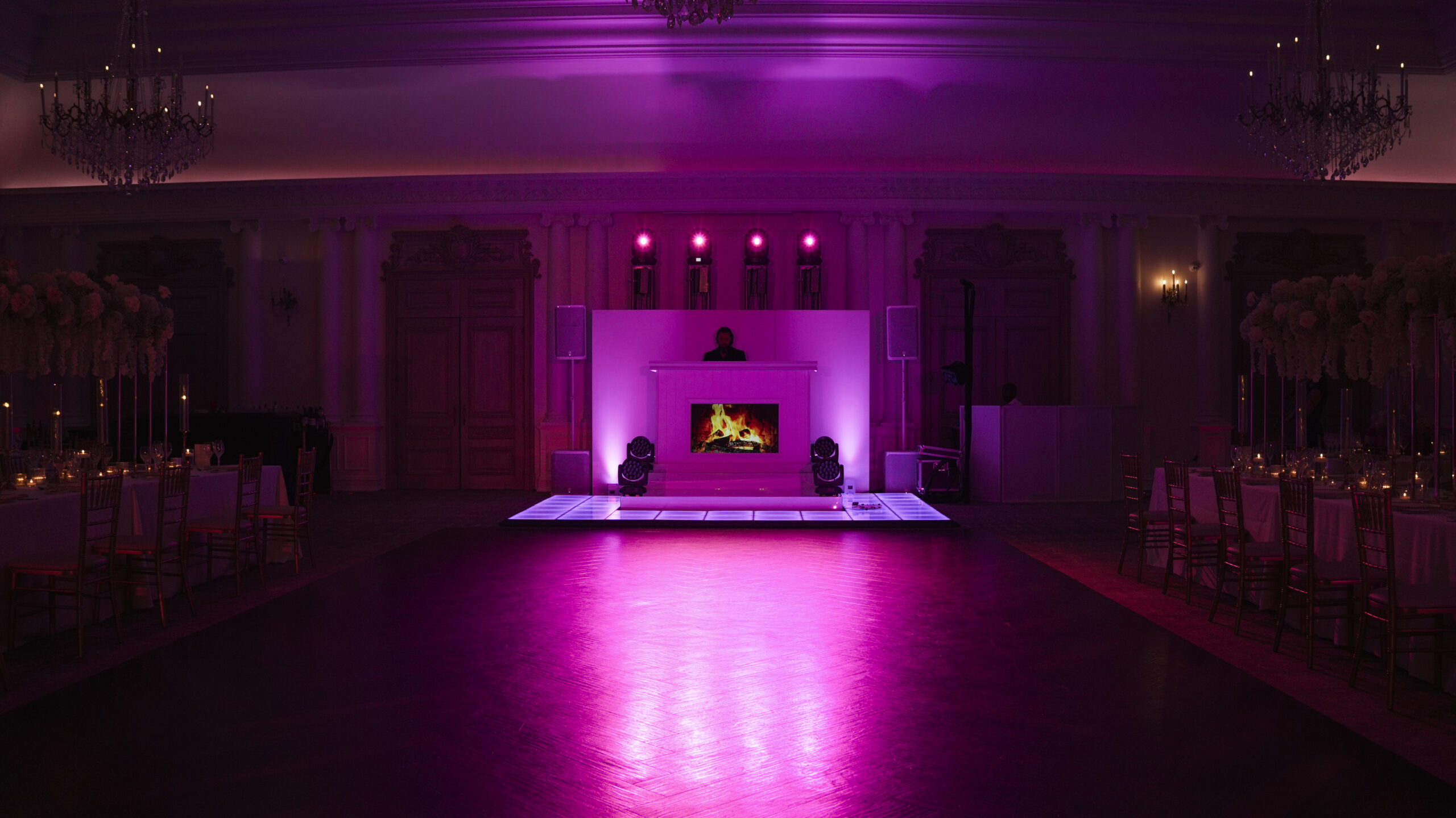
DJ booth size matters more than most people realize. It directly affects event layout, guest flow, dance floor energy, and how sound and lighting are positioned throughout the room.
When the booth is too small, equipment gets cramped. When it’s too large, it can overwhelm the space or interrupt the visual design of the event.
Many planners underestimate how much room DJs actually need to perform comfortably and deliver a great experience. A proper setup isn’t just about placing a table in the corner. It’s about creating a clean, functional hub for the music, lighting, and overall atmosphere of the event.
This guide breaks down everything you need to know about DJ booth sizing, including:
- Standard DJ booth sizes
- Ideal DJ booth height
- How much space a DJ setup really needs
- What professional event companies actually use
Standard DJ Booth Size
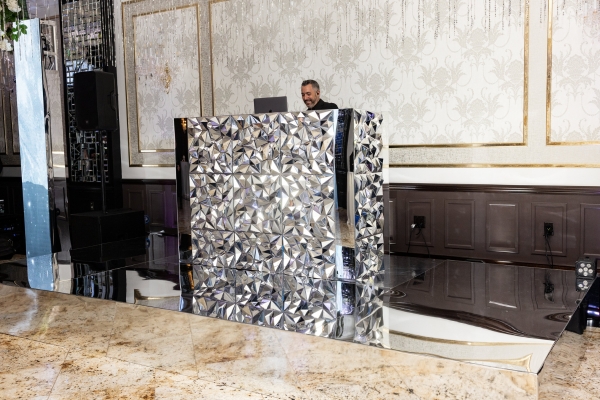
DJ booths come in a range of sizes depending on the event type, equipment setup, and production needs. However, most professional setups fall within a predictable range that balances functionality, presentation, and space efficiency.
Typical DJ Booth Width
Common DJ booth widths include:
- 4 feet
- 5 feet
- 6 feet (most common professional size)
- 8 feet for large productions
While smaller setups can work for basic equipment, 6 feet is widely considered the ideal width for professional events.
This size comfortably fits the essential DJ gear without crowding the workspace. A 6-foot booth provides enough room for:
- a mixer
- CDJs or turntables
- a laptop
- lighting controls and other accessories
It also allows DJs to move naturally during their set without bumping into equipment.
Typical DJ Booth Height
Most DJ booths fall between 36 and 40 inches tall, which is designed to align with comfortable standing posture while mixing.
Some custom booths extend up to 48 inches tall, especially when visual design elements are included.
Height plays an important role in balancing visibility and ergonomics. The booth needs to be tall enough to hide equipment and cables from view, while still allowing the DJ to comfortably operate their gear for several hours.
Professional Event DJ Booth Size
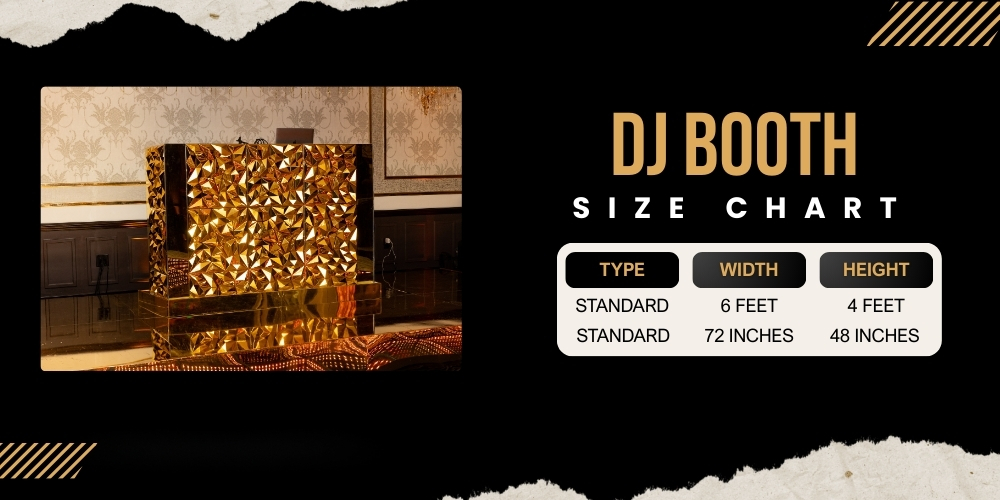
Many professional event companies standardize their DJ booths to maintain consistent staging and equipment layouts across events. One Of A Kind Events builds DJ booths at a standard size of 6 feet wide and 4 feet tall (72″ × 48″).
This size works extremely well for weddings, corporate events, and private celebrations because it balances function and presentation.
Benefits of this size include:
- Clean presentation that hides equipment and cables
- Enough surface area to comfortably hold professional DJ gear
- Better visibility over the booth for the DJ and guests
- Consistent staging for lighting, screens, and visual elements
The result is a setup that looks polished, performs reliably, and integrates seamlessly into the event design.
DJ Booth Measurements Explained
Understanding DJ booth measurements isn’t just about the booth itself. It’s about the equipment layout and workspace needed to operate everything smoothly.
Equipment Footprint
Most DJ gear has a fairly predictable footprint.
Typical widths include:
- CDJ: about 12 inches each
- Mixer: about 12 inches
- Laptop stand: roughly 10–12 inches
Once everything is positioned side by side, the equipment alone can easily take up 3 to 4 feet of space.
That’s why a 4–6 foot booth width is usually considered the practical minimum for professional setups. It ensures the gear fits comfortably while leaving room for movement and adjustments.
Cable and Controller Space
A DJ setup involves more than just decks and a mixer.
Professional booths also need space for additional components like:
- power distribution units
- audio interfaces
- lighting controllers
- wireless microphone receivers
These elements often sit behind or beside the main equipment. Without adequate space, cables become messy and equipment gets stacked in ways that can cause problems during a live performance.
A properly sized DJ booth keeps everything organized and accessible.
How Much Space Does a DJ Need?
Beyond the booth itself, DJs require a certain amount of surrounding space to perform comfortably and manage their equipment.
DJ Booth Footprint
Most professional DJ booths have a footprint of approximately:
- 6–8 feet wide
- 2–3 feet deep
This size accommodates the equipment while still keeping the setup compact enough to fit into typical event layouts.
Working Space Behind the Booth
Professional DJs also need room behind the booth to move, adjust gear, and access equipment racks.
A good rule of thumb is allowing about 6 feet of space behind the booth.
This provides enough room for:
- moving comfortably during the performance
- adjusting cables or audio equipment
- accessing lighting or sound controls
Total DJ Setup Area
When you combine the booth footprint and the working space, a typical DJ setup requires a minimum area of about 8 ft × 8 ft.
For larger productions involving lighting trusses, LED screens, or multiple performers, the setup area may expand to 10–12 feet wide or more.
Planning this space correctly helps ensure the entertainment area functions smoothly without interfering with guest movement or the dance floor.
DJ Booth Height Guide
Height is one of the most overlooked aspects of DJ booth design. The right height makes a huge difference in comfort, visibility, and overall performance.
Standard DJ Booth Height
Most DJ booths are built between 36 and 40 inches tall.
This height aligns closely with the natural elbow position when standing, which helps DJs operate their equipment without straining their wrists or shoulders.
Because DJs often perform for several hours at a time, proper ergonomics are important for maintaining comfort and precision throughout the event.
Why Some Event Booths Are Taller
Some custom event booths are built closer to 48 inches tall for design and production reasons.
Taller booths are often used when:
- branding panels are included on the front
- video displays or screens are embedded into the booth
- lighting features are integrated into the structure
- the DJ needs to be more visible above the crowd
These booths create a stronger visual focal point while still maintaining enough space for professional equipment.
DJ Booth Size for Different Events
The ideal DJ booth size can vary depending on the type of event and the level of production involved.
Wedding DJ Booth Size

Wedding DJ booths are typically designed to be:
- around 6 feet wide
- compact and efficient
- visually clean and elegant
At weddings, the booth should blend seamlessly into the décor while still serving as the energy center of the dance floor.
Corporate Event DJ Booth Size
Corporate events often require larger or more customizable DJ booths.
These setups may include:
- LED screens
- branded panels
- additional production gear
Because branding and visual presentation are important at corporate events, the booth sometimes becomes part of the stage design.
Nightclubs and Festivals
Nightclubs and festivals typically use much larger setups.
These booths can range from:
- 8 to 12 feet wide
- multi-DJ configurations
- extended production platforms
Large booths support multiple performers, extensive lighting rigs, and high-powered sound systems.
Choosing the Right DJ Booth Size
Selecting the right DJ booth size depends on several key factors.
Venue Size
The size and layout of the venue play a major role.
Ballrooms and large event spaces can accommodate wider booths and production setups, while smaller venues may require a more compact design.
Equipment Setup
The type of DJ equipment also matters.
A simple controller setup requires far less space than a full CDJ and mixer configuration with additional audio gear.
Event Production Elements
Production features can significantly influence booth size.
Common additions include:
- lighting fixtures
- video screens
- branding panels
These elements often require extra structure and space, which can expand the overall DJ booth footprint.
Why Professional DJ Booth Design Matters

A professionally designed DJ booth does more than just hold equipment. It improves both the visual presentation and the performance experience.
Benefits of a well-designed booth include:
- cleaner stage design that hides cables and equipment
- better cable management for reliability and safety
- stronger branding opportunities for events or companies
- better photos and visual aesthetics for guests and media
- improved crowd interaction by placing the DJ in a clear focal point
For experienced event production companies, the DJ booth becomes part of the overall event design, not just a functional table. When planned correctly, it enhances the energy of the room and helps create a polished, memorable entertainment experience.
The Ideal DJ Booth Size for Most Events
For most weddings, corporate events, and private parties, the goal is finding a DJ booth size that balances functionality with visual design. The booth needs enough space for professional equipment while still fitting naturally into the event layout.
In practice, a 6 ft × 4 ft DJ booth provides the best overall balance for most events.
This size works well because it provides:
- Enough equipment space for mixers, CDJs, laptops, and audio gear
- Clear visibility so guests can see the DJ and engage with the performance
- Strong design presence without overwhelming the room
- Mobility and flexibility for different venue layouts
A booth that’s too small quickly becomes cramped and cluttered. A booth that’s too large can disrupt the flow of the room or compete with the dance floor.
Professional event production companies often standardize their setups to avoid these issues.
One Of A Kind Events builds their DJ booths at a standard size of 72 inches by 48 inches (6 ft × 4 ft). This size has proven to work consistently across weddings, corporate events, and private celebrations because it supports professional equipment while maintaining a clean, polished event design.
Our DJ Booth Styles
Our DJ booths are designed to give DJs the workspace they need while keeping the setup clean and visually polished for the event. We offer several booth styles that complement different aesthetics and event themes.
- All White DJ Booth: A clean, modern booth that blends beautifully into elegant weddings and upscale events.
- Gold DJ Booth: A glamorous option that adds a luxury feel to the dance floor and event design.
- LED DJ Booth: Built-in lighting effects display colors and patterns, perfect for high-energy parties and sweet sixteens.
- TV DJ Booth: Integrated screens that can display monograms, montages, ZAP photography, or branded visuals.
- Video DJ Booth: Designed for dynamic visuals and video loops, creating a modern and immersive event experience.
- Wine Barrel DJ Booth: A rustic design ideal for farmhouse, barn, or countryside weddings.
- Modern Rustic DJ Booth: Combines rustic textures with a more refined look, perfect for venues that mix elegance with natural style.
While these are our most popular booth styles, we also frequently design custom DJ booths to match the theme, branding, or production elements of a specific event.
Frequently Asked Questions About DJ Booth Sizes
What size is a standard DJ booth?
A standard DJ booth is typically between 4 and 6 feet wide and 36 to 40 inches tall, depending on the equipment setup and event type. Many professional event companies use 6-foot booths because they provide enough room for mixers, CDJs, laptops, and lighting controls while still fitting comfortably into most venues.
How tall should a DJ booth be?
Most DJ booths are built between 36 and 40 inches tall, which aligns with comfortable standing posture for DJs. Some custom event booths extend to 48 inches tall to hide equipment, support branding panels, or integrate lighting and video screens.
How much space does a DJ setup need?
A typical DJ booth footprint is 6–8 feet wide and 2–3 feet deep, but DJs also need room behind the booth to move and manage equipment. In most event layouts, the total recommended DJ area is about 8 ft × 8 ft, with larger productions requiring additional space.
Can DJ booths be customized?
Yes. DJ booths can be customized to match the design of an event or brand. Custom booths may include LED lighting, video panels, branded graphics, or unique materials that complement the event’s visual theme while still supporting the technical equipment required for the performance.
What size DJ booth is best for weddings?
For most weddings, a 6-foot-wide DJ booth is the ideal size. It provides enough room for professional DJ equipment while maintaining a clean, elegant appearance that fits naturally within the event décor and dance floor layout.
Conclusion
DJ booth sizing plays a bigger role in event production than many people realize. The right booth size affects how the room is laid out, how the dance floor flows, and how the entertainment integrates with lighting, staging, and overall event design.
Professional DJ booths are designed to balance function and presentation. They provide the space needed for equipment while creating a clean focal point that enhances the energy of the event.
For planners and venues, the key takeaway is simple: a DJ setup should be intentionally designed, not treated as just another table in the room.
Explore custom DJ booth design and full event design services with One Of A Kind Events to create a setup that looks incredible and performs flawlessly.