
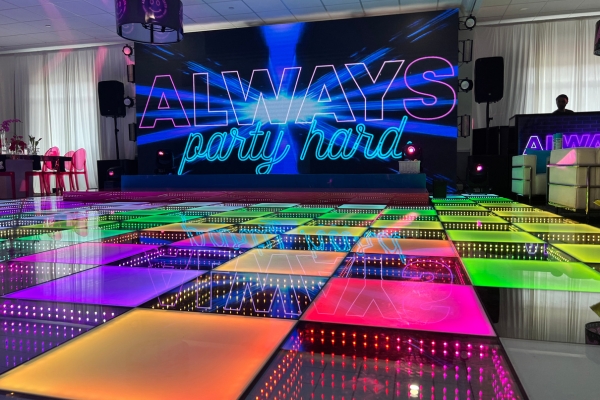
There is no universal dance floor weight capacity that applies to every temporary or portable floor.
How much a dance floor can support depends on the flooring system itself, the construction of the panels, whether a subfloor is used, the surface underneath it, and how the weight is distributed across the floor.
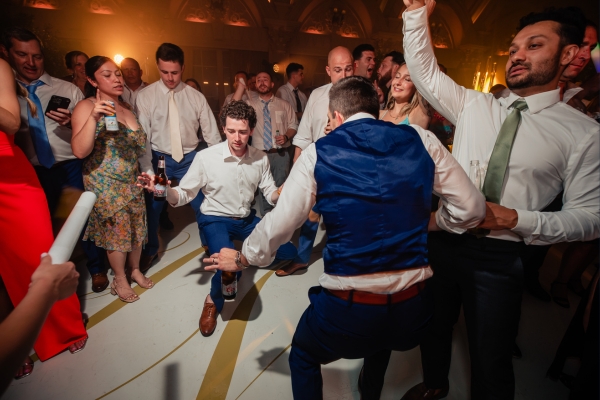
That last part matters. A crowd of guests dancing across a large area creates a very different load than a heavy DJ booth, scenic structure, or piece of furniture resting on a few small feet.
Manufacturer specifications for the actual dance floor system should always be used when determining what the floor is designed to support.
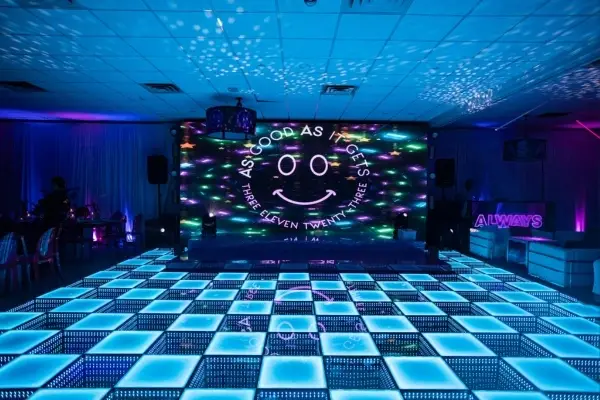
For events that require a professionally installed floor, One Of A Kind Events provides dance floor rentals in New Jersey with Vinyl, LED, and Static options installed around the venue, event layout, and flooring conditions.
This guide explains what affects dance floor weight capacity and why total weight alone does not tell the full story.
How Much Weight Can a Dance Floor Hold?
There is no single number that applies to every portable dance floor.
Dance halls and ballrooms are commonly designed around a live load benchmark of about 100 pounds per square foot, or psf. That does not mean every temporary dance floor installed inside that space is automatically rated for 100 psf.
Portable flooring systems have their own manufacturer specifications, panel designs, connection systems, and support requirements.
The type of load also matters. Weight spread across a large area is different from weight concentrated into one small location.
Dance Floor Weight Capacity Factors
| Factor | What Matters |
| Portable floor panels | Manufacturer rating |
| Distributed guest weight | Spread across the floor |
| Point loads | Weight concentrated in a small area |
| Subfloor | Supports and stabilizes the finished floor |
| Existing surface | Concrete, ballroom floor, grass, platform, etc. |
The main takeaway is simple:
Dance floor weight capacity depends on the complete installed system, not just the visible floor panels.
What Determines Dance Floor Weight Capacity?
Several parts of the installation work together to determine how the floor performs.
Dance Floor Panels
Temporary dance floors are built from individual panels that connect together to create the finished surface.
Their capacity can vary based on:
- Panel material
- Panel thickness
- Internal construction
- Panel dimensions
- Connection system
- Manufacturer specifications
An LED dance floor, modular static floor, and another portable flooring system should not automatically be assumed to have the same capacity just because they serve the same basic purpose.
The actual product matters.
Subfloor and Supporting Surface
The floor underneath the dance floor is part of the equation too.
A temporary floor installed on flat concrete or an existing ballroom floor has a very different base than one installed over grass or uneven outdoor ground.
In those situations, a subfloor may be needed to create a flatter and more stable supporting surface.
The subfloor does not make capacity unlimited. It simply becomes another part of the complete system transferring loads down to the surface underneath.
Panel Connections
Portable dance floors are designed to work as connected systems rather than as individual panels sitting independently.
Interlocking edges, connectors, alignment, and perimeter components help keep the finished surface together.
Damaged panels, poor alignment, or improperly connected sections can affect how the flooring performs.
That is why installation matters just as much as the appearance of the finished floor.
Distributed Loads vs Point Loads
The easiest way to understand dance floor capacity is to understand the difference between distributed loads and point loads.
Distributed Loads
A distributed load spreads weight across a larger portion of the floor.
Typical examples include:
- Groups of guests dancing
- People walking across the floor
- Guests spread throughout the dance area
Instead of all the weight being concentrated in one location, it is spread across many feet and many different parts of the floor.
This is much closer to the normal use a dance floor is designed around.
Point Loads
A point load concentrates weight into a smaller area.
Examples can include:
- Heavy furniture
- DJ booths
- Scenic structures
- Displays
- Equipment resting on narrow legs or small bases
A heavy object may transfer most of its weight through only a few contact points.
That can create a very different load condition than guests moving across the same floor.
Why Total Weight Is Not Enough
Imagine twenty guests dancing throughout a floor.
Together, they may weigh several thousand pounds. But that weight is spread across dozens of feet and constantly moving throughout a larger area.
Now compare that with one heavy scenic structure sitting in one location on four small supports.
The scenic piece may weigh less overall, but it can concentrate much more weight into a few specific points.
That is why simply adding up the total pounds on a dance floor does not tell you whether the setup is appropriate.
Weight, footprint, and location all matter.
What Can Be Placed on a Dance Floor?
Temporary dance floors are primarily designed for people to walk and dance on, but event layouts sometimes place other equipment or objects on the finished floor.
Those additional loads need to be considered separately.
Dancing Guests
Guests are the most common load on any event dance floor.
The number of people expected to dance affects not only weight but also how large the floor needs to be.
A larger guest count generally requires more usable dance area so people are not packed into too small a space.
Our dance floor size guide explains how to estimate the right floor dimensions based on guest count and expected participation.
Tables, Furniture and DJ Equipment
Tables, chairs, DJ booths, and production equipment can create more concentrated loads than dancing guests.
That weight may transfer into the floor through:
- Table legs
- Furniture feet
- Equipment stands
- Small bases
Whether a particular item should be placed on a temporary floor depends on the flooring system, the weight of the object, and how that weight is supported.
Heavy Scenic Elements
Large scenic or decorative pieces require even more consideration.
Examples include:
- Backdrops
- Branded structures
- Decorative builds
- Large displays
- Custom event installations
These elements can be heavy and may place that weight into only a few support locations.
The key questions are:
How much does it weigh? How large is its footprint? Where will that weight sit?
Those questions matter more than simply knowing the total weight of everything in the room.
How Do You Determine the Right Dance Floor Capacity?
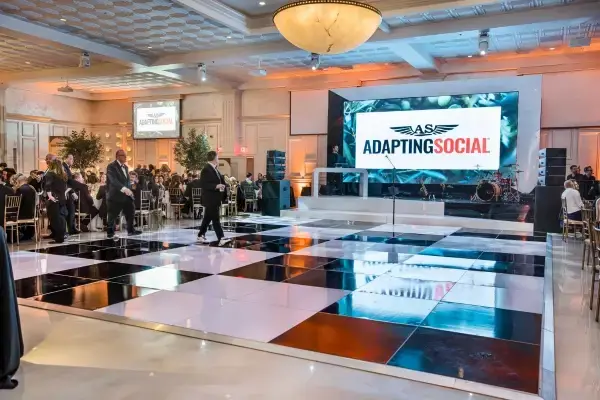
The right dance floor capacity depends on the complete setup, not just the number of guests expected to use it.
Identify the Floor System
Start with the actual flooring system being installed.
One Of A Kind Events offers:
- Vinyl dance floors
- LED dance floors
- Static dance floors
Those systems should not automatically be assumed to have the same load ratings, construction, or installation requirements.
The manufacturer specifications for the exact floor are what matter.
Identify What Will Be on the Floor
Separate normal dance floor use from additional equipment or structures.
Normal use can include:
- Guests
- Walking
- Dancing
Additional loads can include:
- Furniture
- DJ equipment
- Scenic pieces
- Displays
- Decorative structures
This distinction matters because dancing guests generally spread their weight across a larger area, while equipment or scenery may concentrate weight into only a few support points.
Consider the Surface Below
The supporting surface is part of the complete flooring system.
A dance floor may be installed over:
- Concrete
- Ballroom flooring
- Patio surfaces
- Grass
- Uneven terrain
- A constructed subfloor
A flat, solid ballroom floor creates a different installation condition than grass or uneven outdoor ground.
When a subfloor is needed, it becomes another structural layer between the finished dance floor and the surface below it.
Check the Manufacturer Specifications
Before placing unusual or heavy loads on a temporary dance floor, review the specifications for the actual flooring system.
Important information can include:
- Load capacity
- Point load limits where provided
- Installation requirements
- Supporting surface requirements
- Panel connection requirements
The main takeaway is simple:
Two dance floors can look nearly identical and still have different load ratings and installation requirements.
Frequently Asked Questions About Dance Floor Weight Capacity
How Much Weight Can a Dance Floor Hold?
There is no universal dance floor weight capacity.
The amount a temporary floor can support depends on the flooring system, panel construction, connections, subfloor, supporting surface, and how the weight is distributed. Manufacturer specifications for the actual floor should be used when determining its capacity.
Is 100 PSF a Standard Dance Floor Capacity?
Not exactly.
A 100 psf live load is commonly associated with structural design requirements for dance halls and ballrooms, but that does not mean every portable dance floor is automatically rated for 100 psf.
Temporary flooring systems have their own manufacturer specific load ratings and installation requirements.
What Does PSF Mean for a Dance Floor?
PSF means pounds per square foot.
It describes how much weight is distributed across an area of floor. A distributed psf rating should not be confused with a point load, where substantial weight is concentrated within a much smaller footprint.
Can Tables and Chairs Go on a Dance Floor?
Potentially, depending on the flooring system.
Tables and chairs can create concentrated loads through their legs or feet. Their weight, contact area, and the specifications of the temporary floor should be considered before using the dance floor as a furniture surface.
Can a DJ Booth Sit on a Dance Floor?
Potentially.
A DJ booth can create more concentrated weight than dancing guests, especially when speakers, controllers, cases, or other equipment are included.
The total weight, footprint, support points, and flooring specifications should all be considered.
Can Heavy Decorations Be Placed on a Dance Floor?
They may be, depending on the floor and the decoration.
Large backdrops, scenic builds, displays, and branded structures can concentrate substantial weight into a few support locations.
The weight and footprint of the structure should be evaluated against the specifications of the actual flooring system.
Does a Subfloor Increase Dance Floor Capacity?
Not automatically.
A subfloor can provide a stable and more appropriate supporting surface, especially over grass or uneven terrain, but it should not simply be assumed to increase the rated capacity of the finished dance floor.
The complete subfloor and flooring system still need to be considered together.
Can a Dance Floor Be Installed on Grass?
Yes, depending on the installation.
One Of A Kind Events recommends a flat, solid surface when possible. For grass or uneven ground, a subfloor can be used to create a more stable base for the finished dance floor.
Does an LED Dance Floor Have a Different Weight Capacity?
It can.
LED dance floors use different panels, internal components, and support systems than Vinyl or Static floors. Because the construction is different, the capacity and installation requirements for the specific LED flooring system should be reviewed rather than assuming all temporary dance floors perform the same way.
Rent a Dance Floor From a Trusted Company
There is no single weight capacity that applies to every temporary dance floor.
The actual capacity depends on the floor panels, connection system, subfloor, supporting surface, load distribution, and manufacturer specifications. A crowd of dancing guests also creates a very different load than a heavy DJ booth, piece of furniture, or scenic structure resting on a few small support points.
The important question is not simply how many pounds are on the floor. It is what is creating that weight, where it is positioned, and how the complete flooring system supports it.
For a floor planned around your venue, guest count, and event setup, explore One Of A Kind Events’ dance floor rentals in NJ with Vinyl, LED, and Static options installed and managed in house.