
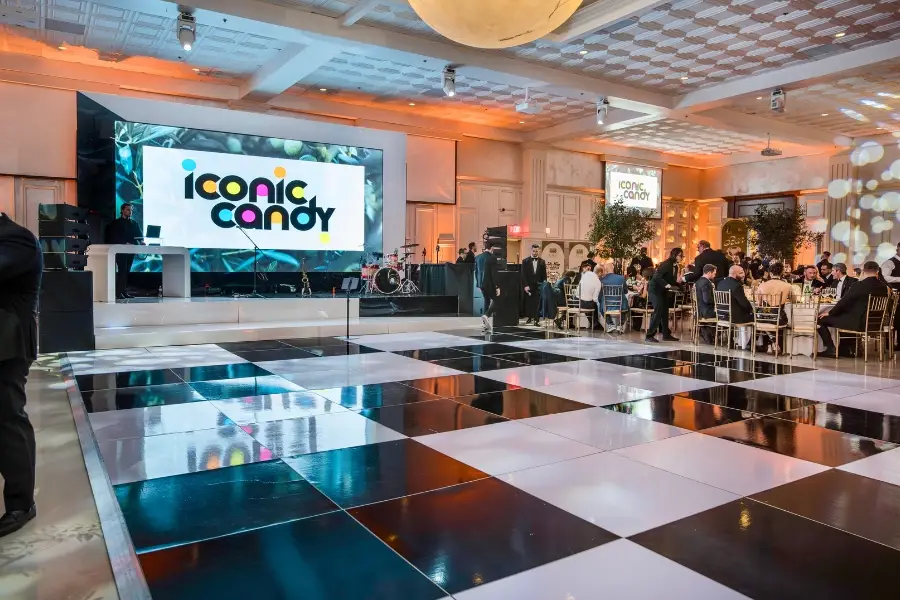
Memorable events rarely rely on one feature. A great dance floor can change the energy of the room, but it becomes even more effective when it works with the lighting, staging, visuals, and overall layout.
The best event spaces feel connected. Instead of treating each rental as a separate piece, the production elements should support one another and create one cohesive experience.
Dance floors and LED video walls work especially well together because they affect both the look and function of the room. The dance floor gives guests a central place to gather, while the LED wall adds movement, branding, imagery, and visual depth around that space.
When both elements are planned together, the room feels more immersive and intentional. Explore our dance floor rentals in New Jersey to see how different floor styles can be incorporated into a complete event production design.
Why Dance Floors and LED Walls Make the Perfect Combination

Dance floors and LED walls naturally create a central area for the event.
The dance floor becomes the physical focal point where guests gather, dance, and interact. The LED wall becomes the visual focal point behind or near that space, helping direct attention toward the action.
Together, they can make a room feel larger and more dynamic. Animated visuals, scenic backgrounds, live content, and lighting effects add depth that a plain wall cannot provide.
They also keep guests visually engaged throughout the event. The content on the wall can change as the night progresses, allowing the room to shift from introductions and presentations to dinner, dancing, and entertainment.
This combination creates a more premium experience because the floor and screen feel like parts of one larger design. Instead of seeing individual rental items, guests experience a fully produced environment.
Choosing the Right Dance Floor for Your LED Wall
The best dance floor depends on the event style, the content displayed on the LED wall, and how much visual activity you want in the room.
Some events benefit from bold lighting and movement across both surfaces. Others look better when the floor remains simple and allows the LED wall to command attention.
LED Dance Floors
LED dance floors are ideal when you want the floor itself to become a major visual feature.
One of a Kind Events offers several LED floor styles:
- Frosted LED dance floors create a soft, illuminated glow that works well for weddings, galas, and elegant celebrations.
- Infinity LED dance floors produce a dramatic three-dimensional effect that fits modern events and high-energy productions.
- Checkered LED dance floors create a bold, playful look with strong retro and nightlife appeal.
An illuminated floor makes the biggest impact during dancing, performances, grand entrances, and other high-energy moments. When coordinated with an LED video wall, both surfaces can share similar colors, motion, or visual themes.
The key is balance. The floor and wall should complement each other rather than compete for attention.
Vinyl Dance Floors
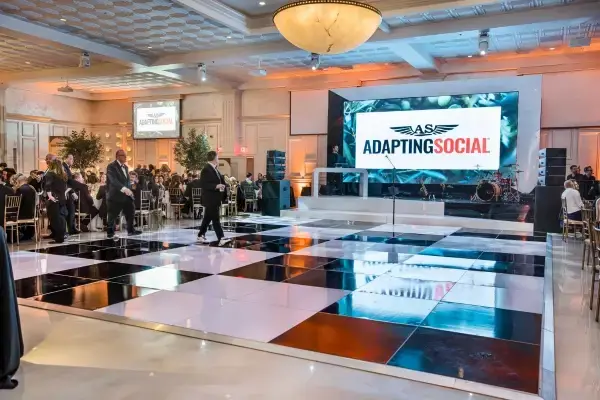
Vinyl dance floors work well when customization and branding are the priority.
They can feature:
- Names
- Monograms
- Company logos
- Custom patterns
- Branded graphics
- Event-specific artwork
For weddings, a vinyl floor can display the couple’s names, initials, or custom monogram while the LED wall shows matching animations, photos, or scenic content.
For corporate events, the floor may feature a company logo while the LED wall displays branded visuals, sponsor graphics, presentation content, or product imagery.
Because vinyl floors remain visually consistent throughout the event, they pair well with LED walls that change content over time. The floor anchors the design while the screen adds movement and variety.
Static Dance Floors
Static dance floors are a strong choice for events that call for a cleaner, more understated look.
They provide a durable, polished surface without illuminated effects or detailed graphics. This allows the LED wall to become the main visual centerpiece.
A static floor may work especially well for:
- Elegant weddings
- Formal galas
- Corporate presentations
- Minimalist event designs
- Venues with strong existing architecture
The simpler floor keeps the room from becoming visually overwhelming. It gives guests a comfortable place to dance while allowing the LED wall, lighting, and stage design to carry the creative direction.
Ways LED Video Walls Enhance the Dance Floor
An LED video wall can change throughout the event, making the area around the dance floor feel fresh and active from beginning to end.
The content should match the event type, audience, and moment. What appears during guest arrival may be completely different from what appears during dancing or a featured performance.
Weddings
At a wedding, an LED wall can add personal details without requiring permanent décor changes.
Content may include:
- The couple’s monogram
- Ceremony footage
- Engagement photos
- Family photo montages
- Animated floral or scenic backgrounds
- First dance visuals
- Custom graphics matching the invitation suite
During the first dance, the wall can display soft motion graphics, meaningful images, or subtle animated backgrounds that make the moment feel more cinematic.
Later in the evening, the visuals can become brighter and more energetic as the dance floor opens to guests.
Corporate Events
Corporate events often need to balance entertainment with clear branding and communication.
An LED wall near the dance floor can display:
- Company branding
- Product launch graphics
- Sponsor recognition
- Presentation slides
- Event schedules
- Awards content
- Live camera feeds
- Social media content
- Animated brand visuals
During presentations or awards, the wall serves a practical purpose. Once the event shifts into entertainment, the content can transition into more dynamic visuals that support the music and dance floor.
A custom vinyl floor featuring the company logo can reinforce the branding, while the wall changes throughout the event to support different segments.
Private Celebrations
LED walls and dance floors can also create a more personalized experience for private events.
They work well for:
- Birthdays
- Bar and bat mitzvahs
- Sweet 16s
- Quinceañeras
- Anniversary parties
- Graduation celebrations

The LED wall can feature the guest of honor’s name, photos, videos, favorite colors, custom animations, or themed graphics.
For milestone celebrations, the screen may also show a timeline of photos or video messages from family and friends. Once dancing begins, the content can shift into high-energy visuals that match the music and floor lighting.
Planning these elements together helps the event feel personal without becoming visually disconnected.
Coordinating Lighting, Dance Floors, and LED Walls
Lighting is what ties the dance floor and LED wall together.
Uplighting can shape the entire room, while intelligent lighting adds movement, energy, and direction. Spotlights can highlight entrances, first dances, speeches, performers, or branded moments without distracting from the rest of the design.
Color synchronization is especially important. The floor, wall, and lighting should share a coordinated palette instead of using unrelated colors at the same time. A frosted LED floor may look best with softer tones, while an infinity or checkered floor can support bolder lighting scenes.
Timing matters too. The room should not look the same during cocktail hour, dinner, speeches, and dancing. Lighting scenes can be programmed to shift throughout the night, creating smoother transitions between each part of the event.
The strongest results come from designing the lighting, dance floor, and LED wall together from the beginning. When each element is planned separately, they can compete visually or create technical conflicts. When they are coordinated, the room feels polished and intentional.
Planning the Room Layout
The placement of each production element affects how the event looks, feels, and functions.
A strong layout should support guest movement, visibility, entertainment, and production needs without making the room feel crowded.
Dance Floor Placement
The dance floor should be easy to see and easy to reach.
It is often placed near the DJ or band so the entertainment and dancing feel connected. It should also be positioned where guests can move between tables, bars, lounges, and other areas without creating bottlenecks.
Consider:
- Whether guests can see the dance floor from their seats
- How people will enter and exit the floor
- Whether servers and staff have clear pathways
- Where the DJ or band will be located
- Whether the floor blocks entrances, exits, or important venue features
A well-placed dance floor naturally draws guests into the action.
LED Wall Placement
The LED wall should be visible without blocking the room.
Viewing angles matter because guests seated on the sides may not see the content clearly if the wall is positioned incorrectly. The wall may be placed behind a stage, near the DJ booth, or adjacent to the dance floor depending on the event layout.
Important factors include:
- Ceiling height
- Stage height
- Screen dimensions
- Guest seating
- Structural limitations
- Power access
- Nearby décor or scenic elements
- Blocked sightlines
The wall should enhance the focal area without overwhelming the venue or making guests crane their necks to see it.
Production Planning
Every major production element should be mapped before installation begins.
That includes:
- Dance floor dimensions
- LED wall size and location
- Stage placement
- Lighting positions
- DJ or band setup
- Power distribution
- Cable paths
- Guest seating
- Venue entrances
- Vendor access
Planning these pieces in advance helps prevent last-minute changes, crowded setups, blocked views, and overlapping equipment.
It also allows the production team to coordinate installation in the right order. For example, staging and power may need to be installed before the LED wall, while the dance floor may need to be placed after larger equipment is moved into position.
Benefits of Working With One Production Team
Coordinating several event vendors can become complicated quickly.
One company may be installing the dance floor while another is building the LED wall. A separate lighting team may arrive later, followed by a staging company that needs access to the same space.
That can lead to scheduling conflicts, mismatched designs, unclear responsibilities, and equipment competing for power or floor space.
Working with one experienced production partner can simplify the process.
The benefits include:
- Better communication between departments
- A more consistent visual design
- Coordinated delivery and installation
- Fewer scheduling conflicts
- More efficient use of the venue
- Cleaner cable management and equipment placement
- A more polished final result
It also means the dance floor, LED wall, lighting, and staging can be designed as one environment rather than separate rentals.
That does not mean every event needs every production service. It simply means the elements you do choose are more likely to work together when one team understands the full plan.
Frequently Asked Questions About LED Video Walls and Dance Floors
Do LED Dance Floors Work With LED Video Walls?
Yes. LED dance floors and LED video walls can work very well together when their colors, brightness, and visual effects are coordinated.
The goal is to create balance. Both features should support the same design direction without competing for attention.
Can a Vinyl Dance Floor Match What Is Displayed on the LED Wall?
Yes. A vinyl dance floor can feature colors, logos, monograms, patterns, or graphics that match the content shown on the LED wall.
The floor can provide a consistent branded or personalized design, while the wall displays changing visuals throughout the event.
Should Lighting Be Coordinated With Both?
Yes. Lighting should be planned around both the dance floor and LED wall.
The right lighting can enhance colors, guide attention, support transitions, and prevent the floor or screen from appearing washed out. Coordinating all three creates a more cohesive look.
Can LED Walls Be Used Without a Stage?
Yes. An LED wall does not always require a stage.
It may be installed behind a DJ booth, beside a dance floor, against a venue wall, or as part of a scenic display. The right setup depends on the screen size, venue structure, viewing angles, and event purpose.
Are LED Dance Floors Too Bright for Weddings?
Not necessarily.
Frosted LED floors can create a softer glow that works well for elegant weddings. Brightness, color, and effects can also be adjusted to match different moments.
The floor may use subtle lighting during dinner and the first dance, then shift into brighter effects later in the evening.
Conclusion
Dance floors and LED walls are most effective when they are planned as part of the same event design.
The right flooring creates a central space for guests, while the LED wall adds movement, imagery, branding, and depth. Lighting and layout then connect those elements and help the room transition throughout the event.
Working with one experienced production company can make the entire process smoother, from initial design and venue planning through installation and breakdown.
Explore our dance floor rentals in NJ and speak with our team about incorporating the right floor into a complete event production design.